 jobdayta.com
 Jobs and Career in Banking Industry
Banking is a critical financial service industry that facilitates monetary transactions, savings, loans, and investment products for individuals and businesses. It primarily includes commercial banks, investment banks, credit unions, and savings institutions, all regulated by governmental agencies such as the Federal Reserve in the United States or the European Central Bank in Europe. Modern banking relies heavily on digital platforms and fintech innovations to enhance customer experience, security, and transaction speed. Key banking services include deposit accounts, credit services, wealth management, and payment processing systems.
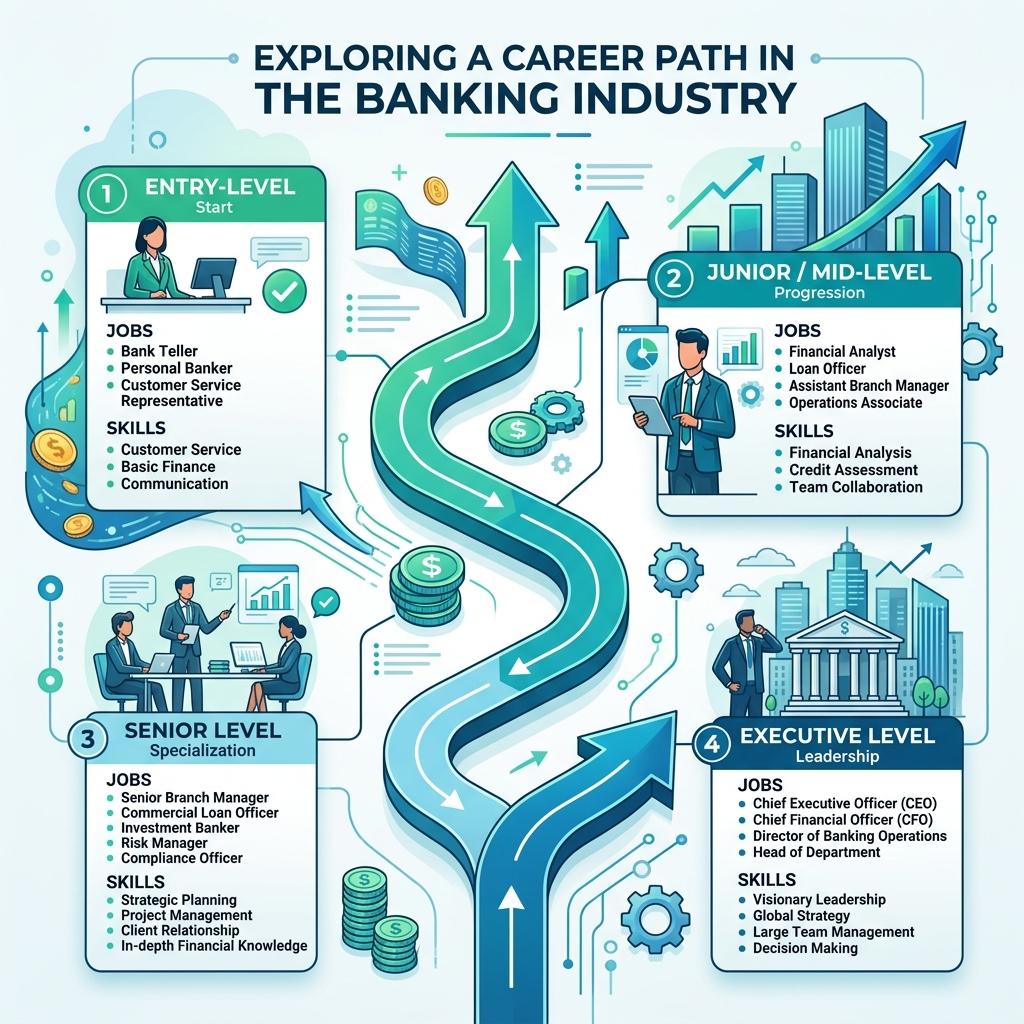
What are the primary career paths available in the banking industry?
The banking industry offers diverse career trajectories tailored to different skill sets. The main divisions include:
- Retail Banking: Focuses on consumer services, including branch management, loan officers, and customer service.
- Commercial Banking: Involves managing relationships with mid-sized to large businesses, offering credit management and treasury services.
- Investment Banking: Centered on capital raising, mergers and acquisitions (M&A), and trading for large corporations and governments.
- Wealth Management: Dedicated to providing financial planning and investment advice to high-net-worth individuals.
- Support/Back Office: Includes vital roles in risk management, regulatory compliance, IT, and human resources.
What are the key differences between Investment Banking and Retail Banking?
Investment and Retail banking serve entirely different clients and have distinct work cultures.
| Feature | Retail Banking | Investment Banking |
|---|---|---|
| Target Clients | Everyday individuals and small businesses | Large corporations, institutions, and governments |
| Core Services | Checking/savings accounts, mortgages, personal loans | M&A advisory, debt/equity underwriting, trading |
| Work Environment | Standard 40-hour weeks, highly stable | High-pressure, 70-100 hour weeks, demanding |
| Compensation | Moderate, steady base salary | High base salary with substantial performance bonuses |
What essential skills are required to succeed in modern banking?
Success in modern banking requires a robust blend of technical expertise and interpersonal abilities:
- Financial Acumen: Deep understanding of financial modeling, valuation, and accounting principles.
- Analytical Thinking: The ability to interpret complex data to make informed, data-driven decisions.
- Communication Skills: Essential for explaining complex financial concepts to clients and negotiating high-stakes deals.
- Technological Proficiency: Familiarity with banking software, data analytics tools, and basic programming (like Python or SQL) is increasingly vital.
- Attention to Detail: Crucial for ensuring regulatory compliance and avoiding costly financial errors.
How can a recent graduate break into the banking industry?
Securing a competitive banking role as a fresh graduate requires strategic and early preparation:
- Pursue Relevant Education: Obtain a degree in Finance, Economics, Accounting, or Mathematics.
- Secure Internships: Apply for summer analyst programs during your sophomore and junior years to gain practical experience.
- Develop Technical Skills: Master Excel, financial modeling, and stay updated on global macroeconomic trends.
- Network Extensively: Attend university career fairs, join finance clubs, and conduct informational interviews with alumni.
- Master the Interview: Practice technical questions, brainteasers, and behavioral scenarios commonly used by financial institutions.
What is the typical career progression for an investment banker?
The investment banking career ladder is highly structured, typically following this timeline:
- Analyst (2-3 years): The entry-level role focusing heavily on financial modeling, market research, and creating pitch books.
- Associate (3-4 years): Manages analysts, interacts more with clients, and oversees the drafting of financial presentations.
- Vice President / VP (3-4 years): Takes on project management, acts as the primary liaison between senior bankers and junior staff, and manages client relationships.
- Director / Senior VP (2-3 years): Focuses heavily on sourcing new deals and executing complex transactions.
- Managing Director / MD: The highest level, responsible almost entirely for client acquisition and generating firm revenue.
How has technology and FinTech impacted banking careers?
Technology and FinTech have fundamentally transformed banking careers, shifting the industry's demand toward digital competency. Automation has drastically reduced the need for manual data entry and routine back-office tasks, pivoting human roles toward complex problem-solving and relationship management.
There is a massive surge in demand for tech-centric roles within traditional banks, such as Data Scientists, Cybersecurity Experts, and Blockchain Developers. Furthermore, traditional finance professionals must now possess a baseline understanding of digital tools, AI-driven analytics, and algorithmic trading. Ultimately, the rise of FinTech has created a hybrid career landscape where financial expertise combined with technological literacy is the ultimate competitive advantage.
What certifications are most valuable for career advancement in banking?
Earning professional certifications can significantly accelerate career growth and increase earning potential in banking:
- CFA (Chartered Financial Analyst): The gold standard for investment banking, asset management, and equity research.
- CPA (Certified Public Accountant): Highly valuable for corporate finance, accounting, and internal audit roles.
- FRM (Financial Risk Manager): Essential for professionals specializing in risk assessment, credit risk, and market risk.
- CFP (Certified Financial Planner): The premier certification for wealth managers advising individual clients.
- Series 7, 63, & 79: Required FINRA licenses in the US for anyone looking to trade securities or work in investment banking.
What is the role of a Compliance Officer in a bank?
A Compliance Officer ensures that a bank operates strictly within the legal and regulatory frameworks set by government bodies. Their primary responsibility is to protect the financial institution from legal penalties, financial forfeiture, and reputational damage.
Daily tasks include monitoring financial transactions for suspicious activities (Anti-Money Laundering), updating internal policies to reflect new banking laws, and conducting regular risk audits. They also train bank employees on proper regulatory protocols. As banking regulations have become increasingly strict globally, the compliance department has grown into a highly stable, lucrative, and critical career path.
How important is networking for career development in banking?
Networking is arguably the most critical factor for career progression in banking, particularly in competitive sectors like investment banking and private wealth management. The industry relies heavily on internal referrals and reputation for hiring and promotions.
Effective networking yields several major benefits:
- Access to Hidden Jobs: Many lucrative banking roles are filled through referrals before they are publicly posted.
- Mentorship: Senior bankers can provide invaluable guidance and sponsor your promotion to upper management.
- Client Acquisition: In senior roles (like Managing Director), your personal network directly translates to your ability to bring in new business and generate revenue.
What are the typical salary expectations for entry-level banking roles?
Entry-level salaries in banking vary drastically depending on the specific sector and geographic location. Below is a general overview of first-year total compensation (Base Salary + Bonus) in major financial hubs:
| Banking Sector | Entry-Level Role | Estimated Total Compensation (USD) |
|---|---|---|
| Retail Banking | Personal Banker | $45,000 - $65,000 |
| Commercial Banking | Credit Analyst | $70,000 - $90,000 |
| Risk & Compliance | Compliance Analyst | $75,000 - $95,000 |
| Investment Banking | Investment Banking Analyst | $130,000 - $180,000+ |
Note: Investment banking compensation includes substantial year-end bonuses, which often account for 40-60% of total take-home pay.