 jobdayta.com
 Jobs and Career in Engineering Industry
Engineering drives innovation by applying scientific principles to design, build, and maintain structures, machines, and systems. It integrates disciplines such as mechanical, electrical, civil, and software engineering to solve complex problems efficiently. Advanced technologies like AI, robotics, and sustainable materials enhance engineering solutions across industries. The field continuously evolves to support infrastructure development, technological advancement, and environmental sustainability.
What are the most in-demand engineering disciplines currently?
The engineering industry is evolving rapidly, driven by technological advancements and environmental concerns. Currently, the most in-demand disciplines include:
- Software Engineering: Driven by artificial intelligence, cloud computing, and cybersecurity needs.
- Renewable Energy & Environmental Engineering: Growing exponentially due to global sustainability goals and climate change mitigation efforts.
- Biomedical Engineering: Expanding alongside innovations in healthcare technology, smart prosthetics, and wearable medical devices.
- Electrical Engineering: Experiencing high demand in semiconductor manufacturing, electric vehicles (EVs), and smart grid development.
Professionals focusing on these future-proof fields currently enjoy robust job security and highly competitive compensation.
How important is obtaining a Professional Engineer (PE) license for career advancement?
The importance of a PE license depends heavily on your specific engineering discipline and long-term career goals:
- Highly Critical: Civil, structural, and environmental engineers often need a PE license to sign and seal public works designs, submit plans to authorities, or act as independent consultants.
- Moderately Important: Mechanical and electrical engineers working in HVAC, power systems, or commercial construction benefit greatly from a PE to secure senior roles.
- Less Critical: Software, aerospace, and chemical engineers rarely require a PE license, as their work is typically covered under corporate industrial exemptions.
Overall, a PE license boosts professional credibility, opens doors to leadership, and can significantly increase salary potential.
What is the typical career progression timeline for an engineer?
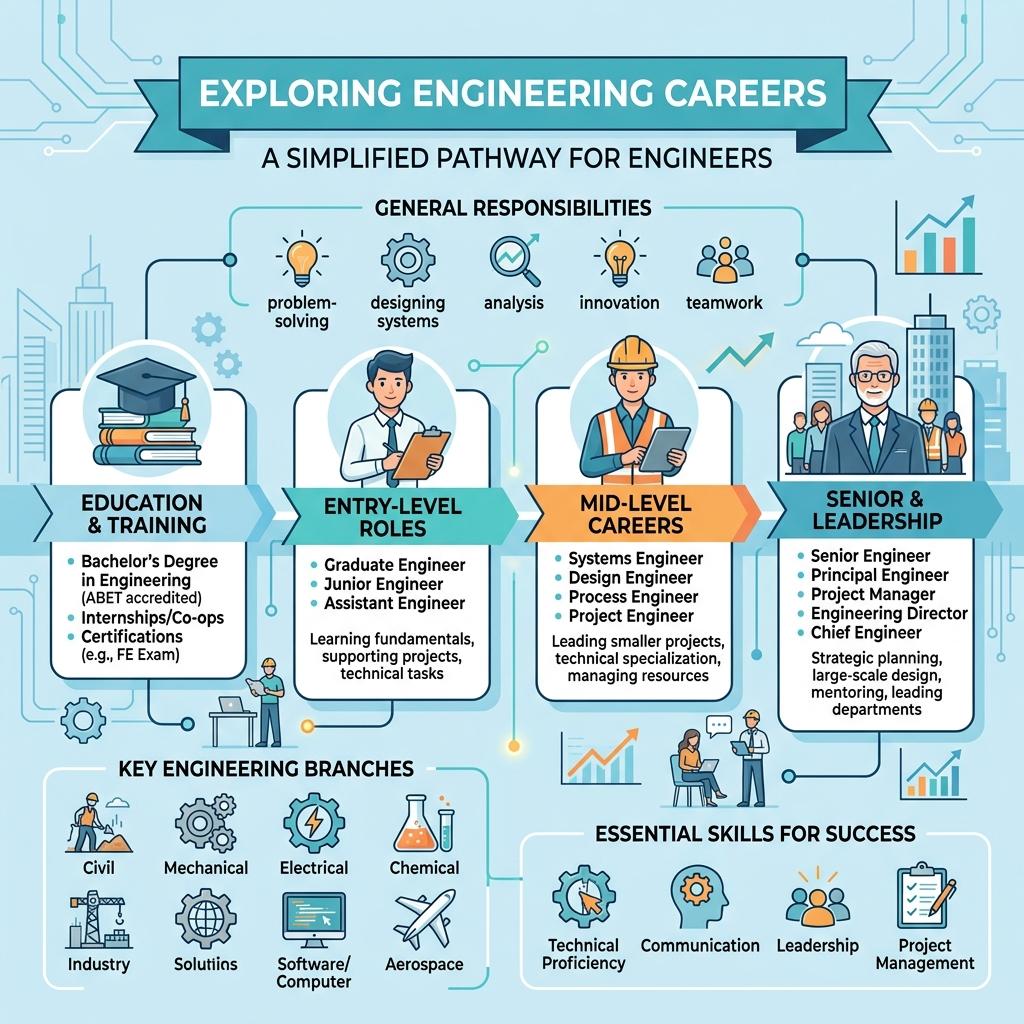
While individual paths vary, a standard engineering career progresses through several key stages. Below is a general timeline:
| Career Stage | Years of Experience | Primary Focus |
|---|---|---|
| Junior / Entry-Level Engineer | 0 - 3 Years | Learning industry tools, executing defined tasks, and gaining practical field experience. |
| Mid-Level Engineer | 3 - 7 Years | Independent problem-solving, managing small projects, and mentoring junior staff. |
| Senior Engineer | 7 - 12+ Years | Leading major projects, system architecture design, and technical strategy. |
| Principal Engineer / Manager | 12+ Years | Department leadership, cross-functional management, or acting as a high-level technical Subject Matter Expert (SME). |
What soft skills are essential for an engineer looking to move into management?
Transitioning from a technical role to engineering management requires a strong foundation in soft skills. Technical expertise alone is not enough to lead teams effectively. Essential skills include:
- Communication:
- Translating complex technical jargon into business terms for non-technical stakeholders.
- Practicing active listening to understand team bottlenecks.
- Leadership & Empathy: Motivating diverse teams, managing interpersonal conflicts, and actively supporting team members' career growth.
- Strategic Decision Making: Balancing technical perfection with real-world business constraints like budgets, deadlines, and resource availability.
Developing these skills early by volunteering to lead small initiatives is crucial for managerial advancement.
What are the average starting salaries for major engineering branches in the US?
Starting salaries for engineers are highly competitive compared to other professions. The table below outlines estimated entry-level salaries across major disciplines based on recent industry averages:
| Engineering Discipline | Average Starting Salary (USD) |
|---|---|
| Petroleum Engineering | $85,000 - $105,000 |
| Software Engineering / Computer Science | $80,000 - $100,000 |
| Chemical Engineering | $75,000 - $90,000 |
| Mechanical / Electrical Engineering | $70,000 - $85,000 |
| Civil Engineering | $65,000 - $75,000 |
Note: Actual salaries vary significantly based on geographic location, company size, and local cost of living.
How is Artificial Intelligence (AI) changing engineering careers?
AI is rapidly transforming the engineering landscape, acting as a powerful tool rather than a replacement for human engineers. Its major impacts include:
- Automation of Routine Tasks: AI handles repetitive calculations, drafting, and massive data analysis, freeing engineers to focus on creative problem-solving.
- Enhanced Generative Design: Engineers use AI algorithms to generate thousands of optimal design options based on material and weight constraints, revolutionizing aerospace and mechanical design.
- Predictive Maintenance: In manufacturing and civil infrastructure, AI models predict equipment failures or structural weaknesses before they physically occur.
To remain competitive, modern engineers must adapt by developing basic data science skills and AI literacy.
How can a professional transition into a completely different engineering sub-field?
Changing disciplines (for example, moving from Mechanical to Software Engineering) requires strategic planning. Follow these steps to pivot successfully:
- Identify Skill Gaps: Research job descriptions in your target field to understand the required technical competencies.
- Upskill and Certify: Take targeted online courses, attend coding bootcamps, or pursue a specialized master’s degree. Earn industry-recognized certifications.
- Leverage Transferable Skills: Highlight skills applicable across all engineering fields, such as project management, mathematics, CAD experience, or quality assurance.
- Seek Internal Transfers: If your current company operates in your desired field, request to shadow that team or take on transitional projects.
Is a Master's degree necessary for career progression in engineering?
A Master’s degree is not strictly necessary for a successful engineering career, but it can significantly accelerate progression depending on your chosen path.
For most operational, manufacturing, or field engineering roles, a Bachelor's degree paired with hands-on experience is sufficient. Employers often value years of practical problem-solving over additional academic credentials.
However, an advanced degree is highly beneficial if you aim for:
- Research and Development (R&D): Deep, specialized knowledge is frequently required to innovate new technologies.
- Academia: Master's or Ph.D. degrees are mandatory for teaching at the university level.
- Executive Management: A Master of Engineering Management (MEM) or an MBA can fast-track a move into corporate leadership.
What are the best ways for a mid-career engineer to stay updated with industry trends?
Continuous learning is vital to prevent skill stagnation in a mid-career engineering role. The most effective strategies include:
- Joining Professional Associations: Organizations like IEEE, ASME, or ASCE provide access to exclusive industry journals, webinars, and technical papers.
- Attending Conferences: Participating in annual trade shows helps you discover emerging technologies and network with industry innovators.
- Earning Micro-credentials: Platforms like Coursera or edX offer specialized, short-term courses in emerging fields like IoT, advanced robotics, or sustainable materials.
- Engaging in Reverse Mentorship: Collaborating with recent college graduates can introduce veteran engineers to the latest academic theories and cutting-edge software tools.
What role does networking play in finding engineering job opportunities?
Networking is incredibly powerful in the engineering industry, often acting as the master key to accessing the "hidden job market"—lucrative positions that are filled before they are ever publicly advertised.
Building a robust professional network provides several distinct advantages:
- Direct Referrals: Internal employee referrals drastically increase your chances of securing an interview compared to submitting cold applications online.
- Mentorship: Connections with senior engineers provide invaluable career guidance, technical resume reviews, and targeted interview preparation.
- Insider Industry Insights: Conversations with peers at other companies keep you informed about which organizations are growing, adopting exciting new technologies, or suffering from high turnover.
Engineers should actively network via LinkedIn and local industry meetups.