 jobdayta.com
 Jobs and Career in Logistics Industry
Logistics encompasses the planning, implementation, and management of the efficient flow and storage of goods, services, and information from origin to consumption. Effective logistics reduces operational costs, enhances supply chain performance, and improves customer satisfaction by ensuring timely delivery and inventory accuracy. Key components include transportation management, warehousing, inventory control, and order fulfillment. Advanced technologies such as GPS tracking, warehouse automation, and data analytics optimize logistics processes and drive competitive advantage.
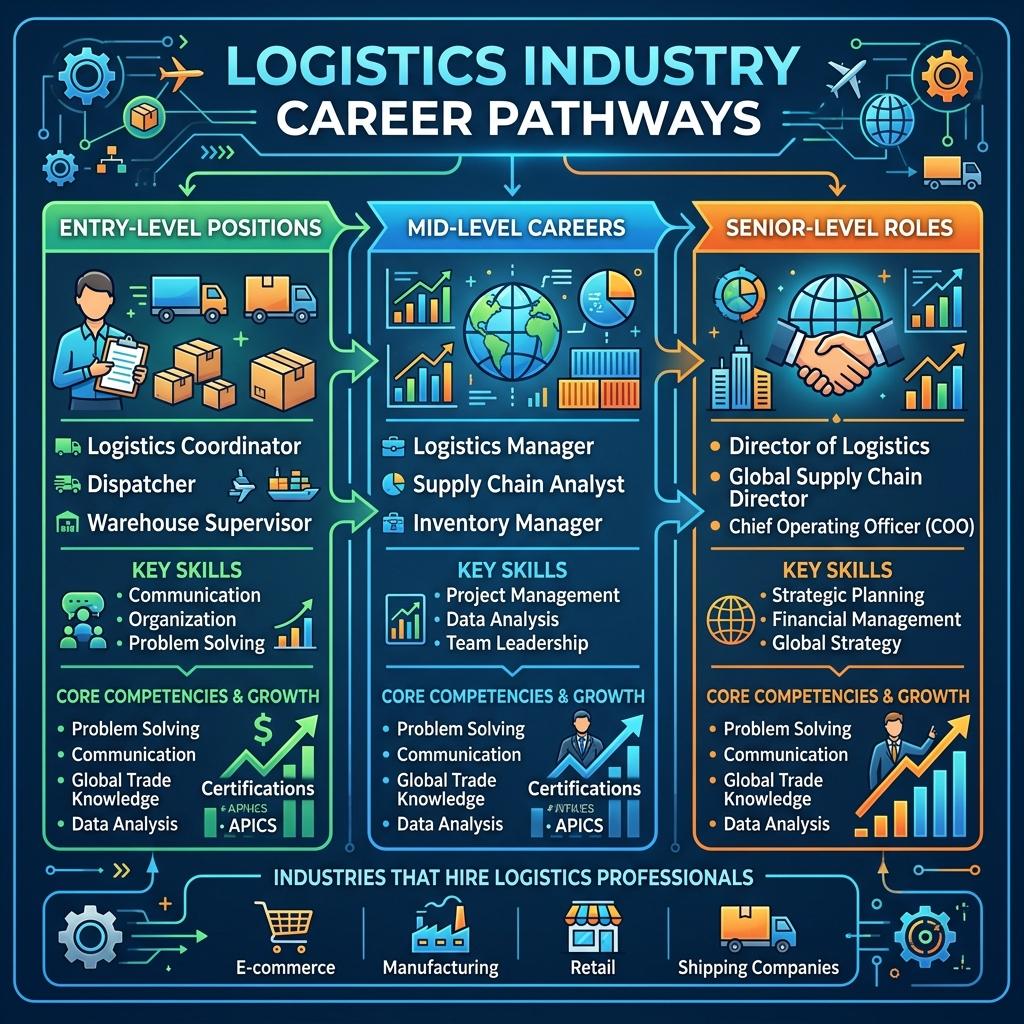
What are the most common entry-level jobs in logistics?
The logistics industry offers numerous entry-level opportunities that require minimal prior experience. These roles serve as excellent stepping stones for advanced career paths.
- Warehouse Associate: Handles receiving, organizing, picking, and dispatching inventory.
- Dispatcher: Coordinates schedules, communications, and routes for truck drivers.
- Inventory Clerk: Monitors stock levels, records data, and conducts regular audits.
- Logistics Coordinator: Assists in tracking shipments, processing documents, and updating clients.
Starting in these positions provides critical foundational knowledge of warehouse operations, transportation planning, and frontline customer service.
What are the essential skills needed for a successful career in logistics?
To thrive in the logistics sector, professionals must develop a blend of technical and soft skills:
- Analytical Thinking: The ability to interpret data to optimize delivery routes and reduce supply chain costs.
- Problem-Solving: Quickly resolving unexpected issues like delayed shipments, port strikes, or inventory shortages.
- Technological Proficiency: Familiarity with Warehouse Management Systems (WMS) and Enterprise Resource Planning (ERP) software.
- Communication: Effectively liaising between suppliers, drivers, warehouse staff, and clients.
- Adaptability: Adjusting swiftly to sudden changes in global supply chains.
What are the average salaries for common logistics roles?
Salaries in logistics vary based on experience, location, and specific responsibilities. Below is a general overview of average annual salaries (in USD) for common career milestones:
| Job Title | Entry-Level Salary | Mid-to-Senior Salary |
|---|---|---|
| Logistics Coordinator | $40,000 | $60,000 |
| Supply Chain Analyst | $55,000 | $85,000 |
| Warehouse Manager | $50,000 | $75,000 |
| Logistics Director | $90,000 | $140,000+ |
Earning specialized certifications or managing larger global teams significantly increases an individual's earning potential.
What is the typical career progression for a Supply Chain Analyst?
A Supply Chain Analyst usually follows a structured upward career trajectory within a company:
- Junior Analyst: Focuses on data entry, tracking Key Performance Indicators (KPIs), and generating basic operational reports.
- Senior Supply Chain Analyst: Takes on predictive modeling, leads route optimization projects, and mentors junior staff.
- Supply Chain Manager: Oversees an entire department, manages vendor relationships, and designs regional supply chain strategies.
- Director of Supply Chain: Handles high-level executive planning, global logistics networks, and multi-million-dollar budgets.
Advancement generally requires a combination of proven cost-saving achievements and advanced education.
How is automation and technology impacting logistics careers?
Technology is rapidly transforming the logistics industry, shifting the focus from manual labor to tech-savvy management. The rise of robotics and Automated Guided Vehicles (AGVs) in warehouses means a growing demand for robotics maintenance technicians and systems operators.
Furthermore, Artificial Intelligence (AI) and the Internet of Things (IoT) are revolutionizing route planning and real-time inventory tracking. Logistics professionals are now expected to be comfortable with data analytics dashboards and machine learning software. While automation reduces the need for basic manual roles, it creates thousands of high-paying jobs in logistics IT and systems engineering.
What professional certifications help advance a logistics career?
Earning industry-recognized certifications can set candidates apart in a competitive job market. The most valuable credentials include:
- APICS Certified Supply Chain Professional (CSCP): Ideal for professionals looking to master end-to-end global supply chain concepts.
- Certified in Production and Inventory Management (CPIM): Best for those focused on internal operations, forecasting, and inventory control.
- Certified Logistics Professional (CLP): Validates broad knowledge in transportation and distribution.
- Six Sigma (Green/Black Belt): Highly sought after for logistics process improvement and waste reduction.
These certifications often lead to faster promotions and higher salary brackets.
What is the difference between Logistics and Supply Chain Management (SCM) careers?
While often used interchangeably, logistics is actually a specialized subset of the broader supply chain.
| Feature | Logistics Careers | Supply Chain Management Careers |
|---|---|---|
| Primary Focus | The physical movement and storage of goods. | The entire lifecycle of a product. |
| Key Tasks | Warehousing, transportation, packaging, and delivery. | Sourcing, procurement, manufacturing, and logistics. |
| Job Titles | Fleet Manager, Warehouse Supervisor. | Procurement Manager, Supply Chain Director. |
Logistics professionals focus on getting items to the right place on time, whereas SCM professionals focus on the overarching strategy of product creation and distribution.
What are the typical work environments for logistics professionals?
Logistics professionals can work in a variety of environments depending on their specific role and seniority:
- Corporate Offices: Analysts, directors, and planners typically work in office settings, focusing on data, scheduling, and client communication.
- Warehouses and Fulfillment Centers: Managers, supervisors, and inventory clerks spend their time on the facility floor overseeing daily physical operations.
- On the Road/Field: Fleet managers and logistics engineers may travel frequently between distribution centers, ports, and vendor sites.
Many modern logistics roles, particularly those focused on data analysis, now also offer hybrid or fully remote working opportunities.
How can someone transition from another industry into logistics?
Transitioning into logistics is highly achievable due to the industry's need for transferable skills. Here is a recommended pathway:
- Identify Transferable Skills: Highlight your past experience in project management, customer service, data analysis, or IT on your resume.
- Pursue Education: Take short online courses or earn a foundational certificate to learn industry terminology.
- Target Mid-Level Roles: Apply for positions like Logistics Coordinator or Procurement Assistant, which value general organizational skills.
- Network: Join professional associations like the Council of Supply Chain Management Professionals (CSCMP) to connect with insiders.
Industries like retail, military, and manufacturing naturally align well with logistics operations.
What are some emerging green jobs in the logistics sector?
As companies strive to reduce their carbon footprint, sustainable logistics has created several emerging career paths:
- Sustainability Supply Chain Manager: Focuses on sourcing eco-friendly materials and ensuring vendors follow strict environmental regulations.
- Green Fleet Manager: Oversees the transition from diesel trucks to electric vehicles (EVs) and optimizes routes to reduce emissions.
- Reverse Logistics Specialist: Manages the return lifecycle of products, prioritizing recycling, refurbishing, and reducing landfill waste.
These roles require traditional logistics knowledge combined with a passion for corporate sustainability goals. They represent some of the fastest-growing niches in the industry.