 jobdayta.com
 Jobs and Career in Nonprofit Industry
Nonprofit organizations operate to serve public or community interests without the primary goal of profit generation, reinvesting all revenue into mission-driven activities. These entities focus on causes such as education, healthcare, environmental conservation, and social services, often relying on donations, grants, and volunteers. Tax-exempt status under IRS Section 501(c)(3) allows nonprofits to receive tax-deductible contributions, making them essential players in charitable efforts and community development. Effective governance, transparent financial management, and impactful program delivery are critical factors for sustaining nonprofit success and donor trust.
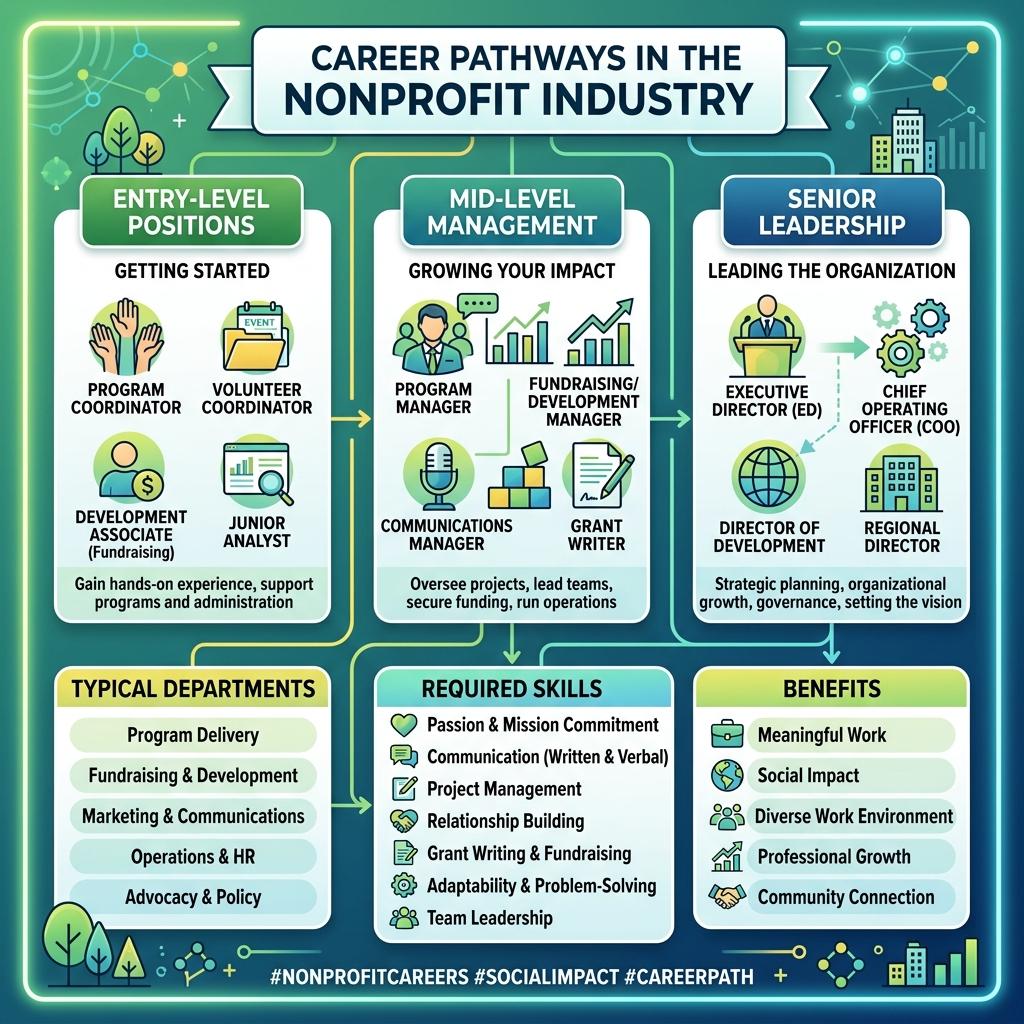
What are the most common entry-level roles in the nonprofit sector?
Entry-level positions in the nonprofit sector typically focus on supporting core operations, programs, and fundraising efforts. Depending on the size of the organization, you might specialize or wear multiple hats.
- Development Assistant: Supports fundraising campaigns, manages donor databases, and processes gifts.
- Program Coordinator: Assists in organizing, implementing, and tracking community programs or services.
- Communications Associate: Helps manage social media, draft newsletters, and update the organization's website.
- Volunteer Coordinator: Recruits, trains, and schedules volunteers for events and daily operations.
How does compensation in nonprofits compare to the for-profit sector?
While nonprofit salaries are historically lower than corporate equivalents, many organizations strive to offer competitive total compensation packages. The gap is most noticeable in entry-to-mid-level roles but often narrows at the executive level.
| Compensation Element | Nonprofit Sector | For-Profit Sector |
|---|---|---|
| Base Salary | Generally lower | Generally higher |
| Paid Time Off (PTO) | Highly generous, flexible leave | Standard or strict accrual |
| Job Fulfillment | High; mission-driven focus | Varies by company culture |
How can someone transition from a corporate job to a nonprofit career?
Transitioning to the nonprofit sector requires translating your corporate experience into terms that resonate with mission-driven organizations.
- Identify transferable skills (e.g., corporate sales translates well to major gift fundraising).
- Gain sector experience:
- Join a nonprofit board of directors.
- Offer pro-bono consulting in your area of expertise.
- Volunteer for fundraising committees.
- Tailor your resume to highlight impact, community involvement, and budget efficiency rather than just profit generation.
- Network actively through local nonprofit associations.
What is the typical career progression for a Grant Writer?
Grant writing is a highly sought-after skill with a clear upward trajectory. Professionals usually progress from writing small proposals to managing massive federal grants or entire fundraising departments.
- Early Career Phase
- Grant Writing Intern/Assistant: Focuses on research and gathering attachments.
- Grant Writer: Writes foundation and corporate proposals.
- Management Phase
- Grants Manager: Oversees grant reporting, compliance, and writer teams.
- Director of Institutional Giving: Strategizes all foundation, corporate, and government funding.
What key soft skills are most valued for nonprofit career development?
Nonprofit environments are often fast-paced, resource-constrained, and highly collaborative. Technical skills are important, but specific soft skills will dictate your long-term success and promotion potential.
- Resourcefulness: The ability to achieve significant results with limited budgets and staff.
- Empathy: Understanding the needs of the populations you serve and the donors who fund you.
- Adaptability: Being willing to pivot quickly when funding shifts or community crises arise.
- Cross-functional Collaboration: Working seamlessly across programs, finance, and development departments.
Are there opportunities for professional development within nonprofits?
Yes, though it may look different than in the corporate world. Because training budgets are often tight, nonprofit professionals must be proactive in seeking out growth opportunities.
Common avenues for development include:
- Cross-training: Shadowing colleagues in different departments to learn new skills.
- Fellowships and Grants: Applying for external scholarships designed to fund nonprofit leadership training.
- Association Memberships: Joining groups like the Association of Fundraising Professionals (AFP) or Young Nonprofit Professionals Network (YNPN) for mentorship and webinars.
What is the difference between direct service and capacity-building roles?
Nonprofit careers are generally divided into two main categories: those working directly with the community, and those working behind the scenes to keep the organization running.
| Role Type | Focus Area | Example Jobs |
|---|---|---|
| Direct Service | Frontline work interacting face-to-face with the target population. | Social Worker, Teacher, Shelter Manager, Clinician |
| Capacity Building | Infrastructure, operations, funding, and administration. | Grant Writer, HR Director, Database Administrator |
How important is volunteering when applying for nonprofit jobs?
Volunteering is exceptionally important, especially for entry-level candidates or career changers. Nonprofits prioritize hiring individuals who demonstrate a genuine commitment to their specific mission.
Having volunteer experience on your resume proves that you are mission-driven, rather than just looking for any paycheck. Furthermore, volunteering allows you to build a network with current staff and leadership, which can lead directly to job offers when unadvertised positions become available.
Where are the best places to find job postings for the nonprofit industry?
While standard job boards like Indeed and LinkedIn have nonprofit listings, utilizing sector-specific job boards will yield much better, highly targeted results.
- Idealist.org: The largest global job board exclusively for nonprofits and social impact roles.
- Philanthropy News Digest (PND): Great for finding foundation and fundraising jobs.
- National Council of Nonprofits: Often links to localized state associations with regional job boards.
- Work for Good: A specialized platform focused entirely on purpose-driven careers.
What are the main challenges of working in the nonprofit sector?
While highly rewarding, working in a nonprofit comes with unique industry challenges that professionals must learn to navigate to avoid burnout.
- Limited Budgets: Staff frequently lack access to premium software, extensive support teams, or large marketing budgets.
- Compassion Fatigue: Continually dealing with systemic social issues (like homelessness or illness) can cause emotional exhaustion.
- Slower Upward Mobility: In smaller organizations, you may have to wait for someone to retire or leave before a management position opens up.
- Wearing Multiple Hats: Job descriptions often blur, requiring staff to handle tasks outside their expertise.