 jobdayta.com
 Jobs and Career in Real estate Industry
Real estate encompasses land and any permanent structures attached, including residential, commercial, and industrial properties. The industry plays a critical role in the global economy, driving investment, development, and urbanization. Key factors influencing real estate value include location, market trends, zoning regulations, and property condition. Understanding these elements is essential for buyers, investors, and developers navigating the property market.
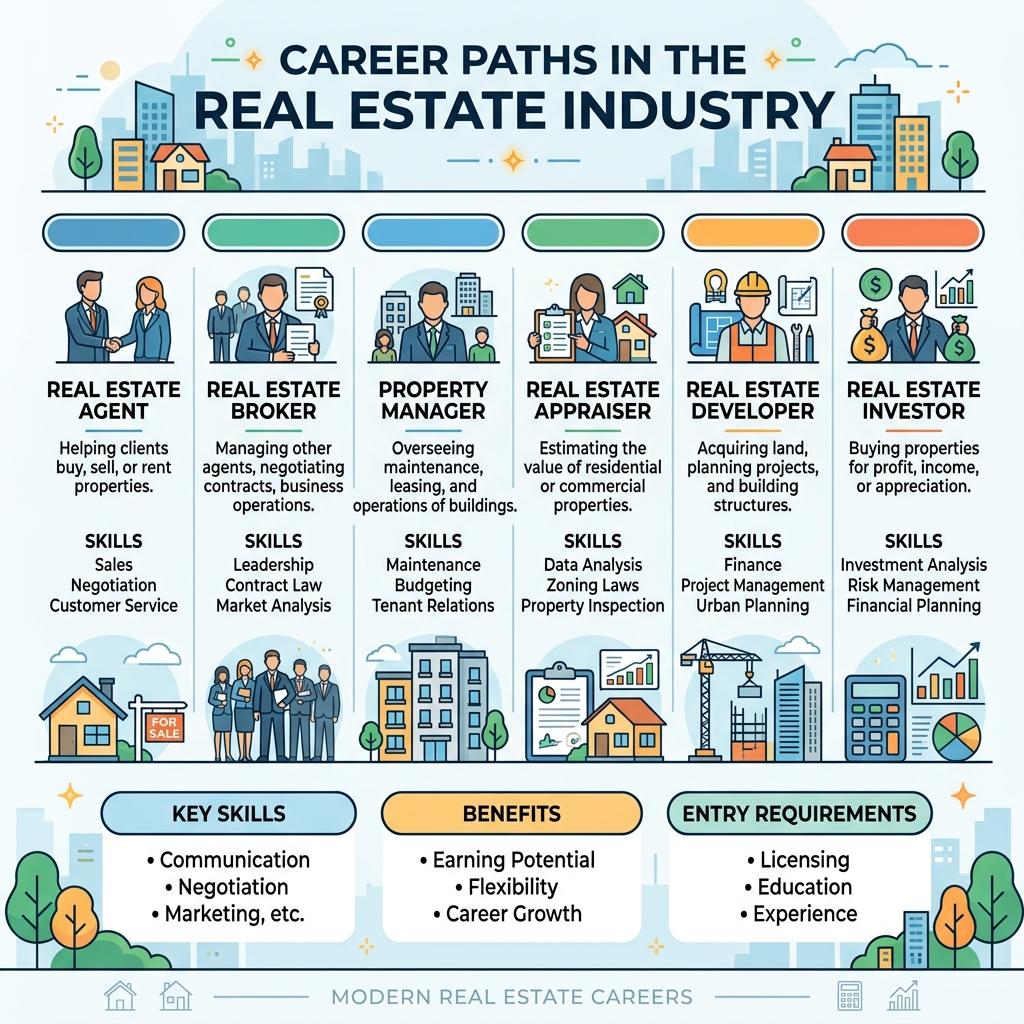
What are the primary career paths in the real estate industry?
The real estate industry offers a diverse range of career paths suited to different skills and interests. The most common sectors include:
- Brokerage & Sales: Residential and commercial agents, brokers, and leasing consultants.
- Property Management: Managers who oversee daily operations and tenant relations for investors.
- Appraisal & Valuation: Professionals who determine the market value of properties.
- Real Estate Development: Investors, developers, and project managers who acquire land and build new properties.
- Finance & Mortgages: Loan officers, mortgage brokers, and underwriters who facilitate property purchases.
How do I become a licensed real estate agent?
While specific requirements vary by location, the general process to become a licensed real estate agent involves the following steps:
- Meet basic requirements: You must typically be at least 18 years old and have a high school diploma.
- Complete pre-licensing education: Take required real estate courses from an accredited institution.
- Pass the licensing exam: Successfully pass both the state and national portions of your local real estate exam.
- Activate your license: Submit your application and background check to the state real estate commission.
- Join a brokerage: New agents must work under the umbrella of a licensed real estate broker to begin practicing.
What is the difference between a real estate agent and a broker?
While both are licensed professionals, their responsibilities, education, and legal standings differ significantly:
| Feature | Real Estate Agent | Real Estate Broker |
|---|---|---|
| Licensing | Entry-level state license. | Advanced license requiring extra education and experience. |
| Independence | Must work under a licensed broker. | Can work independently or own their own brokerage. |
| Responsibilities | Works directly with buyers, sellers, and renters. | Can manage agents, oversee legal transactions, and handle escrow accounts. |
What skills are essential for career growth in real estate?
To thrive in the competitive real estate market, professionals must develop a blend of hard and soft skills:
- Communication & Negotiation: The ability to articulate value and negotiate the best deals for clients is paramount.
- Market Knowledge: Understanding local property trends, zoning laws, and pricing.
- Networking: Building a robust database of clients, contractors, and other industry professionals.
- Tech Savviness: Proficiency in CRM software, digital marketing, and virtual tour tools.
- Resilience & Self-Motivation: Because many roles are commission-based, self-discipline is critical for long-term success.
How do real estate professionals typically earn income?
Income structures in real estate vary heavily based on the specific career path you choose:
- Commission-Based: Agents and brokers typically earn a percentage of the property's sale price (usually 4-6%, split among the buying and selling agents).
- Salary + Bonus: Roles like property managers, financial analysts, and corporate real estate directors usually receive a steady base salary plus performance bonuses.
- Fees for Service: Appraisers and inspectors charge a flat fee or hourly rate for their specific services.
- Investment Returns: Developers and investors earn income through property appreciation, rental yields, or flipping profits.
What is the role of a Property Manager?
A Property Manager acts as a middleman between property owners and tenants, ensuring that real estate investments operate smoothly and profitably. Their daily responsibilities generally include:
- Marketing vacant properties and screening prospective tenants.
- Drafting, signing, and renewing lease agreements.
- Collecting rent and managing the property's financial budget.
- Coordinating routine maintenance, repairs, and emergency services.
- Handling tenant complaints and executing legal evictions if necessary.
Property management is an excellent career path for those who prefer steady, salary-based income over unpredictable commission-based sales.
Are there career opportunities in real estate that don't involve sales?
Absolutely. If you are interested in real estate but want to avoid direct sales, consider these alternative career paths:
- Real Estate Appraiser: Focuses on analyzing properties and market data to determine unbiased property values.
- Title Examiner: Researches public records to verify legal ownership and ensure there are no liens on a property.
- Real Estate Analyst: Works for investment firms to evaluate the financial viability of real estate portfolios and development projects.
- Home Inspector: Physically evaluates the structural integrity, roofing, plumbing, and electrical systems of a house before a sale closes.
What is the career progression for a real estate appraiser?
Becoming a highly paid real estate appraiser involves a strict, tiered licensing progression based on education and experience hours:
- Trainee Appraiser: Requires basic coursework. You must work under the direct supervision of a certified appraiser.
- Licensed Residential Appraiser: Requires additional education, experience hours, and passing an exam. Allows you to appraise basic residential properties.
- Certified Residential Appraiser: Requires a college degree (or equivalent), more training hours, and allows the appraisal of high-value and complex residential properties.
- Certified General Appraiser: The highest level. Requires extensive hours and education, allowing you to appraise any property, including complex commercial real estate.
What are the average salaries for common real estate jobs?
Salaries in real estate fluctuate based on location, experience, and market conditions. Here is a general overview of average median incomes:
| Job Title | Median Annual Income | Primary Income Type |
|---|---|---|
| Real Estate Agent | $50,000 - $80,000+ | Commission |
| Property Manager | $60,000 - $75,000 | Salary |
| Real Estate Appraiser | $65,000 - $85,000 | Fee / Salary |
| Commercial Broker | $90,000 - $150,000+ | Commission |
Note: Top-performing commission-based agents and brokers frequently earn well into the six figures.
What are the best strategies for a new real estate agent to build a client base?
Starting out in real estate sales requires aggressive lead generation. New agents should focus on the following strategies to kickstart their career:
- Leverage your Sphere of Influence (SOI): Inform friends, family, and past colleagues about your new career. They are your warmest leads and best source of referrals.
- Host Open Houses: Offer to host open houses for busy senior agents. It is a highly effective, free way to meet unrepresented buyers.
- Digital Marketing: Utilize social media platforms like Instagram and LinkedIn to showcase market knowledge, post listings, and run targeted ads.
- Community Networking: Join local business chambers, volunteer groups, or neighborhood associations to organically build trust within your community.