 jobdayta.com
 Jobs and Career in Transportation Industry
Transportation encompasses the movement of people, goods, and services across various modes including road, rail, air, and maritime. Efficient transportation networks support economic growth, enable trade, and connect communities globally. Innovations such as electric vehicles, high-speed rail, and autonomous systems are transforming the landscape of modern transportation. Sustainable practices in transportation reduce environmental impact while improving accessibility and mobility.
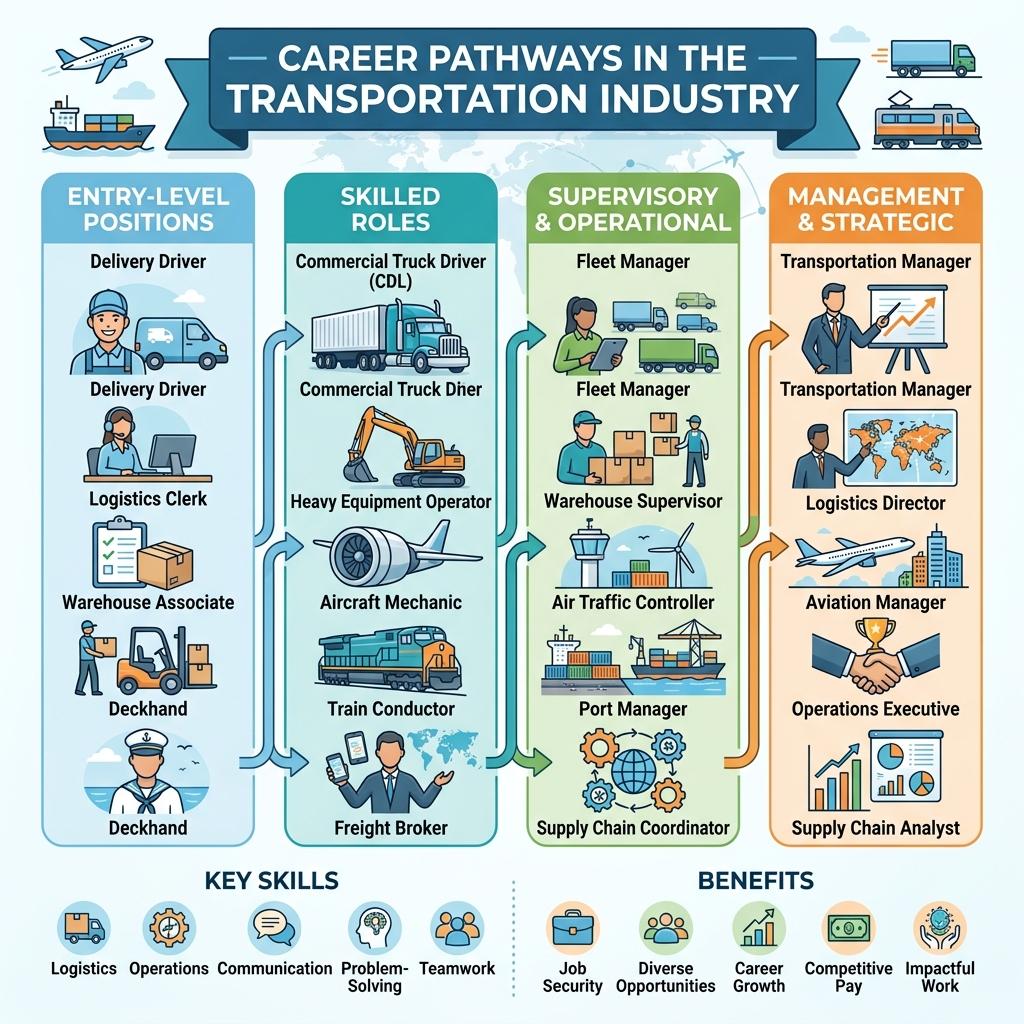
What are the most in-demand entry-level jobs in the transportation industry?
The transportation industry offers numerous entry-level roles requiring minimal prior experience. Some of the most in-demand positions include:
- Delivery Drivers (Local and regional)
- Package Handlers and Warehouse Workers
- Dispatcher Assistants
- Flight Attendants
- Ramp Agents
These roles often provide on-the-job training and serve as excellent stepping stones for advanced career paths in logistics, fleet management, and supply chain operations.
How can a commercial truck driver transition into fleet management?
Transitioning from driving to fleet management requires a shift from operational skills to leadership and strategic planning. Here is a typical path:
- Gain Experience: Build a clean driving record and understand DOT (Department of Transportation) compliance.
- Get Educated: Pursue certifications like the Certified Transportation Professional (CTP) or a degree in supply chain management.
- Take on Office Roles: Move into a dispatcher or driver supervisor role first to understand routing and personnel management.
- Network: Build relationships with current fleet managers and express interest in administrative duties.
What are the basic requirements to become an air traffic controller?
Becoming an air traffic controller in the United States is highly competitive and heavily regulated. Basic requirements include:
- Being a U.S. citizen under the age of 31 upon application.
- Passing a rigorous medical evaluation and background check.
- Holding a bachelor’s degree, 3 years of progressive work experience, or a combination of both.
- Achieving a passing score on the Air Traffic Skills Assessment (ATSA).
Once selected, candidates must complete intensive training at the FAA Academy.
What is the typical salary range for management roles in logistics and transportation?
Management salaries in transportation vary significantly based on experience, location, and the specific sector. Below is a general overview of median annual salaries:
| Job Title | Median Annual Salary |
|---|---|
| Fleet Manager | $65,000 - $85,000 |
| Logistics Manager | $80,000 - $110,000 |
| Transportation Director | $100,000 - $135,000 |
| Supply Chain Director | $115,000 - $150,000+ |
Earning advanced degrees or specialized certifications can push professionals into the higher end of these salary brackets.
How are automation and AI affecting career prospects in transportation?
Automation and AI are rapidly transforming the transportation industry, shifting job demands rather than purely eliminating them. While autonomous vehicles and automated warehouse robots may reduce the need for some manual driving and sorting roles over time, they are creating a massive surge in tech-focused transportation jobs.
There is a growing demand for data analysts, autonomous fleet technicians, AI systems engineers, and cybersecurity experts. Professionals who upskill and adapt to working alongside automated systems will find lucrative, future-proof career opportunities.
What steps should I take to start a career in maritime transportation?
Entering the maritime industry requires specific training and credentialing. Follow these steps to get started:
- Obtain a TWIC Card: Apply for a Transportation Worker Identification Credential for access to secure maritime facilities.
- Get Your MMC: Apply for a Merchant Mariner Credential through the U.S. Coast Guard.
- Complete STCW Training: Pass the Standards of Training, Certification, and Watchkeeping for Seafarers basic safety training.
- Find Entry-Level Work: Apply for positions like Ordinary Seaman (OS) or Wiper to gain sea time.
- Upgrade Licenses: Accumulate sea hours and take exams to advance to an officer role.
What soft skills are essential for career advancement in public transit?
While technical knowledge is important, advancing into management or supervisory roles in public transit relies heavily on soft skills:
- Customer Service: Handling passenger complaints and ensuring public satisfaction.
- Crisis Management: Remaining calm and making quick decisions during emergencies, breakdowns, or delays.
- Communication: Clearly relaying information between drivers, dispatchers, and passengers.
- Empathy and Patience: Dealing professionally with diverse populations.
Mastering these skills allows professionals to transition easily from operator roles into transit planning and operations management.
Are there remote work opportunities in the transportation sector?
Yes, remote work is becoming increasingly common in the transportation industry, particularly for roles that do not require physical handling of freight or operating vehicles. Common remote or hybrid roles include:
- Freight Brokerage and Logistics Sales
- Transportation Planners and Route Analysts
- Supply Chain Consultants
- Remote Dispatchers (utilizing cloud-based fleet management software)
The rise of digital freight matching platforms and advanced logistics software has made it easier than ever to manage global supply chains from a home office.
What are the career advancement opportunities for a railway engineer?
Railway engineers have a structured career progression, often advancing through both technical and managerial tracks:
- Junior Engineer: Focuses on track maintenance, signal testing, or assisting in locomotive design under supervision.
- Senior Engineer: Leads specific projects, such as designing new transit lines or upgrading control systems.
- Project Manager: Oversees large-scale infrastructure projects, managing budgets, contractors, and timelines.
- Director of Engineering: Directs the entire engineering strategy for a railway company, ensuring safety compliance and overseeing technological integration.
How can networking accelerate career development in transportation?
Networking is highly beneficial in transportation due to the industry's interconnected nature. Building relationships with suppliers, carriers, and regulators can open doors to unadvertised job opportunities and valuable mentorships.
Professionals should join industry-specific organizations, such as the Council of Supply Chain Management Professionals (CSCMP) or the American Public Transportation Association (APTA). Attending trade shows, participating in regional logistics councils, and engaging on professional platforms can help you stay updated on industry trends and connect with headhunters.