 jobdayta.com
 Jobs and Career in Utility Industry
Utility services encompass essential sectors such as electricity, water, gas, and waste management that facilitate daily life and economic activities. These services rely on complex infrastructure and advanced technologies to ensure reliable supply, safety, and sustainability. Efficient utility management reduces environmental impact and supports smart city development through real-time data monitoring and automation. Innovations in renewable energy integration and grid modernization are transforming traditional utility frameworks for enhanced resilience and customer engagement.
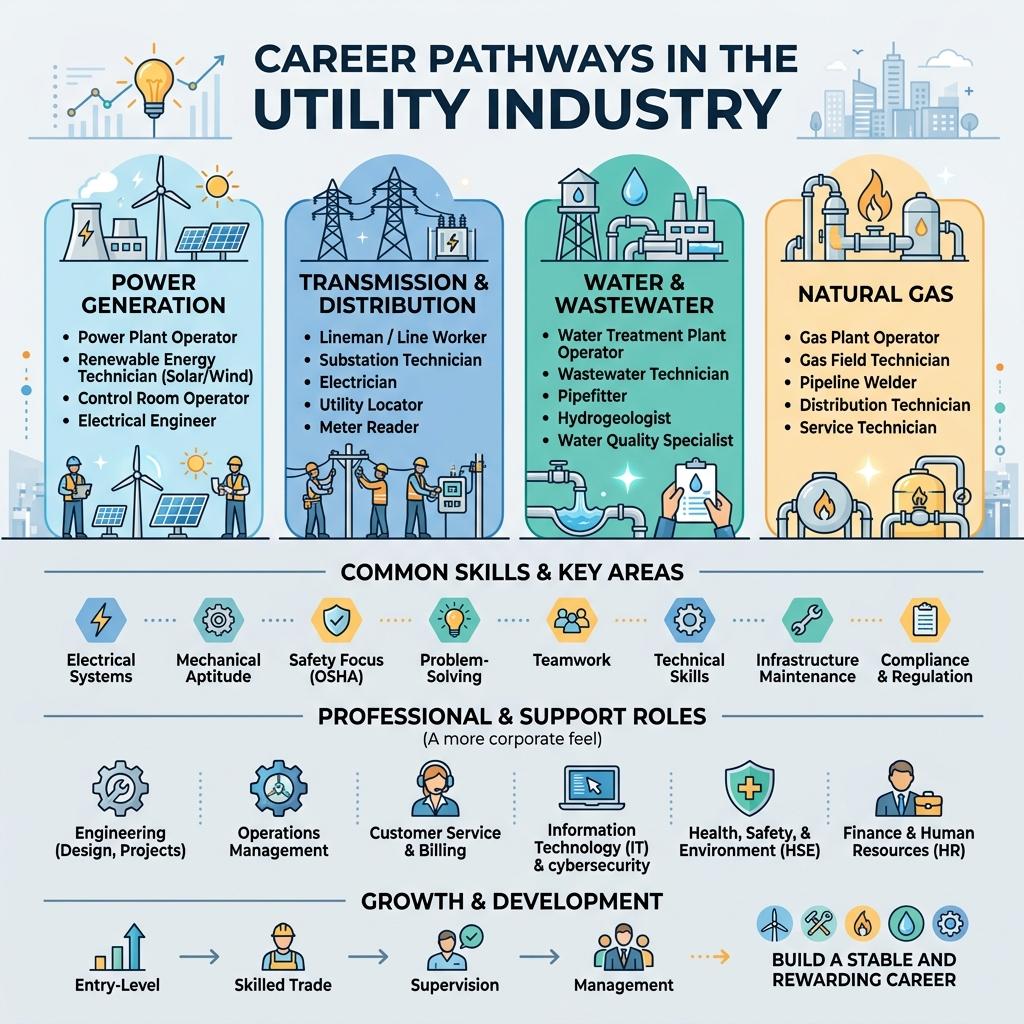
What are the primary sectors within the utility industry for job seekers?
The utility industry is a broad field responsible for providing essential public services. Job seekers can explore career opportunities across four primary sectors:
- Electric Power: Involves generation, transmission, and distribution of electricity.
- Natural Gas: Focuses on the extraction, refinement, and safe pipeline distribution of gas.
- Water and Wastewater: Centers on water purification, distribution, and sanitary sewage treatment.
- Renewable Energy: A rapidly growing sector dedicated to sustainable resources like solar, wind, and hydroelectric power.
What are some common entry-level utility roles and their minimum requirements?
There are numerous pathways into the utility sector depending on your educational background. Below is a breakdown of common entry-level roles:
| Job Title | Minimum Education | Key Focus |
|---|---|---|
| Meter Reader | High School Diploma | Data collection and field navigation |
| Apprentice Lineworker | High School + Trade Program | Physical labor and safety compliance |
| Junior Data Analyst | Bachelor's Degree | Grid efficiency and usage metrics |
| Customer Service Rep | High School Diploma | Client communication and billing |
What skills are required to become a Smart Grid Engineer?
A Smart Grid Engineer integrates traditional electrical systems with modern digital communications. This role requires a blend of specific competencies:
- Technical Skills:
- Power Systems: Understanding of high-voltage transmission and load balancing.
- IoT & Networking: Experience with connected sensors and SCADA systems.
- Cybersecurity: Ability to protect critical infrastructure from digital threats.
- Soft Skills:
- Analytical Problem Solving: Quickly identifying grid faults.
- Cross-functional Communication: Translating complex data for non-technical stakeholders.
How does career progression typically look for a Lineworker?
The lineworker career path is highly structured, emphasizing hands-on experience, safety training, and progressive leadership. The standard trajectory includes:
- Apprentice Lineworker: Learning the trade under strict supervision, typically lasting 3 to 4 years.
- Journeyman Lineworker: A fully qualified professional capable of working independently on high-voltage lines.
- Crew Foreman/Lead: Managing a team of journeymen and apprentices, ensuring OSHA safety standards are met on-site.
- Operations Manager: Transitioning to an office-based role to oversee regional grid maintenance, budget, and large-scale storm response logistics.
How is the shift to renewable energy impacting utility career opportunities?
The global transition to renewable energy is completely reshaping the utility job market. As traditional coal and fossil fuel plants are retired, there is a massive surge in demand for green energy professionals. Utilities are aggressively hiring solar technicians, wind turbine mechanics, and battery storage engineers. Furthermore, current utility workers are being offered reskilling programs to transition from fossil-fuel operations to renewable grid management. This shift not only creates thousands of new jobs but also ensures long-term job security for those willing to adapt to sustainable technologies.
Which certifications are highly valued for career advancement in utilities?
Earning specialized certifications can significantly accelerate career growth and increase earning potential in the utility sector. Highly sought-after certifications include:
- NERC Certification: Essential for system operators managing the bulk electric system reliability.
- PMP (Project Management Professional): Valuable for engineers and managers overseeing large-scale infrastructure upgrades.
- OSHA 30-Hour Construction: Crucial for field supervisors and safety managers to ensure regulatory compliance.
- LEED Certification: Highly regarded for professionals working in energy efficiency and green building integration.
What is the average salary range for key technical roles in the US utility sector?
The utility industry is known for offering competitive compensation and excellent benefits. Below are estimated annual salary ranges for vital technical positions:
| Role | Entry-Level Salary | Senior-Level Salary |
|---|---|---|
| Electrical Engineer | $70,000 | $130,000+ |
| Journeyman Lineworker | $65,000 | $110,000+ |
| Water Plant Operator | $45,000 | $85,000+ |
| SCADA Technician | $60,000 | $105,000+ |
How is Data Analytics changing modern utility jobs?
Data analytics is revolutionizing how utilities operate, shifting the industry from reactive maintenance to proactive management. This transformation creates new career paths while evolving existing ones:
- Predictive Maintenance: Analysts use sensor data to predict equipment failures before they happen, directing field crews more efficiently.
- Load Forecasting: Data scientists analyze weather and consumer habits to optimize power generation.
- Customer Insights: By analyzing smart meter data, analysts help utility companies design better energy-saving programs and customized billing plans for consumers.
Are there specific opportunities for transitioning military veterans in the utility industry?
Yes, transitioning military veterans are highly sought after in the utility sector. The industry heavily values the discipline, safety-consciousness, and technical aptitude developed in the armed forces. Initiatives like the Troops to Energy Jobs program specifically help veterans translate their military experience into civilian utility careers. Roles in logistics, nuclear operations, heavy equipment operation, and field engineering are natural fits for veterans, often allowing them to bypass entry-level requirements and move quickly into supervisory positions.
What are the best strategies for a recent graduate to secure a utility job?
Breaking into the utility industry as a recent graduate requires a mix of targeted networking and practical experience. To stand out, graduates should:
- Pursue Internships/Co-ops: Gain hands-on experience through utility-sponsored summer programs, which frequently lead to full-time offers.
- Join Professional Associations: Become a member of organizations like the IEEE (for power engineers) or AWWA (for water professionals) to network with hiring managers.
- Highlight Reliability and Safety: Tailor your resume to emphasize these two core industry values.
- Be Geographically Flexible: Willingness to relocate to rural or suburban areas can drastically increase your job options.