 jobdayta.com
 Jobs and Career in Automotive Industry
The automotive industry drives global innovation through advanced vehicle manufacturing and cutting-edge technologies. Key sectors include electric vehicles, autonomous driving systems, and smart mobility solutions that enhance transportation efficiency. Automotive market trends focus on sustainability, connectivity, and stringent regulatory compliance to reduce environmental impact. Leading companies invest heavily in research and development to meet evolving consumer demands and technological advancements.
What are the primary career sectors within the automotive industry?
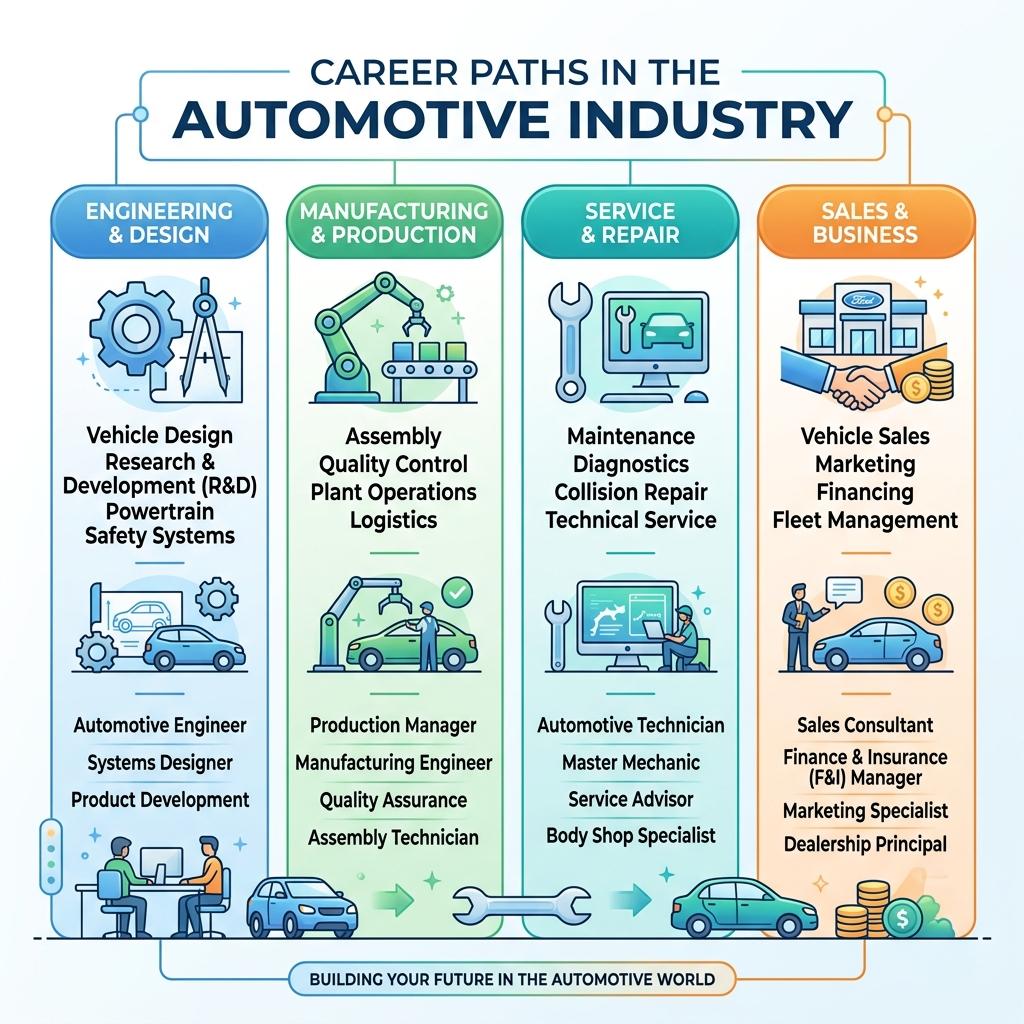
The automotive industry is broad, offering career opportunities across several distinct sectors:
- Engineering & Design: Focusing on vehicle aesthetics, mechanical systems, aerodynamics, and software integration.
- Manufacturing & Production: Involving assembly line workers, robotics technicians, plant managers, and quality control inspectors.
- Sales & Marketing: Encompassing dealership sales roles, corporate marketing, public relations, and market research.
- Service & Aftermarket: Including auto mechanics, parts managers, collision repair specialists, and service advisors.
What skills are currently in highest demand for automotive engineering?
As vehicles become increasingly advanced, engineering demands have shifted from purely mechanical to digital. The most sought-after skills include:
- Software Engineering: Crucial for infotainment systems, autonomous driving algorithms, and over-the-air (OTA) updates.
- Electrical & Battery Engineering: Essential for the rapidly growing Electric Vehicle (EV) market.
- Data Analysis & AI: Used for predictive maintenance, fleet management, and autonomous vehicle testing.
- Advanced CAD/CAM: For lightweight component design and 3D modeling.
Engineers who combine traditional automotive knowledge with programming skills are highly competitive.
How is the shift to Electric Vehicles (EVs) impacting automotive jobs?
The transition to EVs is fundamentally restructuring automotive employment. Traditional roles centered around Internal Combustion Engines (ICE), such as exhaust and fuel system manufacturing, are experiencing slower growth.
Conversely, there is a massive surge in demand for battery technicians, electrical engineers, and charging infrastructure specialists. Furthermore, auto mechanics must now undergo specialized high-voltage training to safely service EVs. Overall, the shift is moving the industry away from purely mechanical roles toward software, chemical, and electrical disciplines.
What is the typical career progression for an automotive technician?
The career path for an automotive technician typically follows a structured progression based on experience and certification:
- Apprentice/Lube Technician: Performs basic maintenance like oil changes and tire rotations while learning under supervision.
- Line Technician: Handles standard mechanical repairs, component diagnostics, and parts replacement.
- Master Technician: Holds advanced certifications (e.g., ASE Master Status) and tackles complex electrical, transmission, and engine diagnostics.
- Shop Foreman or Service Manager: Oversees other technicians, manages shop workflow, and handles customer service escalations.
What are some of the highest-paying jobs in the automotive industry?
The most lucrative positions usually require advanced degrees, specialized technical knowledge, or extensive leadership experience. Here are examples of high-paying roles:
| Job Title | Primary Focus |
|---|---|
| Automotive Software Architect | Designing autonomous logic and vehicle operating systems |
| Chief Automotive Engineer | Overseeing entire vehicle design programs from concept to launch |
| Supply Chain Director | Managing global parts sourcing, logistics, and vendor contracts |
| Dealership General Manager | Overseeing sales volume, service department revenue, and profitability |
Do I need a university degree to work in automotive manufacturing?
Not necessarily. The need for a degree depends entirely on the specific career track you are pursuing:
- No Degree Required: Assembly line workers, machine operators, and material handlers usually only need a high school diploma and receive on-the-job training.
- Trade Certificate/Associate Degree: Roles like CNC machinists, robotics maintenance technicians, and quality inspectors often require vocational training.
- Bachelor's Degree or Higher: Manufacturing engineers, plant managers, and supply chain analysts typically need a four-year university degree.
What are the emerging roles in automotive technology?
As cars transform into connected smart devices, several cutting-edge technology roles have emerged:
- Automotive Cybersecurity Analyst: Protects internal vehicle networks and cloud connections from hacking and unauthorized access.
- ADAS Engineer: Develops Advanced Driver Assistance Systems like lane-keep assist, adaptive cruise control, and automated parking.
- Telematics Specialist: Works on systems that transmit vehicle data to the cloud for real-time fleet tracking and remote diagnostics.
- Machine Learning Engineer: Trains AI models using camera and LiDAR sensor data to improve autonomous driving capabilities.
How can a traditional mechanic transition into an EV specialist?
Transitioning to an EV specialist requires specific, safety-focused education to handle high-voltage systems. Steps include:
- Complete High-Voltage Safety Training: Learn the protocols for de-energizing vehicles and using insulated tools safely.
- Obtain Industry Certifications: Pursue credentials like the ASE L3 (Light Duty Hybrid/Electric Vehicle Specialist) certification.
- Attend OEM-Specific Training: Manufacturers like Tesla, Ford, and GM offer specialized factory training programs for their specific battery architectures.
- Upgrade Digital Skills: Focus on reading complex wiring diagrams and using digital multimeters, as EV diagnostics are highly software-driven.
What qualifications are most beneficial for automotive sales professionals?
While a formal degree isn't strictly required for automotive sales, specific skills and knowledge drastically improve a salesperson's career trajectory:
- Product Knowledge: A deep understanding of vehicle specifications, trim levels, and competitor comparisons.
- Interpersonal Skills: Active listening, empathy, and strong negotiation abilities to build customer trust.
- Financial Literacy: Understanding loan terms, lease agreements, and interest rates to help customers secure financing.
- CRM Experience: Familiarity with Customer Relationship Management software to track leads, follow-ups, and customer retention.
What is the long-term job outlook for the automotive industry?
The long-term outlook for the automotive industry is a mix of transformation and steady growth. While overall employment remains stable, the nature of the jobs is shifting dramatically.
Traditional manufacturing and internal combustion engine repair roles may see stagnation or slight declines. However, this is heavily offset by explosive job growth in green energy manufacturing, battery recycling, software development, and autonomous infrastructure.
Professionals who are willing to continuously upskill—particularly in digital tools, electrification, and automation—will find robust career stability and high demand over the next decade.