 jobdayta.com
 Jobs and Career in Agriculture Industry
Agriculture is the science and practice of cultivating soil, growing crops, and raising livestock for food, fiber, and other products essential to human life. Modern agricultural techniques integrate advanced technologies such as precision farming, biotechnology, and sustainable resource management to increase productivity and reduce environmental impact. Global agricultural output supports the food security of billions, playing a critical role in economic development and rural livelihoods. Innovations in crop genetics, irrigation systems, and pest control continue to transform farming efficiency and resilience against climate change.
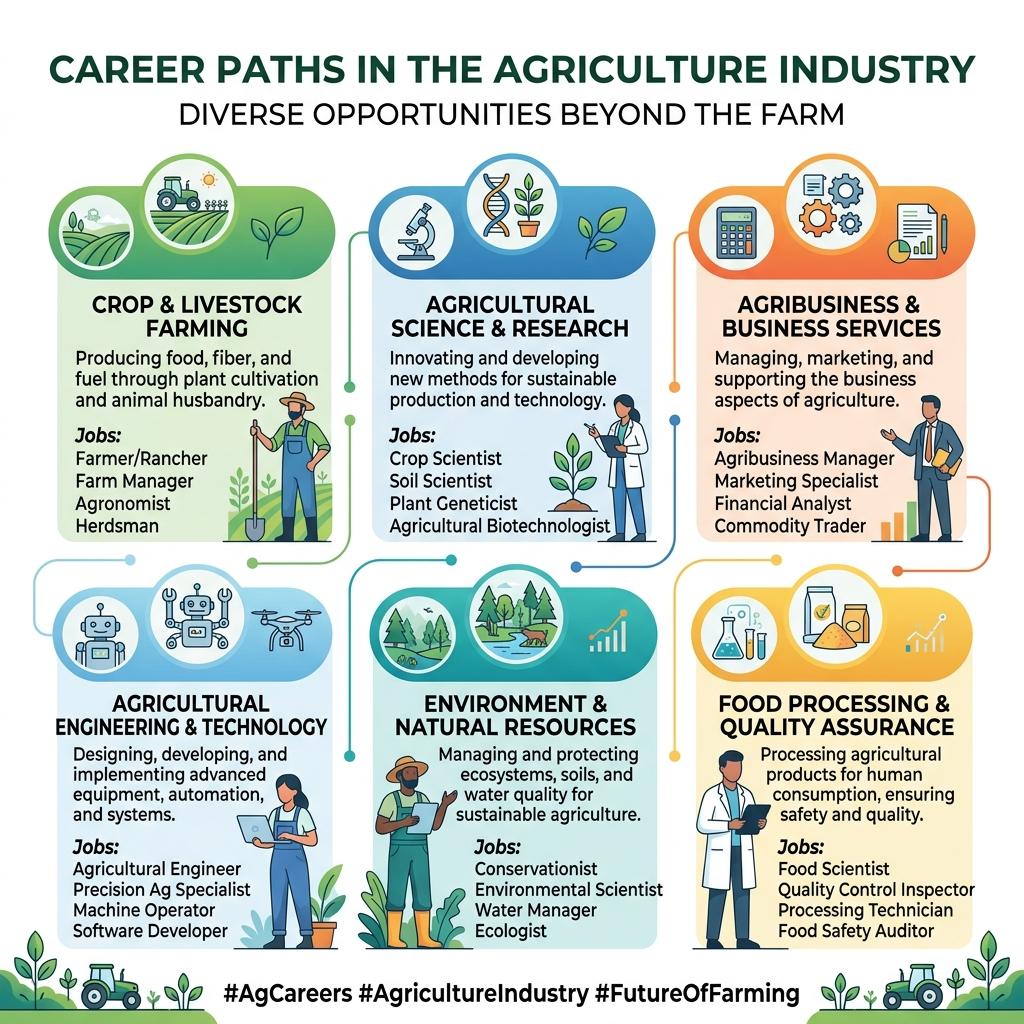
What are the main career sectors within the agriculture industry?
The agriculture industry extends far beyond traditional farming, encompassing several diverse and specialized sectors. Key career areas include:
- Agribusiness: Focuses on the commercial side, including sales, marketing, agricultural economics, and finance.
- Agriscience: Involves research and development in plant genetics, soil science, and crop yield enhancement.
- Farm Management: Direct oversight of farm operations, livestock care, and crop production.
- Agricultural Engineering: Designing advanced machinery, irrigation systems, and sustainable farming technology.
Each of these sectors offers unique entry points and career progression paths for professionals with varying educational backgrounds.
How is technology changing jobs in agriculture?
Technology has completely revolutionized agricultural careers, shifting the focus towards precision, automation, and sustainability. Modern agriculture professionals frequently use advanced tech tools to optimize yields and reduce waste.
- Drones & Satellites: Used by agronomists to monitor crop health and field conditions from above.
- Artificial Intelligence: Data analysts use AI algorithms to predict weather patterns and prevent pest outbreaks.
- Robotics: Automation engineers design self-driving tractors and robotic harvesters.
Consequently, there is a massive demand for tech-savvy candidates, making IT and engineering skills highly valuable in today's agricultural job market.
What educational backgrounds are most in-demand for agricultural careers?
While hands-on experience is incredibly valuable, specific college degrees open doors to specialized, high-paying roles in the industry.
| Degree Field | Typical Career Roles |
|---|---|
| Agricultural Economics | Commodity Trader, Financial Analyst |
| Agronomy / Plant Science | Soil Scientist, Crop Consultant |
| Agricultural Engineering | Irrigation Specialist, Equipment Designer |
| Food Science | Quality Assurance Manager, R&D Scientist |
Additionally, candidates with traditional degrees in business, supply chain management, or computer science are highly sought after by large agribusiness corporations.
How can someone with no farming background start a career in agriculture?
You do not need to grow up on a farm to build a successful career in this industry. Here is a recommended pathway for beginners:
- Gain Education: Pursue a relevant degree or certification in agribusiness, food science, or environmental science.
- Secure Internships: Complete internships with agribusinesses, ag-tech startups, or government agencies like the USDA.
- Leverage Transferable Skills: Apply existing skills in IT, human resources, marketing, or logistics to agricultural companies.
- Network: Attend ag-tech conferences or join organizations like Future Farmers of America (FFA) alumni groups.
Corporate agricultural roles prioritize business acumen and technical expertise over direct farming experience.
What are some high-paying jobs in the agriculture sector?
The agriculture industry offers lucrative opportunities, particularly in science, engineering, and upper management. Below are some high-paying roles and their general salary expectations:
| Job Title | Average Annual Salary (USD) |
|---|---|
| Agricultural Engineer | $80,000 - $100,000+ |
| Agronomist | $60,000 - $90,000 |
| Agribusiness Executive | $100,000 - $150,000+ |
| Food Scientist | $70,000 - $105,000 |
Salaries vary significantly based on geographic location, education level, and years of experience. Leadership roles often include additional bonuses and profit-sharing.
What career opportunities exist in sustainable agriculture?
As climate change impacts global food systems, sustainable agriculture has become a major career growth area. Professionals in this sector focus on eco-friendly farming methods and resource conservation.
- Conservation Scientists: Advise farmers on improving land quality, preventing erosion, and minimizing environmental impact.
- Organic Farm Managers: Oversee crop production strictly without synthetic fertilizers or chemical pesticides.
- Sustainability Coordinators: Work for corporate agribusinesses to ensure practices meet environmental regulations and carbon reduction goals.
These roles are ideal for individuals who are passionate about environmental protection, ecology, and long-term global food security.
Are there government job opportunities in agriculture?
Yes, government agencies play a crucial role in regulating, supporting, and researching agricultural practices. Agencies like the USDA, EPA, and FDA employ thousands of agricultural professionals.
- Agricultural Inspectors: Ensure compliance with food safety, animal welfare, and border bio-security regulations.
- Extension Agents: Act as a bridge between university research and local farmers, providing community education and technical support.
- Policy Analysts: Research and draft public policy related to agricultural subsidies, trade agreements, and land conservation.
Government roles typically offer excellent job security, comprehensive health benefits, and a highly structured path for career advancement.
What soft skills are essential for career development in agribusiness?
Technical and scientific knowledge must be paired with strong soft skills to successfully climb the career ladder in agribusiness.
- Problem-Solving: Agriculture is heavily impacted by unpredictable factors like weather and pests, requiring quick, adaptable decision-making.
- Communication: Professionals must be able to explain complex scientific or technical data to farmers, corporate stakeholders, and the public clearly.
- Negotiation: Absolutely essential for roles in agricultural sales, commodity trading, and procurement.
- Resilience: The industry can be physically and mentally demanding, requiring immense patience and perseverance.
Actively developing these skills will significantly accelerate promotion to managerial positions.
Can an agriculture career offer international travel and global opportunities?
Absolutely. Agriculture is a heavily globalized industry, dealing with international supply chains, global food security, and cross-border trade.
- International Trade Specialists: Navigate foreign tariffs, export laws, and global market trends to sell agricultural products overseas.
- Ag-Tech Consultants: Travel globally to implement and train locals on new farming technologies in developing nations.
- NGO Aid Workers: Organizations like the World Food Programme hire agricultural specialists to improve farming infrastructure in impoverished regions.
Professionals who speak multiple languages and understand international economics are highly valued and frequently travel for these global roles.
What is the future job outlook for the agriculture industry?
The overall job outlook for agriculture is exceptionally positive, driven by the pressing need to feed a rapidly growing global population. The sector is evolving, creating new career pathways.
- Key Drivers of Future Growth:
- Population Growth: Expected to reach nearly 10 billion by 2050, requiring a massive increase in global food production.
- Climate Change: Creates urgent demand for innovators who can develop drought-resistant crops and sustainable farming practices.
- Declining Roles: Traditional manual labor jobs are steadily decreasing due to the rise of automation and robotics.
Therefore, career development should focus heavily on specialized education, technology, and management to ensure long-term job security.