 jobdayta.com
 Jobs and Career in Construction Industry
Construction involves the process of building infrastructure such as residential, commercial, and industrial structures. It encompasses planning, design, financing, and management of projects to ensure safety and compliance with regulations. Advanced materials like concrete, steel, and sustainable resources play a crucial role in modern construction methods. Efficient construction practices contribute to urban development and economic growth worldwide.
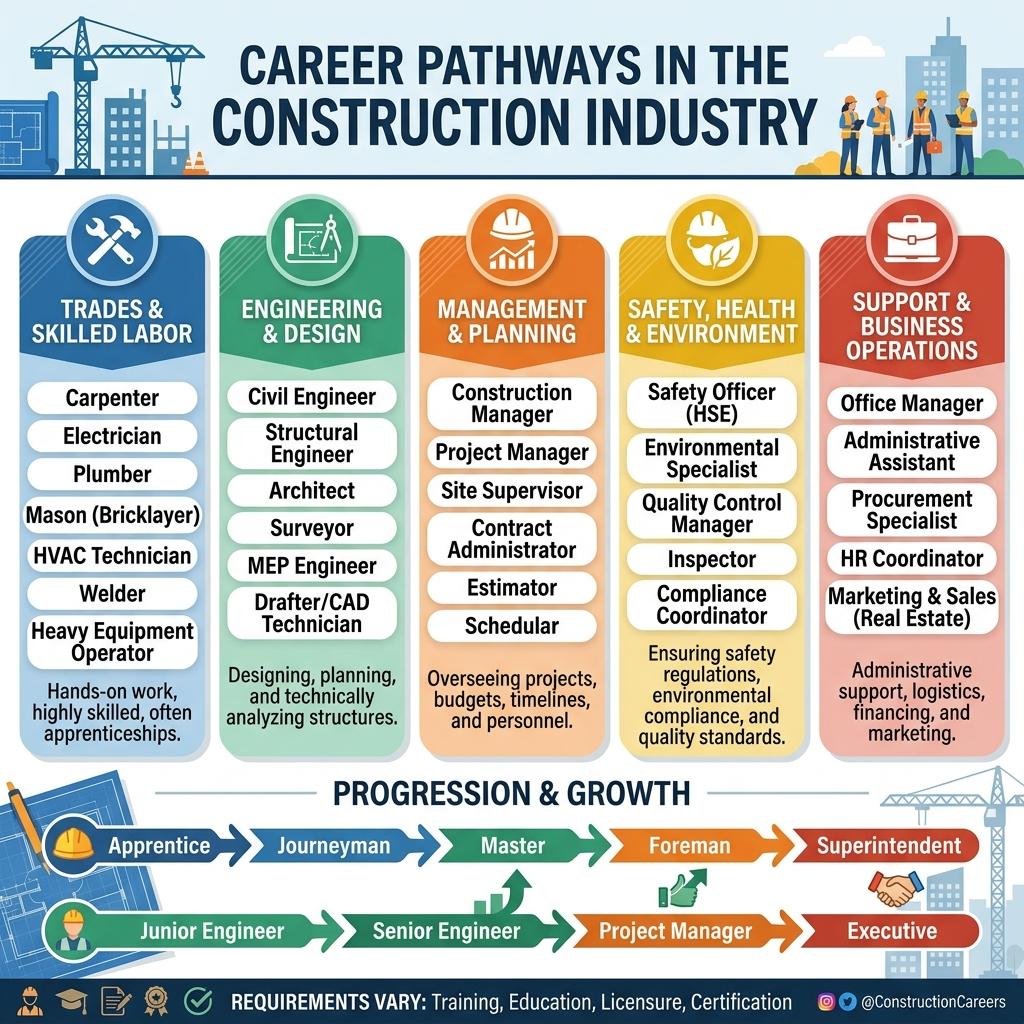
What are the most common entry-level jobs in the construction industry?
The construction industry offers various entry-level roles that require minimal prior experience. These positions provide an excellent foundation for understanding job site operations:
- General Laborer: Performs physical tasks, site clean-up, and assists skilled tradespeople.
- Apprentice: Learns a specific skilled trade (e.g., plumbing, electrical, carpentry) through hands-on training and classroom study.
- Project Coordinator: An office-based role focused on processing paperwork, tracking materials, and assisting project managers.
- Estimator Trainee: Assists senior estimators in calculating material costs and labor requirements for future projects.
How can I advance from a general laborer to a management position?
Transitioning from the field to a management role, like a Site Superintendent or Project Manager, requires a mix of experience, networking, and education. Follow these steps:
- Master your current role: Demonstrate reliability, a strong work ethic, and a proactive attitude on the job site.
- Gain cross-functional knowledge: Observe other trades to understand the overall sequencing of a construction project.
- Earn certifications: Complete safety courses (like OSHA 30) and industry-specific management programs.
- Pursue further education: Consider an associate's or bachelor's degree in Construction Management.
- Express interest: Communicate your career goals to your supervisors and ask to take on leadership tasks.
What are the highest-paying roles in construction, and what is their average salary?
Career advancement in construction can lead to highly lucrative positions, especially for those in management or specialized engineering roles. Below is a look at top-paying roles and their approximate median salaries in the US:
| Job Title | Estimated Median Salary |
|---|---|
| Construction Manager | $100,000+ |
| Civil Engineer | $90,000+ |
| Elevator Installer/Repairer | $97,000+ |
| Construction Superintendent | $85,000+ |
| Senior Estimator | $95,000+ |
Note: Salaries vary based on location, experience, and employer size.
Are certifications necessary for career development in construction?
While not always mandatory for entry-level work, certifications are highly recommended for career advancement. They validate your skills, improve safety records, and make you more competitive for promotions. Key certifications include:
- OSHA 10 & 30: Essential for safety compliance, field workers, and supervisory roles.
- PMP (Project Management Professional): Highly valued for managing large-scale projects and budgets.
- LEED Green Associate: Crucial for professionals involved in sustainable and eco-friendly building practices.
- CCM (Certified Construction Manager): The gold standard credential for experienced construction managers.
What is the role of a Construction Project Manager?
A Construction Project Manager (PM) bridges the gap between field operations and the corporate office. They are ultimately responsible for ensuring a project is completed on time, within budget, and to the client's specifications. Their primary duties include:
- Developing and managing complex project schedules.
- Creating and tracking the project budget, including material and labor costs.
- Hiring, scheduling, and coordinating subcontractors.
- Acting as the main point of contact for clients, architects, and city inspectors.
- Resolving on-site emergencies and mitigating project risks.
How is technology changing jobs in the construction industry?
Technology is rapidly transforming the construction sector, creating new tech-centric career paths and changing how traditional roles operate. Professionals must adapt to tools that improve efficiency and safety.
Key technological advancements include:
- Building Information Modeling (BIM): Allows estimators and engineers to create detailed 3D project models, reducing physical construction errors.
- Drones: Used by surveyors and site managers for aerial site inspections and topographical mapping.
- Project Management Software: Apps like Procore allow seamless, real-time communication between the field and the office.
Embracing these technologies is vital for modern career development.
What soft skills are essential for career growth in construction?
Technical skills (like reading blueprints or operating machinery) are vital, but soft skills often dictate how high you can climb the career ladder. Essential soft skills in construction include:
- Communication: Clear communication prevents costly mistakes between architects, management, and field workers.
- Problem-Solving: Job sites are unpredictable. Leaders must think on their feet to resolve weather delays, material shortages, or safety hazards.
- Team Leadership: The ability to motivate diverse crews and manage conflicts is critical for Superintendents and Foremen.
- Time Management: Keeping strict schedules ensures projects meet critical deadlines.
Do I need a college degree to succeed in construction?
No, a college degree is not strictly necessary to build a highly successful career in construction. The industry heavily values hands-on experience and hard work.
Many professionals start as laborers or apprentices, master a specific trade, and eventually start their own contracting businesses or become well-paid site superintendents.
However, if your goal is to fast-track into corporate roles—such as a Senior Project Manager, Civil Engineer, or Pre-construction Director—a bachelor’s degree in Construction Management, Engineering, or Architecture is typically required by larger firms.
What are the growing sectors within the construction industry?
The construction industry is constantly evolving, with several sectors showing rapid job growth due to changing global needs and government initiatives. For long-term career development, consider specializing in:
- Green/Sustainable Building: Focuses on energy-efficient designs, solar panel installation, and LEED-certified materials.
- Infrastructure: Heavy civil construction is booming due to government investments in repairing roads, bridges, transit systems, and water grids.
- Smart Home Automation: High demand for electricians and tech specialists to integrate smart tech into residential builds.
- Healthcare Facilities: Aging populations are driving the need for new hospitals and specialized care centers.
What are the typical work conditions and hours for construction professionals?
Work conditions in construction vary significantly depending on your specific job title and sector:
- Field Workers (Trades, Superintendents): Typically work outdoors in varying weather conditions. The work is physically demanding. Shifts often start very early (e.g., 6:00 AM) to maximize daylight and avoid afternoon heat.
- Office Staff (Estimators, Coordinators): Work in standard indoor corporate environments with traditional 9-to-5 hours, though they may visit sites occasionally.
- Project Managers: Split their time between the corporate office and the job site, requiring high flexibility.
Overtime and weekend work are common across all roles as project deadlines approach.