 jobdayta.com
 Jobs and Career in Retail Industry
Retail encompasses the sale of goods and services directly to consumers through physical stores, online platforms, or catalog systems. It involves diverse formats such as supermarkets, specialty shops, department stores, and e-commerce sites, each tailored to specific customer needs and buying behaviors. Innovations in supply chain management, customer experience technologies, and omnichannel strategies drive growth and efficiency within the retail sector. Consumer trends and market analytics play crucial roles in shaping retail merchandising, pricing, and promotional strategies for competitive advantage.
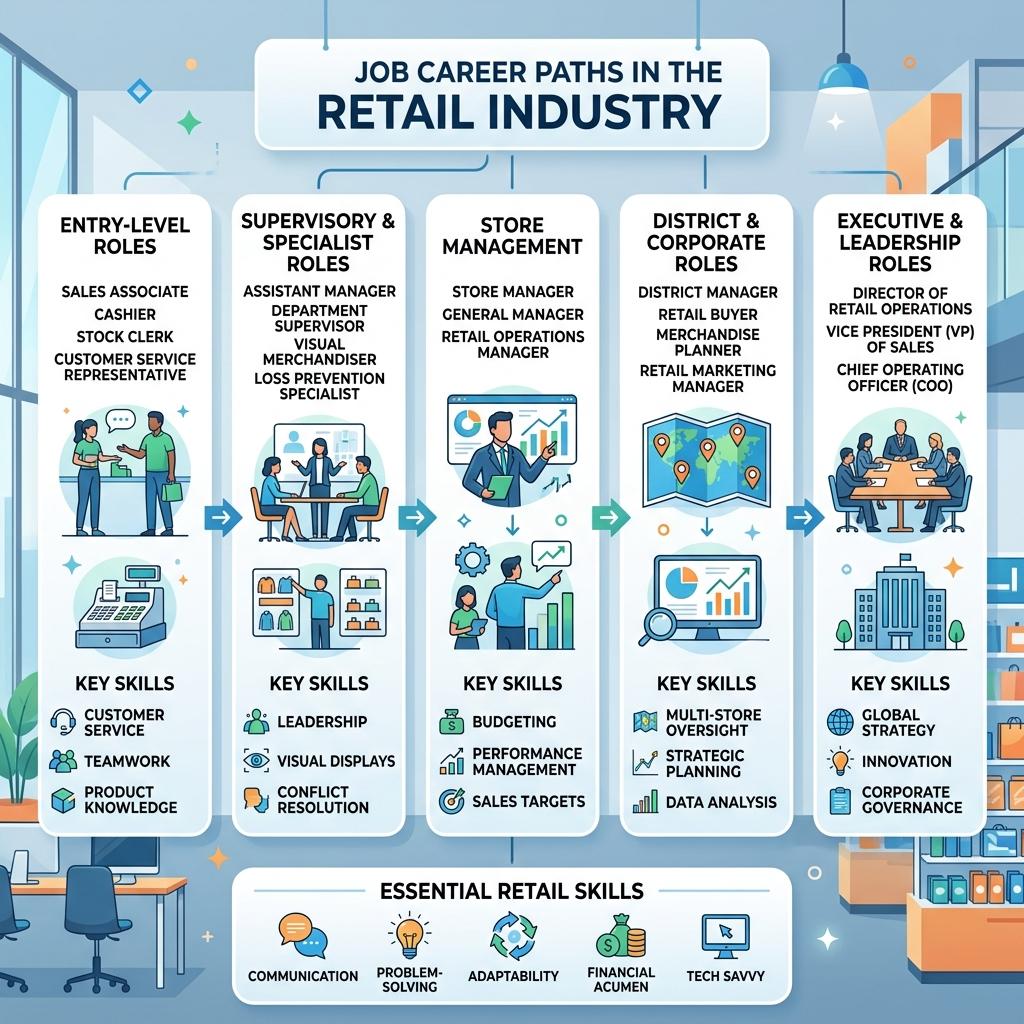
What are the most common entry-level jobs in the retail industry?
The retail industry offers several accessible entry-level positions that require little to no prior experience:
- Sales Associate: Focuses on assisting customers on the sales floor, answering questions, and maintaining store appearance.
- Cashier: Handles financial transactions, processes returns, and manages the point-of-sale (POS) system.
- Stock Clerk / Inventory Associate: Works behind the scenes to receive shipments, organize the stockroom, and replenish shelves.
- Customer Service Representative: Manages customer inquiries, complaints, and product exchanges at a dedicated service desk.
These roles serve as excellent stepping stones, teaching foundational skills in communication, sales, and inventory management necessary for career advancement.
How can a retail sales associate advance to a store manager position?
Advancing from a sales associate to a store manager requires strategic planning and proven leadership. Follow these key steps:
- Master the Basics: Consistently exceed sales targets and provide flawless customer service.
- Communicate Your Goals: Inform your current manager about your career aspirations so they can provide relevant mentorship.
- Seek Cross-Training: Learn operations beyond the sales floor, such as inventory management, scheduling, and cash office procedures.
- Show Initiative: Volunteer to train new hires or lead special merchandising projects to demonstrate leadership.
- Apply for Shift Supervisor: Transition into an intermediate role, like a shift lead or assistant manager, to gain formal management experience.
What are the estimated average salaries for various retail management positions?
Retail management salaries vary significantly based on location, brand size, and experience. Below is a general estimate of annual salaries in the United States:
| Job Title | Estimated Average Salary (USD) |
|---|---|
| Shift Supervisor / Team Lead | $35,000 - $45,000 |
| Assistant Store Manager | $45,000 - $55,000 |
| Store Manager | $55,000 - $80,000 |
| District / Regional Manager | $85,000 - $120,000+ |
Keep in mind that many management roles also include performance-based bonuses, which can significantly increase total compensation.
What essential soft skills are required for a successful career in retail?
While product knowledge can be taught, soft skills are the core of a thriving retail career. The most critical skills include:
- Communication: The ability to clearly explain product features and actively listen to customer needs.
- Empathy: Understanding customer frustrations and handling complaints with grace and patience.
- Adaptability: Thriving in a fast-paced environment where priorities, promotions, and foot traffic change constantly.
- Problem-Solving: Quickly finding alternative solutions when an item is out of stock or a system goes down.
- Teamwork: Collaborating seamlessly with coworkers to ensure the store runs smoothly during peak hours.
Is a college degree necessary to build a successful career in retail?
A college degree is generally not required to build a highly successful career in store-level retail. Many store managers, district managers, and even regional directors started as entry-level associates and worked their way up. In retail operations, hands-on experience, a strong work ethic, and leadership capabilities often outweigh formal education.
However, if you wish to pivot into corporate retail roles—such as merchandising, buying, supply chain management, or retail marketing—a bachelor's degree in business, fashion merchandising, or finance is often preferred or explicitly required by employers.
What is the typical career progression for a Retail Buyer?
A Retail Buyer is responsible for selecting and purchasing the merchandise sold in stores. The typical career ladder looks like this:
- Merchandise Assistant: An entry-level role focusing on administrative tasks, data entry, and tracking purchase orders.
- Assistant Buyer: Supports the buyer by analyzing sales trends, communicating with vendors, and managing smaller product categories.
- Associate Buyer: Takes on more financial responsibility and independently manages moderate-volume categories.
- Senior Buyer: Oversees high-volume departments, dictates seasonal purchasing strategies, and negotiates major vendor contracts.
- Merchandise Director / VP of Merchandising: Leads a team of buyers and sets the overarching product strategy for the entire brand.
How is e-commerce growth affecting traditional retail jobs?
The boom in e-commerce is not destroying retail jobs, but rather transforming them. The impact includes:
- Shift in Duties: Store associates now frequently handle "buy online, pick up in-store" (BOPIS) orders and ship-from-store fulfillments.
- Fewer Cashiers: With the rise of self-checkout and mobile purchasing, traditional cashier roles are declining.
- New Career Paths: There is a massive surge in demand for digital merchandisers, e-commerce customer success agents, and warehouse logistics coordinators.
- Omnichannel Focus: Retail workers are now expected to be comfortable using digital tools to check online inventory and assist customers seamlessly.
What are the main responsibilities of a Visual Merchandiser?
A Visual Merchandiser blends creativity with sales strategy to make a store visually appealing and profitable. Their primary responsibilities include:
- Window Displays: Designing and installing eye-catching storefront windows to drive foot traffic.
- Floor Layouts: Strategically arranging fixtures and aisles to optimize customer flow and highlight high-margin products.
- Mannequin Styling: Dressing mannequins to showcase the latest trends and encourage multi-item purchases.
- Signage and Lighting: Ensuring promotional signs are accurately placed and lighting flatters the merchandise.
- Sales Analysis: Reviewing sales reports to see if specific visual layouts are successfully driving revenue, and pivoting designs if they are not.
What certification programs can boost a retail professional's resume?
Earning certifications can help retail workers stand out for promotions and corporate roles. Some highly regarded options include:
- NRF Foundation Credentials: The National Retail Federation offers certificates in Customer Service and Sales, as well as Business of Retail, which validate foundational retail operations knowledge.
- Category-Specific Certifications: For specialized retail, credentials like the WSET (Wine & Spirit Education Trust) or specific technology certifications are invaluable.
- Management and Leadership: General certificates in project management or leadership from local community colleges can help an associate transition into a Store Manager role.
What are the primary differences between Store Operations and Corporate Retail roles?
Understanding the difference between the two main branches of retail is crucial for career planning:
| Feature | Store Operations | Corporate Retail |
|---|---|---|
| Focus | Execution, daily sales, customer service. | Long-term strategy, planning, brand marketing. |
| Environment | On your feet, working in brick-and-mortar stores. | Office or remote settings, mostly at a desk. |
| Schedule | Irregular hours, including nights, weekends, and holidays. | Standard business hours (Monday - Friday). |
| Entry Requirement | Minimal experience needed to start. | Usually requires a specialized college degree. |
Both paths offer lucrative careers, but they appeal to completely different working styles and skill sets.