 jobdayta.com
 Jobs and Career in Insurance Industry
Insurance provides financial protection against unexpected losses by transferring risk from individuals or businesses to an insurer. It covers various sectors such as health, life, automotive, and property, ensuring compensation for damages or losses incurred. Policies often include premiums, deductibles, and coverage limits, which determine the extent of financial support. Risk assessment and underwriting are critical processes that help insurers evaluate and price insurance products accurately.
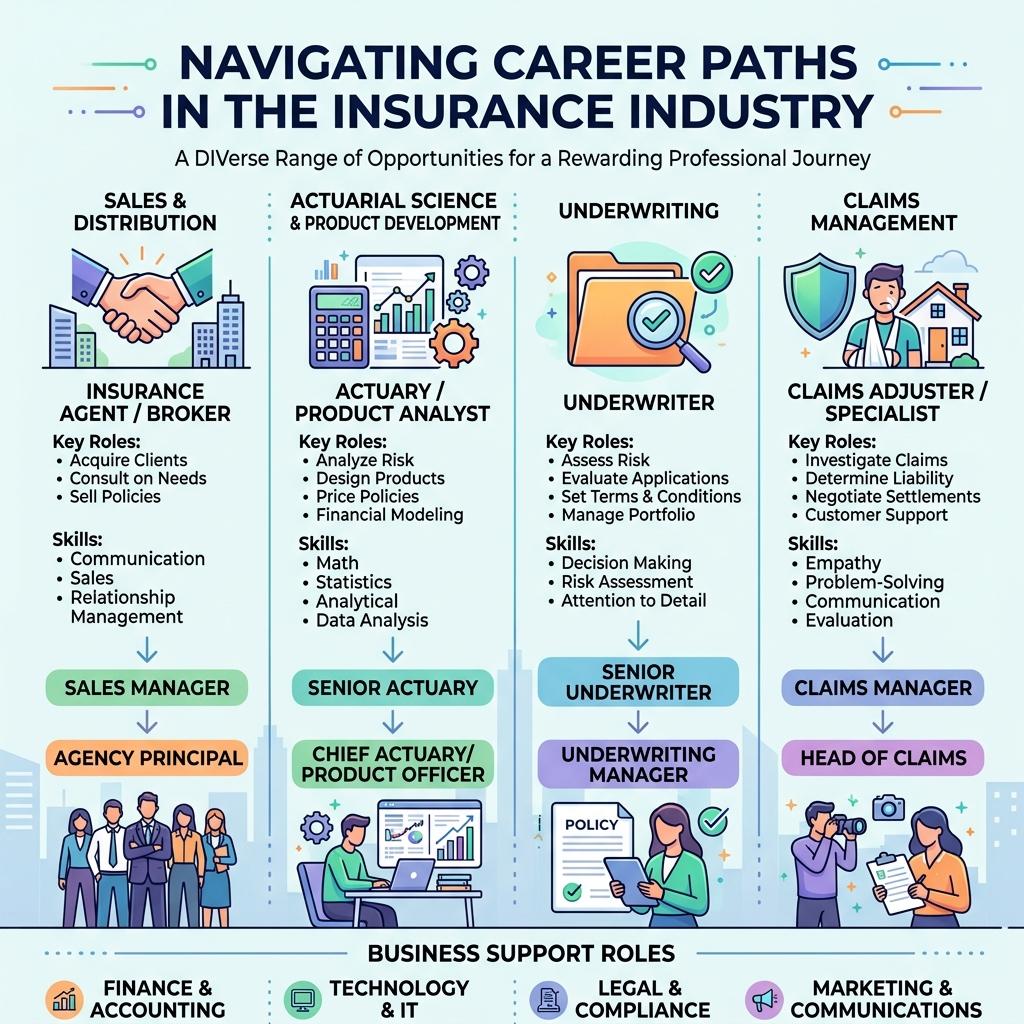
What are the most common entry-level jobs in the insurance industry?
The insurance industry offers numerous pathways for beginners, requiring minimal prior experience. Some of the most common entry-level positions include:
- Customer Service Representative: Handling policyholder inquiries, processing payments, and basic account management.
- Claims Trainee: Assisting in investigating, evaluating, and settling insurance claims under supervision.
- Underwriting Assistant: Gathering risk data, running reports, and preparing documentation for senior underwriters.
- Sales Agent: Selling life, health, or property-casualty policies to individuals and businesses.
These roles provide foundational knowledge about insurance products, state regulations, and customer needs, serving as excellent stepping stones for advanced career development.
How does a career path for an underwriter progress?
Underwriting is a core insurance function with a clear and structured career progression. A typical path looks like this:
- Underwriting Trainee / Assistant: Focuses on data entry, basic risk assessment, and learning company guidelines.
- Junior Underwriter: Evaluates standard risks and approves basic policies.
- Senior Underwriter: Handles complex, high-value accounts and mentors junior staff.
- Underwriting Manager: Oversees a team of underwriters, ensuring profitability and adherence to standards.
- Director/VP of Underwriting: Develops overarching underwriting strategies, manages portfolios, and shapes corporate policy.
Earning professional designations significantly accelerates this progression.
What are the differences between an insurance agent and an insurance broker?
While both roles involve selling insurance and require state licenses, their primary allegiances and operational structures differ significantly:
| Feature | Insurance Agent | Insurance Broker |
|---|---|---|
| Representation | Represents the insurance company. | Represents the buyer/client. |
| Product Offerings | Sells policies from one specific company (captive) or a select few (independent). | Compares policies from multiple different insurers across the market. |
| Binding Authority | Often has the authority to bind coverage immediately for the client. | Cannot bind coverage; must hand the account over to an insurer to finalize. |
What is the role of an actuary, and what skills are required?
Actuaries are the analytical backbone of the insurance industry. They use mathematics, statistics, and financial theory to analyze the financial costs of risk and uncertainty. Their primary job is to help insurers design policies, determine appropriate premium rates, and ensure the company maintains adequate financial reserves to pay future claims.
Key skills required to succeed as an actuary include:
- Advanced mathematical and statistical proficiency.
- Strong computer programming skills (e.g., SQL, R, Python, Excel).
- Keen analytical and problem-solving abilities.
- Strong communication skills to explain complex data to non-technical stakeholders.
What certifications or licenses are needed to advance in an insurance career?
State licenses are legally required for sales and claims roles, while professional designations demonstrate expertise and drive career advancement. Key credentials include:
- State Licenses (Required for specific roles):
- Property & Casualty (P&C) License
- Life & Health (L&H) License
- Claims Adjuster License
- Professional Designations (For career advancement):
- CPCU (Chartered Property Casualty Underwriter): The gold standard for P&C professionals.
- CISR (Certified Insurance Service Representative): Great for customer service managers.
- FCAS/FSA: Fellowship designations required for top-tier actuaries.
Obtaining these credentials often leads to higher salaries and leadership opportunities.
What is the average salary range for common insurance roles?
Salaries in the insurance industry vary widely based on location, experience, and specialization. Here is a general estimate of average annual base salaries in the United States:
| Job Title | Average Annual Salary Range |
|---|---|
| Customer Service Representative | $35,000 - $50,000 |
| Claims Adjuster | $50,000 - $75,000 |
| Insurance Agent/Broker | $50,000 - $100,000+ (Commission based) |
| Underwriter | $60,000 - $90,000 |
| Actuary | $90,000 - $150,000+ |
Note: Base salaries for sales roles and executive positions can increase significantly with bonuses and commissions.
Are there tech-focused careers in the insurance industry?
Yes, the rise of "Insurtech" (Insurance Technology) has created a massive demand for tech professionals. Insurers are rapidly modernizing legacy systems, adopting cloud computing, and utilizing big data. Prominent tech roles include:
- Data Scientists: Building predictive models to improve underwriting accuracy and detect fraud.
- Software Developers: Creating customer-facing mobile apps and automated claims processing systems.
- Cybersecurity Analysts: Protecting highly sensitive personal and financial client data from cyber threats.
- UX/UI Designers: Enhancing the digital experience for policyholders purchasing insurance online.
Tech professionals in insurance enjoy high job security and the opportunity to drive digital transformation.
How is Artificial Intelligence (AI) impacting insurance jobs?
AI is fundamentally reshaping the insurance workforce by automating routine tasks and augmenting human decision-making. Rather than eliminating jobs, AI is largely shifting the nature of the work.
For example, AI chatbots now handle basic customer service inquiries, allowing human representatives to focus on complex, high-empathy client interactions. In underwriting and claims, AI algorithms can instantly process standard applications and assess minor property damages via photo recognition. This allows underwriters and adjusters to concentrate on nuanced, high-value risks and complex fraud investigations.
Consequently, there is a growing career demand for professionals who can bridge the gap between business needs and AI technology.
What does a claims adjuster do, and what are their daily tasks?
A claims adjuster investigates insurance claims to determine the extent of the insuring company's liability. They act as the primary point of contact for a policyholder who has experienced a loss, such as a car accident, workplace injury, or house fire.
A typical day involves a mix of desk work and field work, including:
- Interviewing claimants, witnesses, and experts to gather facts.
- Inspecting property damage physically or via virtual drone tools.
- Reviewing police reports, medical records, and specific policy wording.
- Negotiating settlements and authorizing claim payouts.
This role requires high emotional intelligence alongside strong negotiation and analytical skills.
How can someone pivot into the insurance industry from another field?
The insurance industry highly values transferable skills like customer service, analytical thinking, and sales. To successfully pivot, follow these steps:
- Identify Transferable Skills: Highlight past experiences. Retail workers excel in insurance sales, while healthcare professionals make excellent medical claims adjusters.
- Get Licensed: If aiming for sales or adjusting, passing your state's licensing exam before applying shows initiative and makes you highly hirable.
- Pursue Entry-Level Certifications: Consider introductory courses like the AINS (Associate in General Insurance) to learn industry terminology.
- Leverage Networking: Attend local chapter meetings of insurance associations to connect with hiring managers.
Many agencies and carriers offer robust on-the-job training programs specifically designed for career changers.