 jobdayta.com
 Jobs and Career in Marine Industry
Marine environments encompass vast and diverse ecosystems critical for global biodiversity and climate regulation. Oceanic species like coral reefs, cetaceans, and plankton form complex food webs that support fisheries and coastal economies. Scientific advances in marine biology and technology enable detailed exploration of deep-sea habitats and monitoring of anthropogenic impacts. Conservation efforts focus on mitigating pollution, overfishing, and habitat destruction to preserve marine health.
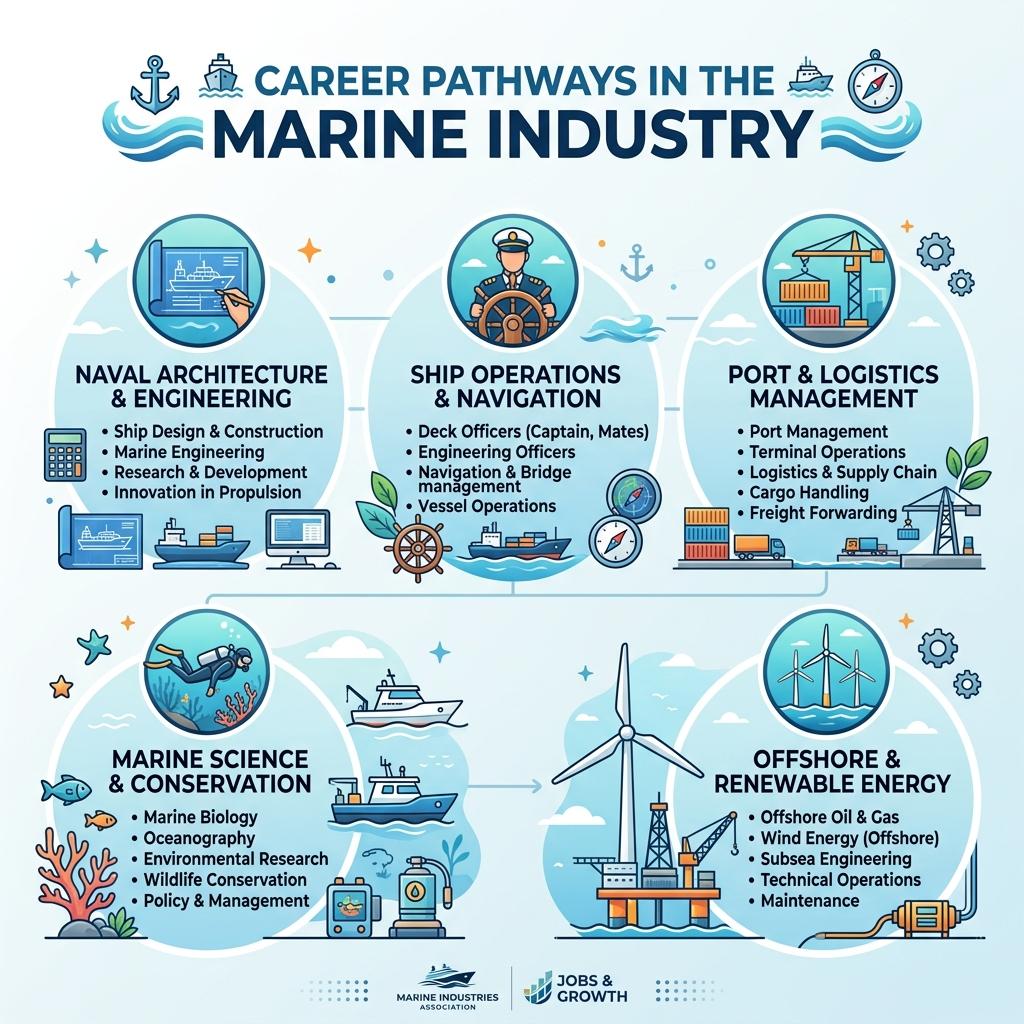
What are the primary career sectors within the marine industry?
The marine industry is vast and offers diverse career pathways. The primary sectors include:
- Shipping and Transportation: Roles like ship captains, deck officers, and logistics managers.
- Marine Engineering and Design: Naval architects and marine engineers who design and build vessels.
- Offshore Energy: Careers in oil, gas, and renewable offshore wind farms.
- Marine Science and Conservation: Marine biologists and oceanographers focusing on ecosystem health.
- Maritime Law and Insurance: Professionals handling maritime regulations, vessel insurance, and dispute resolution.
Each sector offers unique growth opportunities depending on your technical skills, educational background, and professional interests.
What qualifications are required to become a Marine Engineer?
Becoming a Marine Engineer typically requires a combination of formal education and practical training:
- Bachelor’s Degree: Obtain a degree in Marine Engineering, Mechanical Engineering, or Naval Architecture.
- Licensure: Pass national or international licensing exams (such as the USCG license in the US or MCA in the UK).
- STCW Certification: Complete the mandatory Standards of Training, Certification, and Watchkeeping (STCW) basic safety training.
- Sea Time: Accumulate required hours of onboard training through cadetships or maritime apprenticeships.
Continuous professional development and higher-level certifications are required to eventually advance to the rank of Chief Engineer.
What is the typical career progression for a Deck Officer?
A Deck Officer follows a structured, hierarchical career path based on sea-time experience and advanced examinations:
- Deck Cadet: The entry-level training phase involving academic study and guided onboard practical experience.
- Third Officer: Responsible for maintaining life-saving equipment and participating in bridge navigational watches.
- Second Officer: Acts as the ship's primary navigator, planning voyage routes and updating maritime charts.
- Chief Officer (First Mate): The captain's deputy, overseeing cargo operations, vessel maintenance, and deck crew management.
- Captain (Master): The ultimate authority on the vessel, responsible for overall safety, navigation, and commercial operations.
What are the average salaries for common maritime roles?
Salaries in the marine industry vary widely based on rank, vessel type, and region. Below is a general estimate of annual global salaries in USD:
| Job Title | Entry-Level / Junior | Senior / Experienced |
|---|---|---|
| Deck Officer | $40,000 - $60,000 | $80,000 - $120,000+ |
| Marine Engineer | $50,000 - $70,000 | $90,000 - $150,000+ |
| Marine Biologist | $45,000 - $55,000 | $75,000 - $100,000+ |
| Naval Architect | $60,000 - $75,000 | $100,000 - $160,000+ |
Working on specialized vessels, such as offshore drilling rigs or LNG carriers, typically yields higher compensation and hazard pay.
What are the essential soft skills needed for a successful maritime career?
While technical expertise is crucial, soft skills dictate long-term career success in the demanding marine environment:
- Communication: Clear communication is vital for vessel safety, coordinating with diverse crews, and port operations.
- Resilience and Adaptability: Seafarers face long periods away from home, rough weather, and changing schedules.
- Teamwork: Living and working in confined spaces requires excellent collaboration and conflict resolution skills.
- Crisis Management: The ability to remain calm and make swift, accurate decisions during onboard emergencies.
- Cultural Awareness: Marine crews are highly international, demanding respect and understanding of different cultural backgrounds.
How can seafarers transition to shore-based maritime careers?
Transitioning from a seagoing role to a shore-based job is a common career step for experienced mariners seeking better work-life balance. Sea experience is highly valued in many corporate maritime roles.
Common shore-based transitions include:
- Fleet Management: Utilizing onboard experience to manage vessel operations and maintenance from ashore.
- Maritime Education: Becoming an instructor at a maritime academy to train future cadets.
- Port Operations: Working as a harbormaster, port captain, or terminal manager.
- Marine Surveying: Inspecting vessels for regulatory compliance or assessing damage claims for insurance companies.
Networking and obtaining business-oriented certifications can greatly accelerate this transition.
What is the role of a Naval Architect in the marine industry?
A Naval Architect is a specialized engineer responsible for the design, construction, and repair of marine vessels and offshore structures. They ensure that ships are safe, economically viable, and environmentally compliant.
Their core responsibilities include:
- Designing hull forms for optimal hydrodynamics and fuel efficiency.
- Calculating weight distribution to ensure vessel stability and buoyancy.
- Selecting suitable construction materials and managing the shipbuilding process in shipyards.
- Retrofitting existing vessels to meet new global environmental regulations.
This career offers excellent growth, often leading to roles as lead project engineers or technical directors.
Are there emerging "green" career opportunities in the marine sector?
Yes, sustainability is rapidly transforming the marine industry, creating numerous "green" career opportunities. As global regulations push for decarbonization, new roles are emerging:
- Offshore Wind Specialists: Engineers, project managers, and technicians dedicated to building and maintaining offshore wind farms.
- Alternative Fuels Engineers: Experts developing and managing propulsion systems powered by LNG, hydrogen, ammonia, or electric batteries.
- Environmental Compliance Officers: Professionals ensuring vessels meet strict international emissions, ballast water, and waste management standards.
- Marine Conservationists: Scientists focused on minimizing the impact of shipping on marine ecosystems.
These sustainability-focused roles are expected to see massive job growth over the next decade.
What mandatory certifications do all seafarers need before going to sea?
Regardless of rank or department, anyone working on a commercial vessel must complete STCW (Standards of Training, Certification, and Watchkeeping) Basic Safety Training. This ensures a universal standard of emergency preparedness.
The STCW Basic Safety Training consists of four main modules:
- Personal Survival Techniques (PST): How to survive at sea in the event of ship abandonment.
- Fire Prevention and Fire Fighting (FPFF): Identifying fire hazards and operating basic firefighting equipment.
- Elementary First Aid (EFA): Providing immediate medical response to injuries onboard.
- Personal Safety and Social Responsibilities (PSSR): Understanding safety procedures, pollution prevention, and teamwork.
These core certificates must typically be refreshed every five years.
What are the main challenges of working at sea, and how can they be managed?
Working at sea is financially rewarding but presents significant lifestyle challenges. Understanding these before entering the industry is crucial for career longevity.
- Isolation and Homesickness: Seafarers spend months away from family. Management: Utilizing onboard internet to stay connected and building strong camaraderie with crewmates.
- Fatigue: Shift work and changing time zones disrupt sleep. Management: Strictly adhering to mandated rest hours and maintaining a healthy diet and exercise routine onboard.
- Hazardous Environments: Heavy machinery and extreme weather pose physical risks. Management: Rigorous adherence to safety protocols and continuous emergency drill training.
Many shipping companies now offer mental health support programs to help crew members navigate these challenges successfully.