 jobdayta.com
 Jobs and Career in Entertainment Industry
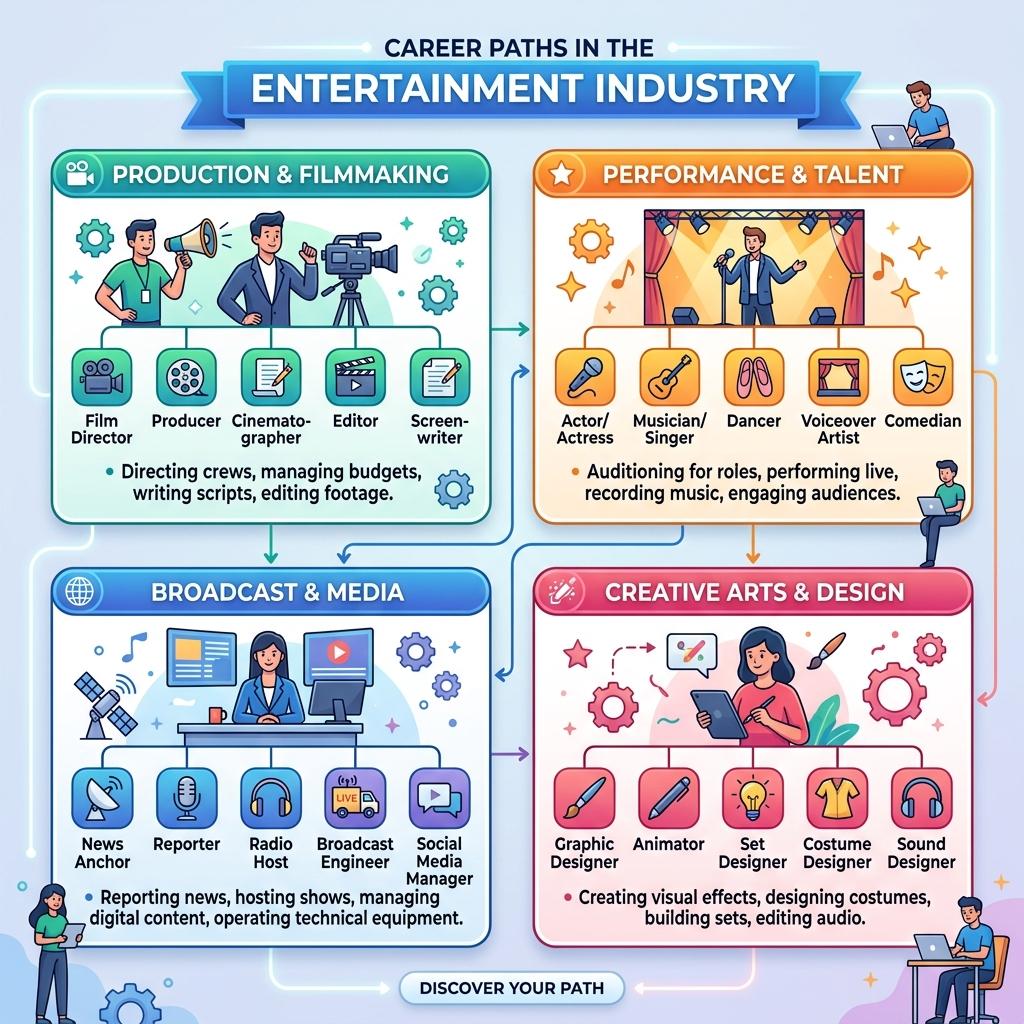
Entertainment encompasses diverse forms such as movies, music, theater, and digital media that engage audiences through storytelling, performance, and interactive experiences. The industry thrives on innovation, leveraging technology like virtual reality and streaming platforms to deliver immersive content worldwide. Entertainment significantly influences culture, shaping social trends and providing escapism through various genres and formats. Major global markets include Hollywood, Bollywood, and the gaming sector, each driving billions in revenue annually.
How do I start a career in film production?
Breaking into film production requires a mix of practical experience and networking. Here is a standard path to get started:
- Education: Obtain a degree or certificate in film, communications, or a related field to understand the basics of the craft.
- Internships: Secure an internship at a production company, studio, or talent agency to gain industry exposure.
- Entry-Level Roles: Work as a Production Assistant (PA). This is the most common stepping stone to learn set etiquette and daily operations.
- Build a Portfolio: Work on independent or short films to develop specific skills, such as camera work, lighting, or directing.
What are some of the highest-paying roles in the entertainment industry?
While income varies greatly based on experience and project scale, leadership and business-oriented roles tend to be the most lucrative.
| Job Title | Role Description |
|---|---|
| Executive Producer | Secures funding, manages budgets, and oversees the entire production process. |
| Showrunner | The leading creative and management force behind a television series. |
| Entertainment Lawyer | Handles contracts, intellectual property rights, and high-stakes talent negotiations. |
| Talent Agent | Secures jobs for artists and takes a percentage commission of their earnings. |
Do I need to live in Los Angeles or New York to succeed in entertainment?
While Los Angeles and New York remain traditional powerhouses for the US entertainment industry, living there is no longer a strict requirement. The rise of streaming platforms has created thriving secondary hubs:
- Atlanta, Georgia: Offers massive tax incentives and numerous major studio lots.
- Vancouver & Toronto, Canada: Known as "Hollywood North," booming with TV and VFX production.
- London, UK: A primary global hub for major franchise filming and theater.
Additionally, post-production, animation, and screenwriting careers increasingly offer viable remote work opportunities.
What core skills are essential for a talent manager?
A talent manager guides the long-term career of actors, musicians, or writers. To excel in this role, you must possess a diverse and highly interpersonal skill set:
- Networking: Building strong relationships with casting directors, producers, and label executives.
- Negotiation: Securing favorable contracts and compensation for your clients.
- Strategic Planning: Mapping out long-term career goals rather than just booking the next immediate gig.
- Emotional Intelligence: Managing different client personalities and helping them navigate industry rejections.
- Trend Analysis: Understanding what audiences and studios are currently looking for.
How can an aspiring screenwriter break into the industry?
Screenwriting is highly competitive. Success requires persistence, continuous writing, and strategic exposure. Follow these steps to build your career:
- Write constantly to build a robust portfolio of feature scripts and TV pilots.
- Submit your best scripts to reputable competitions, such as the Nicholl Fellowship or Austin Film Festival.
- Upload your work to vetted platforms like The Black List to gain reads from industry professionals.
- Write query letters to literary managers, who are generally more willing to develop new talent than agents.
- Network with independent filmmakers who need writers for their upcoming projects.
What is the difference between an Art Director and a Production Designer?
While both roles work closely together in the art department to build the visual world of a film, their scopes of responsibility differ significantly.
| Production Designer | Art Director |
|---|---|
| The creative head of the art department. | The project manager of the art department. |
| Establishes the overarching visual concept, mood, and style of the project. | Executes the Production Designer's vision by managing the crew, logistics, and budget. |
| Works directly with the Director and Cinematographer. | Oversees set designers, graphic artists, and construction crews. |
How important is networking in the entertainment business?
Networking is absolutely critical. The entertainment industry operates heavily on a referral-based system. Most unadvertised jobs are filled by recommendations from trusted colleagues to minimize the risk of hiring unknowns.
Effective networking isn't just about asking for jobs; it is about building genuine, mutually beneficial relationships. You can build your network by:
- Attending film festivals, screenings, and industry panels.
- Joining relevant professional guilds, unions, or associations.
- Conducting informational interviews with industry veterans.
- Staying consistently connected with peers from film school or previous entry-level jobs.
What is the traditional career progression for a film director?
There is no single path to becoming a director, but a common traditional route involves working your way up the set hierarchy to understand all facets of production.
- Production Assistant (PA): Learning basic set operations and etiquette.
- Second Assistant Director (2nd AD): Managing call sheets, schedules, and background actors.
- First Assistant Director (1st AD): Running the set schedule and keeping the entire crew on track.
- Short Film/Commercial Director: Building a visual reel and proving creative competence to producers.
- Television/Feature Director: Directing large-scale, heavily funded projects.
Are there stable corporate jobs within the entertainment industry?
Yes, the entertainment industry relies heavily on traditional corporate infrastructure. Studios, streaming networks, and talent agencies offer highly stable, standard-hour jobs that do not require being on a film set.
Common corporate entertainment sectors include:
- Marketing & PR: Promoting films, managing brand partnerships, and handling crisis communications.
- Legal Affairs: Drafting talent contracts and managing intellectual property rights.
- Finance & Accounting: Managing production budgets and processing payroll for massive crews.
- Data Analytics: Analyzing viewer metrics for streaming platforms to determine which shows get greenlit or canceled.
How is Artificial Intelligence (AI) affecting entertainment careers?
AI is rapidly reshaping the entertainment landscape, creating both new opportunities and significant anxieties regarding job security.
On the positive side, AI tools are accelerating post-production workflows, assisting in visual effects, and helping executives analyze script data. This has birthed new, tech-centric roles for AI technicians and prompt engineers.
Conversely, AI poses a threat to traditional roles. Screenwriters, voice actors, and concept artists face challenges from generative AI technologies that can quickly replicate their work. Future career development in entertainment will heavily depend on an individual's ability to adapt and integrate AI tools into their creative processes responsibly.