 jobdayta.com
 Jobs and Career in Media Industry
Media shapes public perception by delivering news, entertainment, and information across diverse platforms such as television, radio, digital outlets, and social networks. It plays a pivotal role in influencing cultural trends, political discourse, and consumer behavior through curated content and targeted messaging. Advances in technology have transformed traditional media into interactive, real-time communication channels with global reach. Effective media strategy integrates analytics and audience segmentation to maximize engagement and impact.
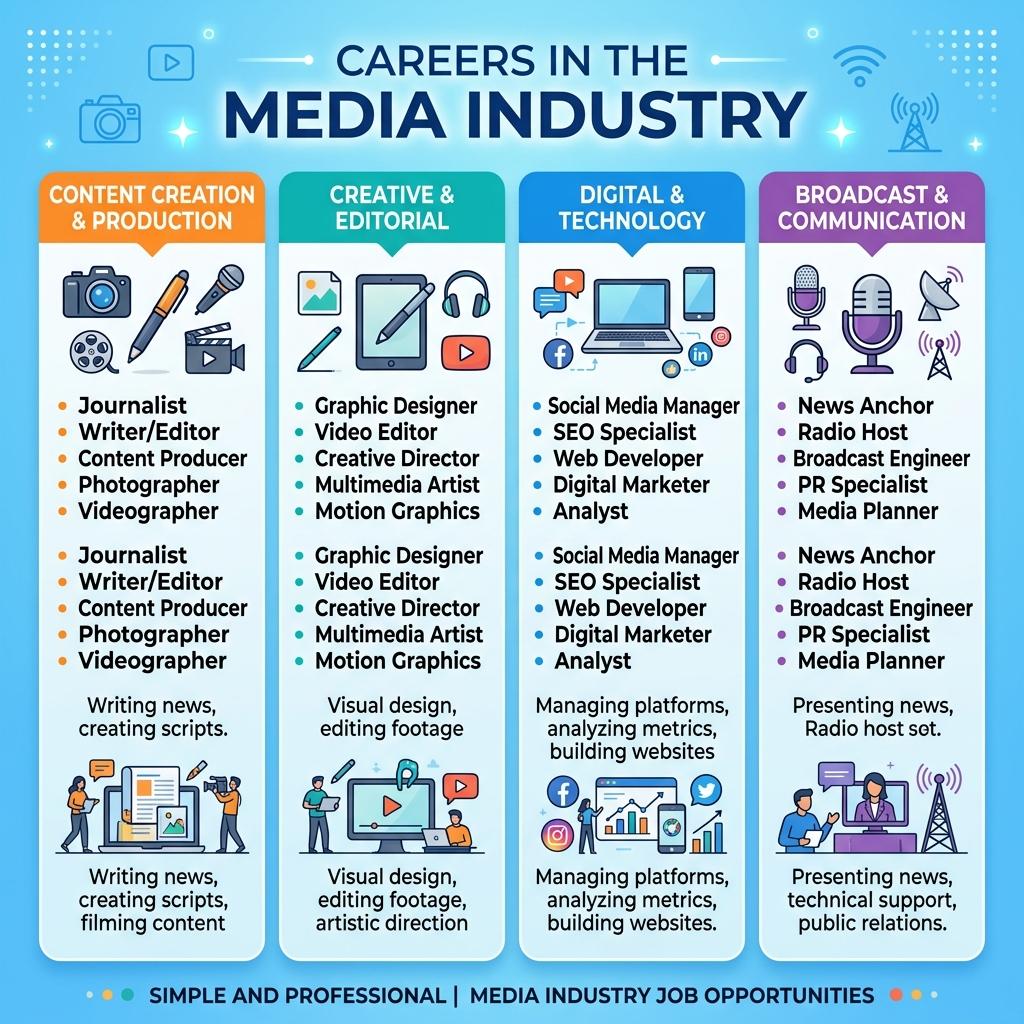
What are the core sectors within the media industry?
The media industry is vast and typically categorized into several core sectors. Here are the main areas to consider for a career:
- Print & Digital Publishing: Newspapers, magazines, and book publishing, heavily transitioning to digital formats.
- Broadcast Media: Traditional television and radio broadcasting.
- New Media: Streaming services, podcasts, blogs, and interactive digital content.
- Advertising & PR: Agencies focused on brand communications, marketing, and public relations.
- Film & Animation: Movie production, video game design, and visual effects.
Choosing a sector depends on your strengths, whether they lie in storytelling, technical production, or strategic communication.
What are the average salaries for common entry-level media jobs?
Salaries vary significantly by location and company size, but here is a general overview of average starting salaries in the US media sector:
| Job Title | Estimated Annual Salary (USD) |
|---|---|
| Social Media Coordinator | $40,000 - $50,000 |
| Editorial Assistant | $38,000 - $45,000 |
| Junior Video Editor | $45,000 - $55,000 |
| PR Assistant | $40,000 - $48,000 |
As professionals gain experience, build a strong portfolio, and move to major media hubs, these earning potentials increase significantly.
How can a recent graduate effectively break into the media industry?
Breaking into media requires a mix of practical experience, networking, and persistence. Follow these steps:
- Build a Portfolio: Start creating content immediately. Write articles, shoot videos, or manage social media for local businesses.
- Complete Internships: Practical, on-the-job experience is crucial. Apply for internships at agencies, newsrooms, or production houses.
- Network Actively: Attend industry events, join professional associations, and connect with professionals on LinkedIn.
- Stay Updated: The media landscape changes rapidly. Be aware of current trends, software tools, and digital platforms.
Entry-level roles are competitive, so demonstrating passion through independent projects will set you apart.
What hard skills are most in demand for digital media professionals?
Employers in digital media look for candidates with specific technical competencies. The most highly sought-after hard skills include:
- SEO and Analytics: Using tools like Google Analytics to understand audience behavior and search intent.
- Video and Audio Editing: Proficiency in industry-standard software like Adobe Premiere Pro, Final Cut, or Audition.
- Content Management Systems (CMS): Experience with WordPress, Drupal, or similar publishing platforms.
- Graphic Design: Basic to intermediate skills in Adobe Photoshop and Illustrator.
- Copywriting: Writing clear, engaging, and platform-specific copy.
Mastering two or more of these skills will make you a versatile and highly employable candidate.
What is the typical career progression for a journalist?
While the path can vary based on the publication and medium, a traditional journalism career usually follows this trajectory:
- Editorial Assistant / Intern: Handling fact-checking, research, and administrative tasks.
- Staff Writer / Reporter: Pitching and writing daily stories, covering specific beats (e.g., local politics, tech).
- Senior Reporter / Correspondent: Handling high-profile, investigative, or long-form feature stories.
- Section Editor: Managing a team of writers, editing copy, and shaping the section's editorial direction.
- Editor-in-Chief: Overseeing the entire publication, setting broad editorial policies, and managing budgets.
Many journalists also pivot to freelance writing or corporate communications later in their careers.
What are the differences between working for a media agency versus an in-house team?
Media professionals often choose between agency and in-house roles. Here is a brief comparison:
| Feature | Agency | In-House |
|---|---|---|
| Pace | Fast-paced, strict deadlines. | Generally steadier, focused on long-term goals. |
| Variety | High; work with multiple clients. | Low; deep focus on a single brand. |
| Culture | Highly competitive, dynamic. | Integrated into the broader corporate culture. |
| Skill Development | Broad, rapid skill acquisition. | Specialized, deep industry knowledge. |
Agencies are great for early-career growth, while in-house roles often offer a better work-life balance.
How is Artificial Intelligence (AI) impacting jobs in the media industry?
AI is fundamentally transforming media roles by automating repetitive tasks, allowing professionals to focus on strategy and high-level creativity. Key impacts include:
- Content Generation: AI assists in drafting routine reports, social media copy, and newsletters.
- Data Analysis: Predictive analytics help marketers and editors target audiences more effectively.
- Production: AI tools are speeding up transcription, color grading, and even generating synthetic voiceovers.
To stay relevant, media professionals must not fear AI, but rather adapt by learning how to use these tools as "co-pilots" to enhance their productivity and creative output.
How can media professionals build a standout portfolio?
A strong portfolio is your most valuable asset in the media industry. Here is how to build an effective one:
- Curate Your Best Work: Choose quality over quantity. Select 5-7 pieces that showcase your versatility and highest skill level.
- Provide Context: For each project, write a brief description of the goal, your specific role, and the final impact or metrics.
- Make It Digital: Use platforms like Squarespace, WordPress, or Behance to host your portfolio online for easy sharing.
- Keep It Updated: Regularly replace older work with your newest, most impressive projects.
Ensure the design of the portfolio itself is user-friendly, as it reflects your digital media sensibilities.
How important is networking for career advancement in media?
Networking is absolutely critical. Because the media industry relies heavily on reputation and "who you know," many job openings are filled through internal referrals before they are ever posted publicly. Effective networking strategies include:
- Attending film festivals, journalism conferences, or marketing summits.
- Engaging with industry peers and thought leaders on platforms like LinkedIn and X (Twitter).
- Conducting informational interviews with professionals whose career paths you admire.
Successful networking is about building mutually beneficial relationships, not just asking for favors. Offer help, share others' work, and maintain genuine, long-term connections.
What are some emerging job titles in the media industry?
As technology and audience habits evolve, new career paths are rapidly opening up. Here are some emerging roles shaping the future of media:
- Prompt Engineer: Crafting inputs for AI models to generate high-quality text, images, or video for campaigns.
- Audience Development Manager: Focusing on audience retention, community building, and cross-platform growth using data analytics.
- Immersive Media Specialist: Creating Virtual Reality (VR) and Augmented Reality (AR) experiences for news and entertainment.
- Podcast Producer/Strategist: The demand for specialized audio storytelling and audio monetization strategists continues to skyrocket.
Professionals who upskill in these emerging areas will find highly lucrative and secure career opportunities.