 jobdayta.com
 Jobs and Career in Environment Industry
Sustainable environmental practices focus on preserving natural resources, reducing pollution, and combating climate change to ensure a healthy planet for future generations. Ecosystems provide essential services such as clean air, water filtration, and biodiversity support, which are crucial for human survival and economic stability. Renewable energy sources like solar, wind, and hydroelectric power significantly reduce carbon emissions, mitigating global warming effects. Environmental conservation efforts also include waste management, deforestation prevention, and habitat restoration to maintain ecological balance.
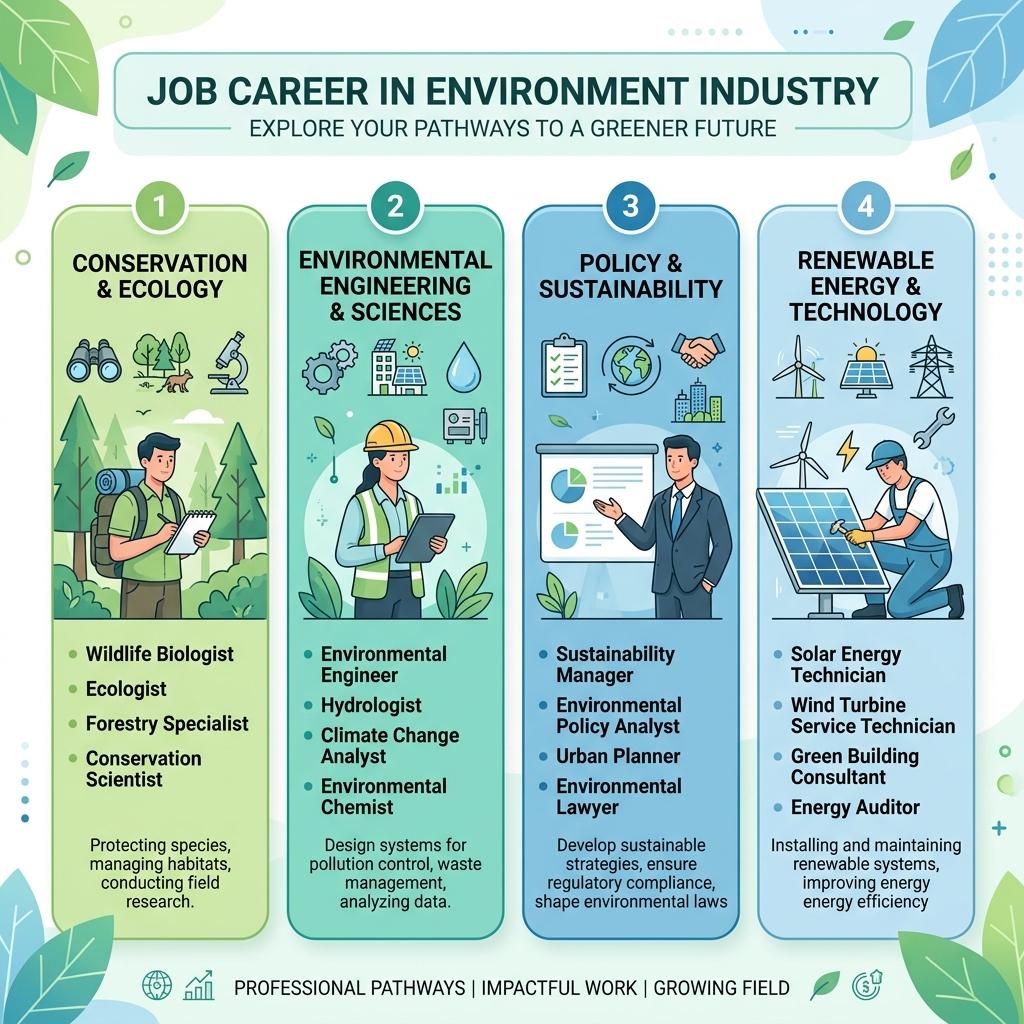
What are the most in-demand jobs in the environmental sector today?
The shift toward a green economy has created a surge in demand for specialized environmental professionals. Some of the most sought-after roles include:
- Sustainability Manager: Oversees corporate green initiatives and ensures eco-friendly practices.
- Wind/Solar Energy Technician: Installs, inspects, and maintains renewable energy infrastructure.
- Environmental Engineer: Designs technological solutions for waste management, water treatment, and pollution control.
- Climate Change Analyst: Evaluates scientific data to shape climate policy and corporate strategy.
What educational background is required for an Environmental Scientist?
A strong foundation in STEM is essential for aspiring Environmental Scientists.
- Bachelor’s Degree: The minimum entry requirement. Common majors include Environmental Science, Biology, Chemistry, Geosciences, or Ecology.
- Master’s Degree: Often required for career advancement, specialized research positions, or environmental policy roles.
- Ph.D.: Necessary for high-level independent research or tenured academic positions.
Additionally, coursework in data analysis and Geographic Information Systems (GIS) provides a significant competitive edge.
How much do environmental professionals typically earn?
Salaries in the environmental industry vary widely based on education, experience, and the specific role. Below is a general breakdown of estimated median annual salaries in the US:
| Job Title | Median Annual Salary (USD) |
|---|---|
| Solar Photovoltaic Installer | $45,000 |
| Environmental Science Technician | $48,000 |
| Environmental Scientist | $76,000 |
| Environmental Engineer | $96,000 |
| Chief Sustainability Officer | $110,000+ |
What skills are essential for a career in renewable energy?
Success in the renewable energy sector requires a balanced combination of technical expertise and interpersonal abilities.
- Hard Skills:
- Proficiency in data analysis and CAD modeling software.
- Understanding of power grid systems and energy storage.
- Knowledge of local and international environmental regulations.
- Soft Skills:
- Problem-solving: To overcome complex engineering and logistical challenges.
- Communication: For translating technical data to stakeholders and the public.
- Adaptability: To keep pace with rapidly evolving green technologies.
How can I transition into an environmental career from a different industry?
Transitioning into the green economy is highly achievable if you strategically leverage your existing background. Follow these steps:
- Identify Transferable Skills: Skills like project management, data analysis, marketing, and supply chain management are highly sought after by green companies.
- Upskill: Take short courses or earn certifications in sustainability, ESG reporting, or environmental law.
- Network: Attend environmental industry conferences and join professional green groups on platforms like LinkedIn.
- Volunteer: Gain hands-on experience by working with local conservation groups to build a relevant portfolio.
What is the primary role of an Environmental Consultant?
An Environmental Consultant acts as an expert advisor to private companies, government agencies, and real estate developers. Their primary goal is to help clients minimize their environmental impact and ensure compliance with complex regulations.
Key responsibilities typically include:
- Conducting field surveys and Environmental Impact Assessments (EIA).
- Testing soil, water, and air for hazardous contamination.
- Developing strategies for waste management and pollution reduction.
- Writing detailed technical reports for regulatory bodies.
Are there remote work opportunities in the environmental sector?
Yes. While traditional environmental jobs often rely heavily on fieldwork and laboratory testing, the digital transformation has created numerous remote opportunities. Roles that easily transition to remote or hybrid environments include:
- ESG Analysts: Focusing on corporate sustainability reporting and data analysis.
- Environmental Grant Writers: Securing funding for non-profits and research institutions.
- Sustainability Consultants: Advising global clients via virtual meetings.
- GIS Specialists: Mapping and analyzing spatial environmental data using cloud-based software.
These roles focus more on data, policy, and strategy rather than physical sampling.
What professional certifications can boost a career in sustainability?
Earning professional certifications validates your expertise and makes your resume stand out to green employers. Highly regarded certifications include:
- LEED Green Associate / AP: Essential for professionals in sustainable architecture, construction, and urban planning.
- Certified Energy Manager (CEM): Ideal for those optimizing energy efficiency in commercial or industrial facilities.
- FSA (Fundamentals of Sustainability Accounting): Perfect for finance and corporate ESG reporting professionals.
- Certified Environmental Professional (CEP): A prestigious credential for senior-level environmental scientists and managers.
What is the typical career progression for a Conservation Scientist?
A career in conservation science usually follows a structured trajectory, moving from hands-on fieldwork to strategic management.
- Entry-Level (Field Technician): Focuses on collecting environmental samples, monitoring wildlife, and data entry.
- Mid-Level (Conservation Scientist): Involves designing research projects, analyzing complex ecosystems, and writing reports for land-use planning.
- Senior-Level (Project Manager): Manages large-scale conservation programs, oversees budgets, and leads scientific teams.
- Executive Level (Policy Advisor / Director): Focuses on shaping environmental laws, securing major funding, and organizational strategy.
How does corporate ESG (Environmental, Social, and Governance) impact green job growth?
The rise of ESG frameworks has drastically accelerated job growth across the entire environmental sector. As consumers and investors demand greater corporate accountability, companies are no longer treating sustainability as an afterthought.
This shift has led to the creation of entirely new departments within traditional corporations. Companies are rapidly hiring dedicated ESG Directors, Sustainability Analysts, and Carbon Accounting Specialists to manage regulatory compliance, reduce carbon footprints, and publish annual sustainability reports. Consequently, environmental jobs are expanding beyond pure science into finance, legal, and corporate strategy.