 jobdayta.com
 Jobs and Career in Healthcare Industry
Healthcare encompasses a broad range of services aimed at maintaining and improving physical and mental health through prevention, diagnosis, treatment, and rehabilitation. Key sectors include hospitals, pharmaceutical companies, medical devices, and health insurance providers that collaborate to deliver patient-centered care. Advanced technologies such as telemedicine, electronic health records (EHR), and AI-driven diagnostics are transforming clinical outcomes and operational efficiency. Public health initiatives and policy frameworks play critical roles in addressing global challenges like pandemics, chronic diseases, and healthcare access disparities.
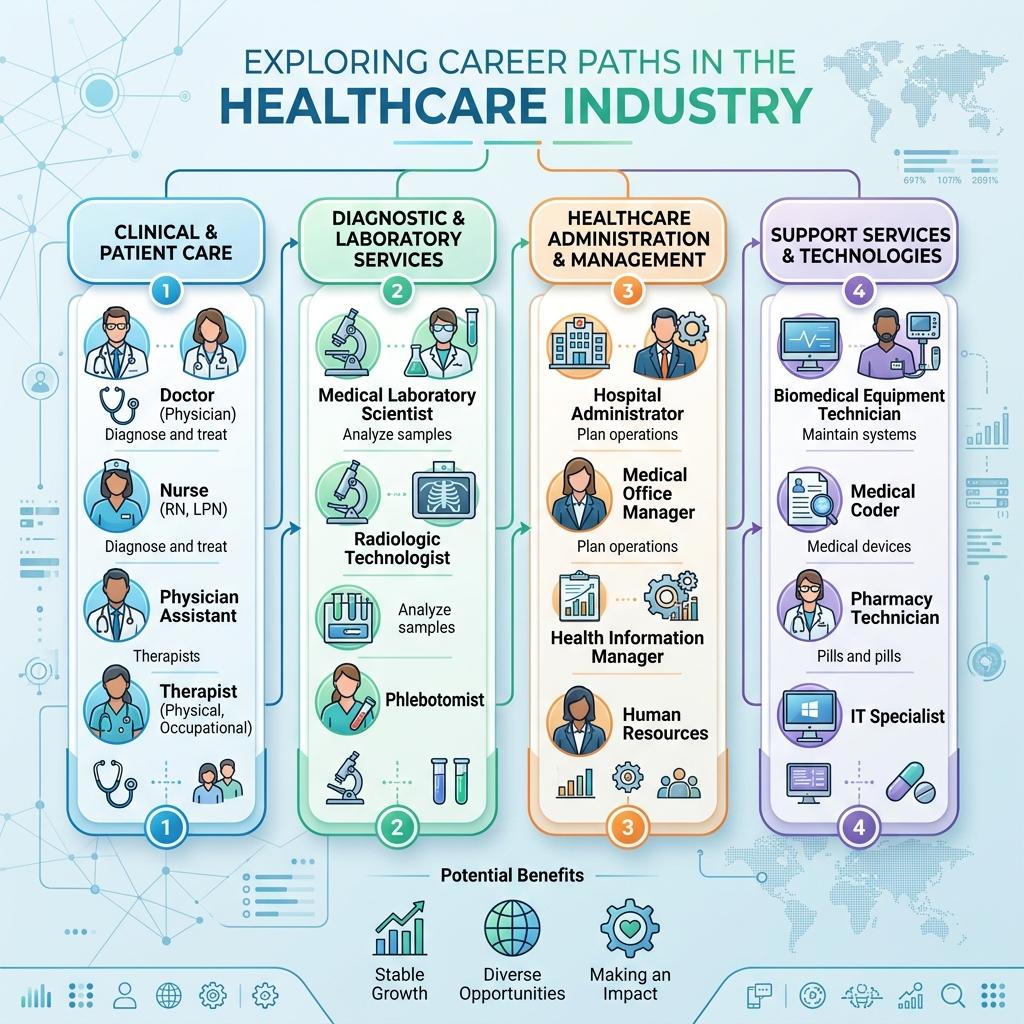
What are the fastest-growing jobs in the healthcare industry?
The healthcare industry is experiencing rapid growth due to an aging population and advancements in medical technology. According to labor statistics, some of the fastest-growing roles include:
- Nurse Practitioners (NPs): Advanced clinical nurses who can prescribe medication and diagnose illnesses.
- Medical and Health Services Managers: Professionals who plan, direct, and coordinate medical services.
- Home Health Aides: Caregivers who assist patients with daily activities in their homes.
- Physical Therapist Assistants: Aides helping patients recover from injuries under a physical therapist's supervision.
These roles offer excellent job security, competitive salaries, and long-term career stability.
What are the typical educational pathways for nursing careers?
Nursing offers a tiered career path, allowing professionals to continuously advance through further education. Here is a breakdown of standard nursing roles and their educational requirements:
| Role | Required Education | Typical Duration |
|---|---|---|
| Certified Nursing Assistant (CNA) | State-approved certificate program | 4-12 weeks |
| Licensed Practical Nurse (LPN) | Diploma or Certificate in Practical Nursing | 1 year |
| Registered Nurse (RN) | Associate (ADN) or Bachelor's Degree (BSN) | 2-4 years |
| Advanced Practice Registered Nurse (APRN) | Master’s (MSN) or Doctoral Degree (DNP) | 2-4 years post-BSN |
How can a clinical healthcare professional transition into healthcare administration?
Moving from direct patient care into healthcare administration requires a shift from clinical expertise to leadership and business management. To make this transition successfully, professionals should follow these steps:
- Gain leadership experience: Volunteer for committees, lead departmental projects, or take on roles like charge nurse or shift supervisor.
- Pursue higher education: Obtain a Master of Health Administration (MHA) or Master of Business Administration (MBA) with a healthcare focus.
- Acquire certifications: Earn credentials such as the Certified Medical Manager (CMM) or certification from the American College of Healthcare Executives (ACHE).
- Network effectively: Connect with current hospital administrators and seek out formal mentorship opportunities.
Are there entry-level healthcare jobs that do not require a college degree?
Yes, the healthcare sector offers numerous entry-level positions that require only a high school diploma followed by short-term vocational training or on-the-job training. Examples include:
- Phlebotomist: Draws blood for tests, transfusions, or donations. Usually requires a certification taking a few months.
- Medical Receptionist: Handles administrative duties, patient scheduling, and billing in front-office settings.
- Home Health Aide: Assists elderly or disabled patients with daily living tasks.
- Pharmacy Technician: Helps pharmacists dispense prescription medication to customers or health professionals.
These roles act as excellent stepping stones for further career development in the medical field.
How do average salaries compare across common allied health professions?
Allied health encompasses a wide range of diagnostic, technical, and therapeutic roles. Salaries vary significantly based on education, specialization, and location. Below is a general comparison of median annual salaries in the US:
| Allied Health Profession | Median Annual Salary (Estimate) |
|---|---|
| Occupational Therapist | $93,000 |
| Radiologic Technologist | $65,000 |
| Respiratory Therapist | $70,000 |
| Dietitian / Nutritionist | $66,000 |
| Medical Assistant | $38,000 |
Choosing an allied health career provides faster entry into healthcare compared to medical school, with high earning potential.
What are the primary certifications needed to become a Medical Coder?
Medical coding is a vital administrative career that translates healthcare services into universal alphanumeric codes. Employers typically require candidates to hold credentials from recognized industry organizations. The two main certifying bodies are:
- AAPC (American Academy of Professional Coders): Offers the Certified Professional Coder (CPC) credential, which is the gold standard for physician-based (outpatient) coding.
- AHIMA (American Health Information Management Association): Offers the Certified Coding Specialist (CCS) credential, widely preferred for hospital-based (inpatient) coding.
Many professionals start with a certificate or Associate's degree in Health Information Technology before sitting for these exams to boost their employability.
What soft skills are most important for career advancement in healthcare?
While clinical knowledge is mandatory, soft skills are what truly drive career advancement and leadership potential in healthcare. The most critical soft skills include:
- Empathy and Compassion: Essential for building trust with patients and providing patient-centered care.
- Clear Communication: Vital for accurately relaying patient information to colleagues and families to prevent medical errors.
- Adaptability: Healthcare environments are fast-paced; professionals must quickly adjust to emergencies or new technologies.
- Critical Thinking: The ability to analyze complex situations quickly and make life-saving decisions under pressure.
Mastering these interpersonal skills often leads to promotions into supervisory roles.
What role does telemedicine play in modern healthcare careers?
Telemedicine has revolutionized healthcare delivery, drastically altering traditional career paths and creating entirely new job categories. For clinicians, it offers the flexibility of remote work, allowing doctors, nurses, and therapists to consult with patients globally via video conferencing.
Furthermore, telemedicine has driven demand for specialized technical and administrative roles, such as:
- Telehealth Care Coordinators
- Virtual Triage Nurses
- Health Informatics Specialists
To succeed in this evolving landscape, modern healthcare professionals must become proficient with digital health platforms, remote monitoring devices, and virtual bedside manner techniques.
What are the best strategies for preventing burnout in healthcare jobs?
Burnout is a widespread issue in healthcare due to long hours, high stakes, and emotional strain. Professionals must proactively manage their well-being to sustain long-term careers. Effective strategies include:
- Set strict boundaries: Separate work from personal life by not bringing charts home and completely disconnecting during time off.
- Prioritize physical health: Ensure adequate sleep, proper nutrition, and regular exercise to maintain physical stamina.
- Seek mental health support: Utilize employee assistance programs (EAPs), therapy, or peer support groups to process workplace trauma.
- Pursue continuous learning: Shifting focus to learn a new skill or specialty can reignite passion and prevent career stagnation.
How is Artificial Intelligence (AI) impacting career development in healthcare?
AI is fundamentally transforming healthcare careers by automating routine tasks and enhancing clinical decision-making. Rather than replacing medical professionals, AI is shifting their job responsibilities.
Administrative staff are leveraging AI for faster billing and scheduling, while clinicians use AI-driven diagnostic tools to detect diseases like cancer earlier and more accurately. Consequently, career development now heavily emphasizes technological literacy.
Healthcare workers who upskill to understand data analytics, AI prompt engineering, and the ethical management of AI tools will find themselves highly sought after, often securing lucrative roles in health informatics and clinical systems management.