 jobdayta.com
 Jobs and Career in Manufacturing Industry
Manufacturing involves the transformation of raw materials into finished goods through mechanical, chemical, or thermal processes. It plays a crucial role in supply chains, supporting industries such as automotive, aerospace, electronics, and consumer goods. Advanced technologies like automation, robotics, and additive manufacturing enhance production efficiency and product quality. Sustainability initiatives focus on reducing waste, energy consumption, and carbon emissions throughout manufacturing operations.
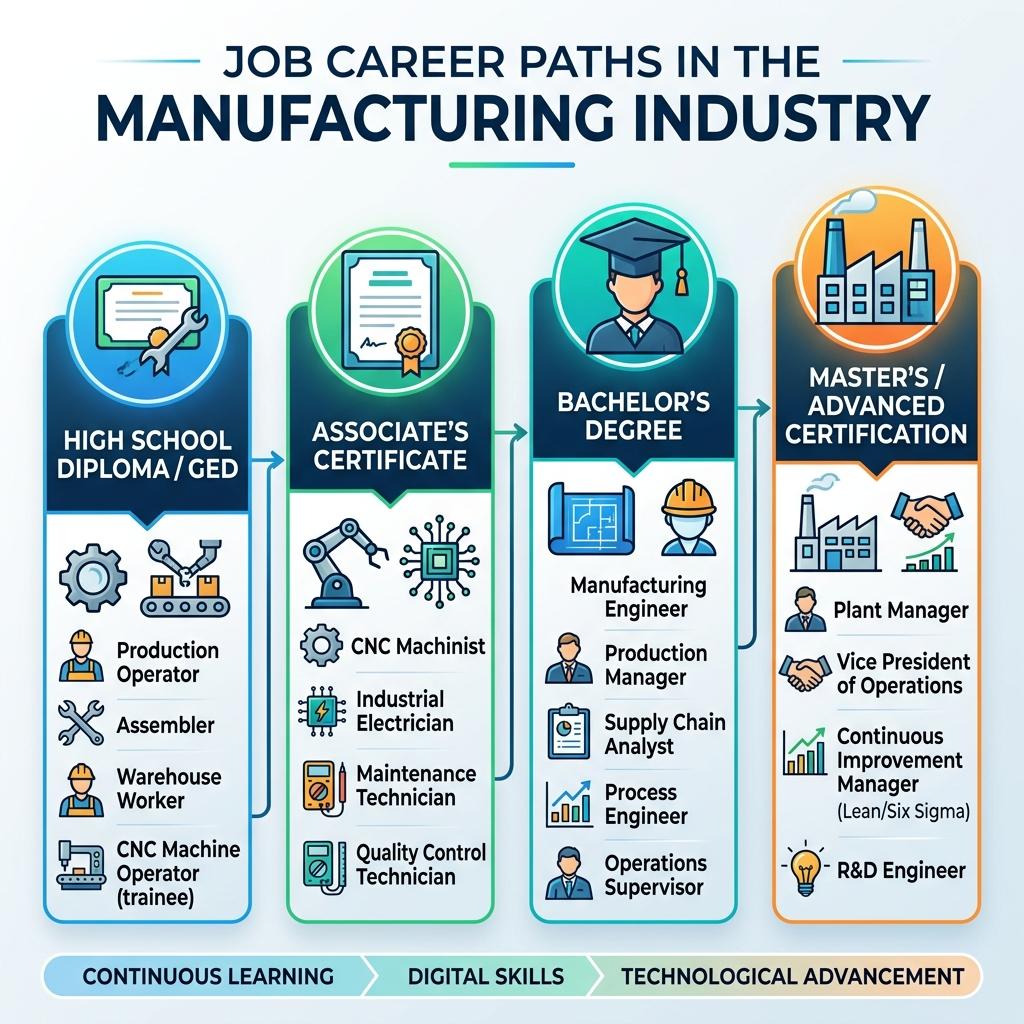
What are the primary entry-level jobs in the manufacturing industry?
Entry-level manufacturing jobs are accessible and provide a solid foundation for long-term career growth. Common roles include:
- Assembly Line Worker: Puts together parts of manufactured products using tools and machinery.
- Machine Operator: Operates and monitors production machinery safely and efficiently.
- Quality Control Inspector: Examines materials and finished products to ensure they meet defect-free standards.
- Material Handler: Moves raw materials and finished goods around the production floor or warehouse.
Most of these positions require a high school diploma or equivalent, with on-the-job training provided. They serve as excellent stepping stones to supervisory roles or specialized technical positions.
How is automation and Industry 4.0 changing manufacturing careers?
Automation and "Industry 4.0" are radically transforming manufacturing careers by shifting the focus from manual labor to technology management. Rather than replacing all jobs, automation is creating high demand for new, digitally-skilled roles.
Workers are now expected to interact with robotics, Internet of Things (IoT) devices, and data analytics platforms. This evolution means modern manufacturing careers heavily involve troubleshooting, programming, and system maintenance. Consequently, workers who upskill in digital literacy, robotics programming, and electromechanical systems are highly sought after and command significantly higher salaries than traditional manual laborers.
What does a typical career progression look like for a Production Worker?
A dedicated production worker has a clear, upward career trajectory. A typical progression looks like this:
- Entry-Level Production Worker: Learns basic assembly, safety protocols, and machine operation.
- Team Lead / Shift Supervisor: Manages a small team, ensures daily quotas are met, and handles minor scheduling or personnel issues.
- Production Manager: Oversees entire production lines or shifts, focusing on efficiency, budget, and cross-departmental coordination.
- Plant Manager: Directs all plant operations, including production, maintenance, quality control, and shipping.
Advancement usually requires demonstrated reliability, leadership skills, and sometimes additional certifications in management or continuous improvement.
What are the highest-paying roles in manufacturing?
The highest-paying jobs in manufacturing typically require advanced degrees in engineering, extensive management experience, or highly specialized technical skills. Here are some top-paying roles:
| Job Title | Primary Focus | Estimated Avg. Salary |
|---|---|---|
| Plant Manager | Overall facility operations and strategy | $100,000 - $140,000+ |
| Manufacturing Engineer | Process design and optimization | $85,000 - $115,000 |
| Industrial Production Manager | Production scheduling and efficiency | $90,000 - $120,000 |
| Supply Chain Director | Logistics, procurement, and material sourcing | $110,000 - $150,000+ |
Note: Salaries vary based on location, industry sector, and experience level.
What are Lean Manufacturing and Six Sigma, and why are they important for career development?
Lean Manufacturing and Six Sigma are vital methodologies used to improve production efficiency and product quality. Earning certifications in these areas significantly accelerates career development.
- Lean Manufacturing: Focuses on identifying and eliminating waste (time, materials, effort) within the production process to improve flow and efficiency.
- Six Sigma: Uses data-driven, statistical techniques to identify and remove the root causes of defects, ensuring high product consistency.
Professionals who earn "Belt" certifications (e.g., Green Belt, Black Belt) are highly valued because they directly save companies money. Holding these certifications is often a prerequisite for senior management roles.
What soft skills are most important for success in the manufacturing sector?
While technical abilities are crucial, soft skills are equally important for career advancement in the modern manufacturing environment. The most critical soft skills include:
- Problem-Solving: The ability to quickly identify production bottlenecks or machine malfunctions and implement effective solutions.
- Adaptability: Being flexible enough to learn new technologies, switch production lines, or adapt to changing industry standards.
- Teamwork and Communication: Manufacturing is highly collaborative. Clear communication ensures safety and efficiency across shifts and departments.
- Attention to Detail: Crucial for maintaining quality control standards and ensuring a safe working environment.
Developing these skills helps employees transition from solitary operational roles into leadership.
How can someone transition from another industry into manufacturing?
Transitioning into manufacturing is highly achievable, as many skills from other industries are transferable. Here is how to make the switch:
- Identify Transferable Skills: Highlight skills like logistics, project management, IT, or equipment maintenance on your resume.
- Pursue Targeted Training: Complete short-term certifications (e.g., OSHA safety, basic CNC machining, or CAD software) to show commitment and base knowledge.
- Start in Periphery Roles: Apply for roles that bridge the gap, such as warehousing, inventory management, or quality assurance.
- Leverage Apprenticeships: Many manufacturers offer paid apprenticeships that combine classroom learning with on-the-job training, perfect for career changers.
Networking through local manufacturing associations can also open doors to new opportunities.
What is the role of a CNC Machinist, and what is the career outlook?
A CNC (Computer Numerical Control) Machinist is a skilled professional who programs, operates, and maintains computer-driven machines that cut, shape, and finish materials like metal and plastic. They translate engineering blueprints into complex machine instructions.
The career outlook for CNC Machinists remains incredibly strong. While basic machine operation is becoming automated, the industry desperately needs experts who can program and troubleshoot these advanced machines. Due to an aging workforce and a shortage of skilled tradespeople, experienced CNC programmers are in high demand, offering excellent job security and competitive wages.
What types of engineering degrees are most valuable in manufacturing?
Manufacturing relies heavily on engineering professionals to design, build, and optimize production processes. The most valuable engineering degrees include:
- Mechanical Engineering: Focuses on designing the physical machinery, robotics, and tools used on the factory floor.
- Industrial Engineering: Concentrates on optimizing complex processes, systems, and workforce organizations to eliminate waste.
- Electrical Engineering: Essential for designing and maintaining the complex control systems, sensors, and power grids that run automated factories.
- Manufacturing Engineering: A specialized degree focused entirely on the practices and technologies of turning raw materials into finished products.
Graduates with these degrees are primed for leadership roles in plant operations and product development.
Are there good opportunities for women in the manufacturing industry?
Yes, the opportunities for women in manufacturing are better than ever. Historically male-dominated, the industry is actively working to close the gender gap, recognizing that diverse teams drive better innovation and problem-solving.
With the shift toward Industry 4.0, manufacturing relies less on brute physical strength and more on critical thinking, engineering, robotics, and management—areas where women excel. Organizations like the Manufacturing Institute run initiatives like the "Women MAKE America" program to mentor and promote female talent.
Women are increasingly stepping into roles ranging from floor supervisors and CNC programmers to senior executives and plant directors, supported by robust networking and diversity initiatives.