 jobdayta.com
 Jobs and Career in Forestry Industry
Forestry encompasses the science and practice of managing forests for sustainability, biodiversity, and economic value. It involves the cultivation, conservation, and sustainable harvesting of trees to meet ecological, social, and commercial needs. Key components include forest ecology, silviculture, forest management plans, and the protection of wildlife habitats. Advanced technologies such as remote sensing and GIS enhance monitoring and decision-making in modern forestry.
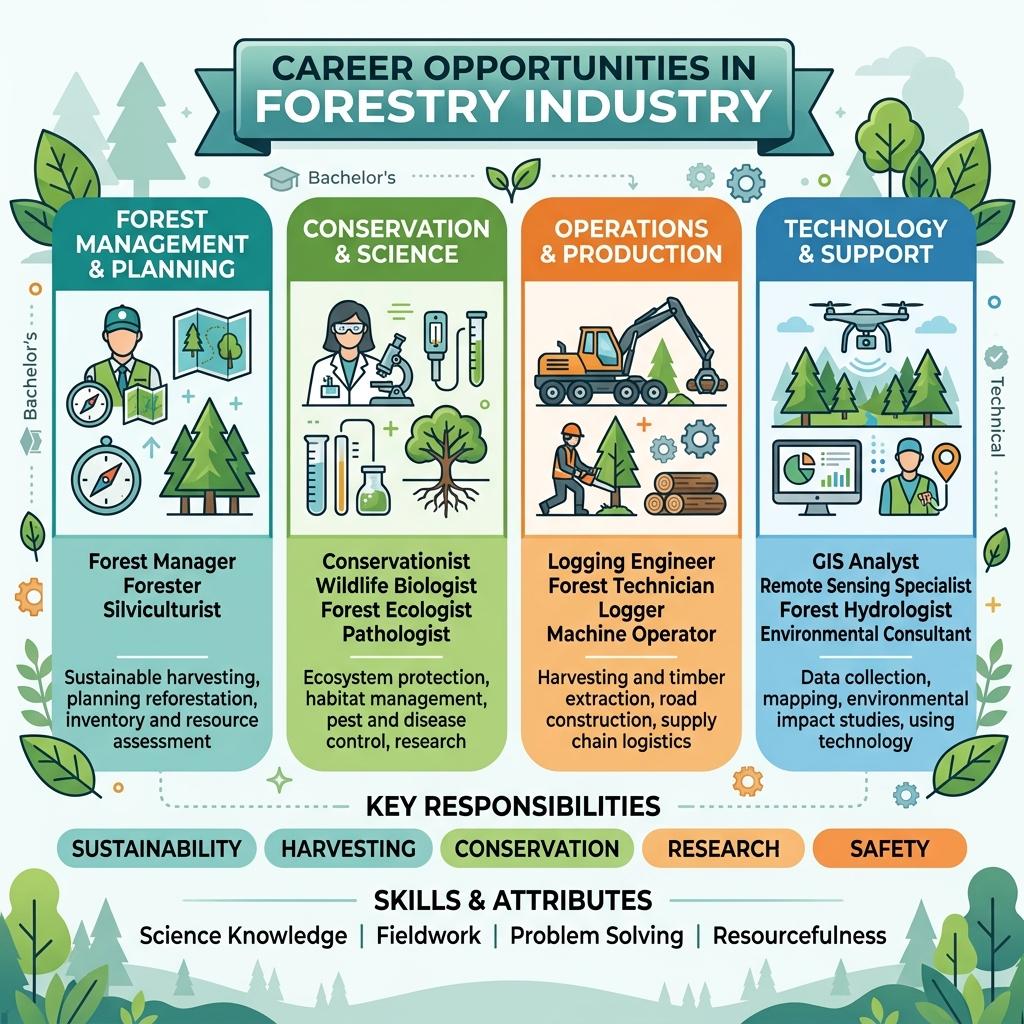
What are the primary career paths available in the forestry industry?
The forestry industry offers diverse career opportunities depending on your interests and education. Primary career paths include:
- Forester: Manages land quality, timber yield, and conservation efforts.
- Forest and Conservation Technician: Assists in data collection, tree planting, and maintaining forest health.
- Logging Equipment Operator: Uses heavy machinery to harvest timber safely and efficiently.
- Urban Forester: Manages tree populations and green spaces within city limits.
- Wildland Firefighter: Prevents, manages, and suppresses forest fires.
What educational background is required to become a professional forester?
While entry-level labor jobs may only require a high school diploma, professional and technical roles require formal higher education:
- Associate Degree: Ideal for Forest Technicians. Focuses on field skills, land surveying, and basic timber management.
- Bachelor's Degree: The standard requirement for a professional Forester or Conservation Scientist. Programs cover biology, ecology, and forest economics.
- Master's Degree or Ph.D.: Necessary for advanced research, academic positions, or senior policy-making roles in environmental conservation.
How much do common forestry jobs pay on average?
Salaries in the forestry industry vary significantly based on education, location, and experience. Below is an estimated overview of median annual salaries:
| Job Title | Median Annual Salary |
|---|---|
| Conservation Scientist | $64,460 |
| Professional Forester | $63,980 |
| Logging Equipment Operator | $42,060 |
| Forest Technician | $40,650 |
Note: Figures can increase with government employment, union memberships, and advanced certifications.
What essential skills are needed for career advancement in forestry?
To advance in the forestry sector, professionals must blend traditional outdoor capabilities with modern management techniques. Key skills include:
- Technical Proficiency: Mastery of Geographic Information Systems (GIS), GPS mapping, and data analysis software.
- Analytical Thinking: Ability to assess environmental data, predict forest growth, and evaluate ecological impacts.
- Communication: Presenting conservation plans to stakeholders, landowners, and the public clearly.
- Physical Stamina: Enduring long hours navigating rough terrain in various weather conditions.
- Leadership: Managing field crews and overseeing large-scale timber operations.
How is technology changing jobs in the forestry sector?
Technology is revolutionizing forestry, shifting many roles from purely manual labor to highly technical positions. The integration of modern tools improves efficiency, safety, and sustainability.
- Drones and LiDAR: Used for aerial surveying, 3D forest mapping, and rapid disease detection.
- Automated Harvesting: Harvesters now use onboard computers to optimize log cutting and track inventory in real-time.
- Advanced Software: Climate modeling and GIS software allow foresters to predict long-term impacts of harvesting.
Consequently, IT and data science skills are becoming highly valuable in modern forestry careers.
Are there opportunities for urban forestry, and what do they entail?
Yes, urban forestry is a rapidly growing niche. As cities expand, the need to maintain green spaces for environmental and aesthetic benefits increases.
Urban foresters work for municipalities, private landscaping firms, or nonprofits. Their daily responsibilities include:
- Planning and planting street trees and managing urban parks.
- Monitoring tree health and mitigating disease or pest outbreaks.
- Advising city planners on how construction impacts local flora.
- Managing hazardous trees that threaten power lines or public safety.
This path is perfect for those who love forestry but prefer living in metropolitan areas.
What is the typical career progression for a forest technician?
A forest technician typically starts with hands-on fieldwork and can progress into management or specialized roles. A common career trajectory looks like this:
- Entry-Level Technician: Focuses on basic data collection, marking timber, and assisting with controlled burns.
- Crew Leader: Takes on supervisory duties, leading field crews and managing daily logistics.
- Specialist: Transitions into niche roles like GIS Specialist or Wildland Fire Dispatcher through additional training.
- Forester/Manager: By obtaining a bachelor's degree, a technician can become a certified forester, overseeing entire forest districts.
What are the working conditions like for forestry professionals?
Working conditions in forestry are unique and often split between demanding field environments and office settings.
Fieldwork: Foresters and technicians spend considerable time outdoors in remote areas. The work is physically demanding, requiring hiking through dense underbrush, navigating steep terrain, and enduring extreme weather conditions—from summer heat to winter snow.
Office Work: As professionals advance, they spend more time indoors. Office duties include analyzing field data, writing environmental reports, consulting with landowners, and drafting budget proposals.
How can someone transition into a forestry career from another field?
Transitioning into forestry is highly feasible, especially if you possess transferable skills. Here are the best steps to make the switch:
- Leverage Existing Skills: Backgrounds in IT, biology, heavy machinery, or logistics translate perfectly into GIS mapping, ecology, logging, and timber transport.
- Get Certified: Obtain industry-recognized certifications, such as a specialized GIS certificate or a pesticide applicator license.
- Volunteer: Gain practical experience by volunteering with conservation corps, state parks, or local land trusts.
- Pursue Education: Consider a Master of Forestry (MF) program designed for students with non-forestry bachelor's degrees.
What are the future job outlook and sustainability trends in forestry?
The job outlook for forestry is stable, with employment projected to grow as the demand for sustainable timber and environmental conservation increases. Modern forestry is heavily focused on green trends:
- Climate Change Mitigation: Roles focused on carbon sequestration and forest resiliency are expanding rapidly.
- Wildfire Management: Due to increased fire risks globally, there is a high demand for experts in fuel reduction and fire ecology.
- Sustainable Harvesting: As consumers demand eco-friendly wood products, jobs in forest certification (e.g., FSC) and sustainable supply chain management are rising.