 jobdayta.com
 Jobs and Career in Defence Industry
Defense encompasses strategies and technologies designed to protect nations, organizations, and individuals from threats and attacks. Modern defense systems integrate cybersecurity, intelligence analysis, and advanced weaponry to address evolving challenges. Military defense involves coordinated operations across land, sea, air, and space domains to ensure security and sovereignty. Investment in defense research and development drives innovation in surveillance, missile systems, and autonomous defense technologies.
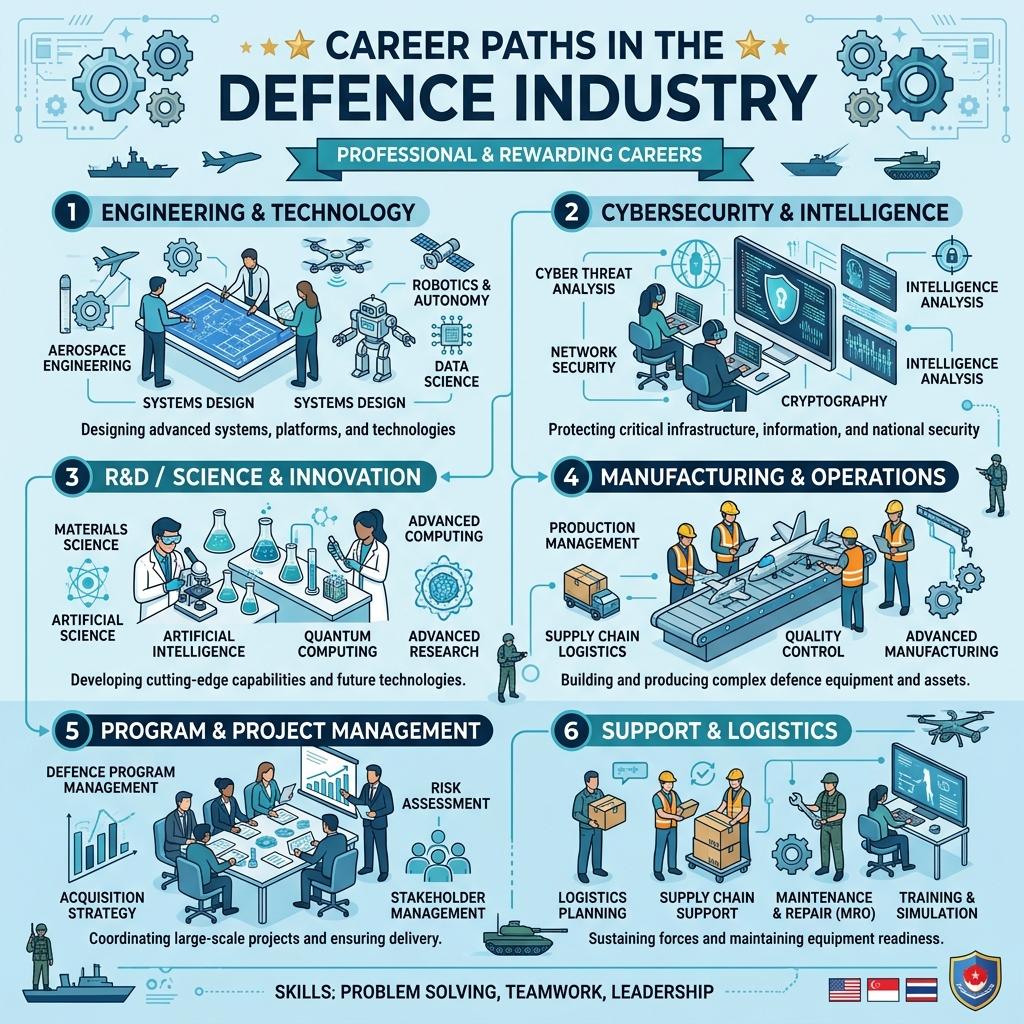
What are the primary sectors for employment within the defence industry?
The defence industry is vast and encompasses several key sectors that work together to provide national security solutions. The primary sectors include:
- Aerospace: Developing military aircraft, autonomous drones, and advanced missile systems.
- Land Systems: Manufacturing armored vehicles, artillery, and infantry technology.
- Naval/Maritime: Building submarines, aircraft carriers, and maritime surveillance systems.
- Cybersecurity & Intelligence: Protecting military networks, analyzing data, and developing electronic warfare capabilities.
Each sector offers unique career trajectories, ranging from hands-on manufacturing and logistics to high-level research and development.
What educational background is typically required for a career in defence engineering?
A career in defence engineering generally requires a strong foundation in STEM (Science, Technology, Engineering, and Mathematics). Most entry-level engineering roles require at least a Bachelor's degree in fields such as Aerospace, Mechanical, Electrical, Software, or Systems Engineering.
For advanced research, design, or specialized roles, a Master's degree or Ph.D. is often preferred. Additionally, participating in university defence projects, securing internships with defence contractors, or joining engineering societies can significantly boost a candidate's profile. Practical experience with CAD software, programming languages, and systems integration is highly valued.
How important is obtaining a security clearance, and what does the process involve?
A security clearance is absolutely crucial in the defence industry, as most jobs involve handling classified information. Without one, employment opportunities are severely limited. The process typically involves the following steps:
- Sponsorship: An employer must sponsor your clearance application after offering you a job.
- Application: Completing a highly detailed background questionnaire.
- Background Investigation: Investigators review your criminal history, finances, foreign contacts, and interview associates.
- Adjudication: A government agency reviews the findings to determine your reliability and trustworthiness.
Maintaining a clean personal and financial record is essential for approval.
What are some common non-STEM career paths in the defence sector?
While engineering and technology dominate the spotlight, the defence industry relies heavily on non-STEM professionals to operate efficiently. Common non-technical career paths include:
- Contracts and Procurement: Negotiating and managing multi-million dollar government contracts.
- Supply Chain and Logistics: Ensuring the timely global delivery of materials and parts.
- Human Resources: Recruiting specialized talent and managing complex security clearance protocols.
- Finance and Accounting: Managing project budgets, auditing, and ensuring compliance with strict government financial regulations.
- Policy and Strategy: Analyzing geopolitical trends and advising corporate strategy.
What are the typical salary ranges for entry-level defence industry roles?
Entry-level salaries in the defence industry are highly competitive, often reflecting the specialized skills and security clearances required. Below is a general estimate of annual starting salaries (in USD):
| Job Role | Estimated Starting Salary |
|---|---|
| Systems Engineer | $70,000 - $90,000 |
| Cybersecurity Analyst | $75,000 - $95,000 |
| Supply Chain Specialist | $55,000 - $70,000 |
| Contracts Administrator | $60,000 - $80,000 |
These figures can vary based on location, qualifications, and whether the candidate already holds an active security clearance, which often commands a premium salary.
How can veterans transition their military experience into civilian defence jobs?
Veterans possess a distinct advantage in the civilian defence industry due to their firsthand experience with military equipment, active security clearances, and deep understanding of military culture. To transition successfully, veterans should translate military jargon into corporate language on their resumes.
Many major defence contractors have dedicated military transition programs and recruiters. Veterans should leverage these programs, attend specialized career fairs, and utilize networking platforms to connect with veteran resource groups. Highlighting soft skills—such as leadership, adaptability, and working under pressure—is just as important as showcasing technical expertise.
What are the top skills employers look for in defence industry candidates?
Defence industry employers look for a blend of technical expertise and strong interpersonal traits. Top skills include:
- Systems Thinking: The ability to understand how complex hardware and software components integrate seamlessly.
- Cybersecurity Awareness: Understanding basic threat mitigation is essential, even in non-IT roles.
- Project Management: Familiarity with Agile frameworks and managing strict timelines and budgets.
- Communication: The capability to clearly explain highly technical concepts to non-technical stakeholders or government officials.
- Integrity and Ethics: Given the sensitive nature of the work, a strong moral compass is non-negotiable.
What role does continuous learning and certification play in career advancement?
In the rapidly evolving defence sector, continuous learning is critical for career progression. Because technologies like artificial intelligence, hypersonics, and quantum computing are constantly advancing, unrefined skills can quickly become obsolete.
Earning industry-recognized certifications demonstrates a commitment to professional development. For IT and cyber roles, certifications like Security+ or CISSP are often mandated by government directives. For management, Project Management Professional (PMP) certifications are highly sought after. Most large defence companies offer generous tuition reimbursement programs to encourage employees to pursue Master's degrees, facilitating upward mobility.
Are there opportunities for remote work in the defence industry?
Historically, remote work in the defence industry was rare due to the strict handling of classified information inside Secure Compartmented Information Facilities (SCIFs). However, the industry has modernized significantly in recent years.
Today, many defence contractors offer hybrid or fully remote opportunities for roles that do not require daily access to classified data. This includes jobs in human resources, finance, unclassified software development, and supply chain management. When classified work is required, companies often adopt a hybrid model, allowing employees to do administrative tasks at home and secure work onsite.
What are the future job trends and growth areas in the defence sector?
The defence industry is shifting its focus towards high-tech and asymmetric warfare capabilities, creating massive job growth in specific niches. The top future growth areas include:
- Artificial Intelligence & Machine Learning: Developing autonomous systems, predictive maintenance, and strategic decision-making algorithms.
- Space Systems: Engineering satellites, orbital defence mechanisms, and space domain awareness technologies.
- Directed Energy Weapons: Researching and designing laser and microwave defence systems.
- Advanced Cybersecurity: Protecting national infrastructure from state-sponsored cyber-attacks and securing zero-trust networks.
Professionals who upskill in these emerging technologies will find the most lucrative career opportunities in the coming decade.