 jobdayta.com
 Jobs and Career in Hospitality Industry
Hospitality encompasses the art of providing exceptional service and comfort to guests in various settings such as hotels, restaurants, and resorts. The industry thrives on creating memorable experiences through personalized attention, quality amenities, and efficient management. Key components include guest satisfaction, staff training, and sustainability practices to enhance overall service delivery. Innovations in technology and customer engagement continue to drive growth in the global hospitality market.
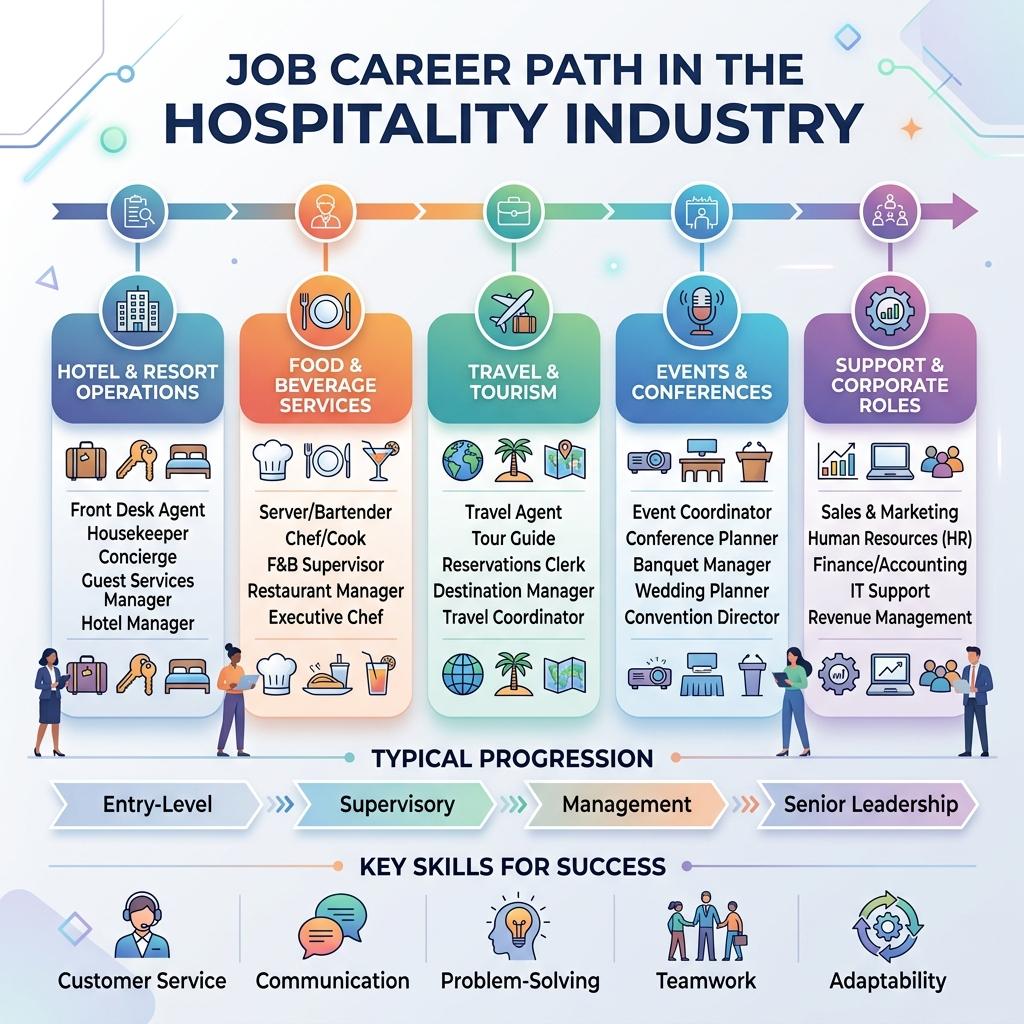
What are the primary career sectors within the hospitality industry?
The hospitality industry is vast, offering diverse career paths. It is typically categorized into four main sectors, each with its own specialized roles:
- Lodging
- Hotels and Luxury Resorts
- Hostels and Boutique Inns
- Food and Beverage (F&B)
- Restaurants and Fine Dining
- Catering and Banquets
- Travel and Tourism
- Airlines and Cruise Lines
- Tour Operators and Travel Agencies
- Recreation and Events
- Event and Wedding Planning
- Theme Parks and Casinos
What essential soft skills are required for a successful career in hospitality?
While technical skills can be taught, soft skills are the core foundation of a successful hospitality professional. Key competencies include:
- Communication: The ability to interact clearly and professionally with guests and staff from diverse backgrounds.
- Empathy and Patience: Anticipating guest needs and handling complaints gracefully to ensure customer satisfaction.
- Problem-Solving: Thinking quickly on your feet to resolve unexpected operational issues, such as overbookings or maintenance failures.
- Teamwork: Collaborating smoothly across various departments—like housekeeping, the kitchen, and the front desk—to deliver a seamless guest experience.
How does the career progression for a Hotel General Manager typically look?
Becoming a Hotel General Manager usually follows a structured, operational path that requires mastering multiple departments:
- Entry-Level: Starting as a Front Desk Agent, Bellhop, or Food & Beverage Server to learn basic operations.
- Supervisory Role: Promotion to Shift Leader or Front Office Supervisor.
- Department Management: Leading an entire team as a Front Office Manager, F&B Director, or Executive Housekeeper.
- Executive Level: Serving as Director of Rooms or Director of Operations, overseeing multiple departments.
- Pinnacle: Promotion to General Manager, taking full responsibility for the property's profitability, brand standards, and overall operations.
What is the average salary range for common hospitality jobs?
Salaries in the hospitality industry vary significantly based on geographic location, property size, and the candidate's experience level. Below is a general estimate of annual salaries in the United States:
| Job Title | Entry-Level Salary | Mid-to-Senior Salary |
|---|---|---|
| Front Desk Agent | $25,000 - $30,000 | $35,000 - $45,000 |
| Event Coordinator | $38,000 - $45,000 | $55,000 - $75,000 |
| Food & Beverage Manager | $45,000 - $55,000 | $65,000 - $90,000 |
| Hotel General Manager | $65,000 - $80,000 | $100,000 - $150,000+ |
How can gaining international experience benefit a hospitality professional?
International experience is highly prized in hospitality because the industry caters to a global clientele. Working abroad accelerates career development in several ways:
- Cultural Intelligence: Understanding diverse cultural expectations improves guest relations and service delivery.
- Language Skills: Fluency in multiple languages makes candidates significantly more competitive for executive roles.
- Adaptability: Proves to employers that you are resilient and can thrive outside your comfort zone.
Many global hotel chains offer cross-training programs, allowing ambitious staff to transfer to overseas properties to build these crucial competencies.
What role do certifications play in hospitality career advancement?
While on-the-job experience is vital, industry certifications validate your expertise, demonstrate a commitment to continuous learning, and can fast-track promotions. Popular certifications include:
- Certified Hotel Administrator (CHA): The most prestigious certification for hotel managers and executives.
- Certified Meeting Professional (CMP): An essential credential for event, meeting, and convention planners.
- Sommelier Certification: Crucial for professionals looking to dominate the high-end food and beverage sector.
Earning these credentials often leads to higher salary brackets and helps resumes stand out to corporate recruiters.
How is technology changing career paths in the hospitality sector?
Technology is rapidly transforming the hospitality industry, creating entirely new career trajectories. Traditional roles are evolving to include digital competencies, while specialized tech-centric jobs are emerging in high demand.
For instance, Revenue Managers now rely heavily on Artificial Intelligence and data analytics to set dynamic room rates. Furthermore, the rise of online travel agencies (OTAs) has created a need for Digital Marketing Specialists and E-commerce Directors within hotel groups. Professionals who can combine traditional hospitality service skills with technical proficiency—such as managing property management systems (PMS) or developing guest-facing apps—are currently the most sought-after candidates.
What are the typical educational requirements for management roles in hospitality?
Educational requirements vary by position, but higher-level management generally requires formal education combined with practical experience:
- Associate Degree: Usually sufficient for entry-level supervisory roles, such as a Shift Supervisor or Head Receptionist.
- Bachelor’s Degree: The standard requirement for department heads (e.g., Marketing Director, HR Manager). Degrees in Hospitality Management, Business, or Tourism are highly preferred.
- Master’s Degree (MBA or MS): Often required for corporate executive positions or regional management for global brand portfolios.
However, the industry heavily favors internal promotion; extensive hands-on experience and a strong track record can often substitute for formal degrees.
What are the biggest challenges faced by professionals working in hospitality?
While rewarding, building a career in the hospitality industry comes with distinct challenges that professionals must navigate:
- Unconventional Hours: Hotels and airlines operate 24/7, requiring staff to frequently work weekends, nights, and holidays.
- High Stress Levels: Managing demanding guests and resolving real-time operational crises requires immense emotional resilience.
- Physical Demands: Roles in F&B, housekeeping, and event setups often involve long hours of standing and physical labor.
- Economic Vulnerability: The industry is highly sensitive to global economic downturns, travel restrictions, and seasonal fluctuations.
How can someone pivot from another industry into hospitality management?
Transitioning into hospitality from another field is quite common due to the high value placed on transferable skills like customer service, finance, and human resources. To pivot successfully:
- Identify Transferable Skills: Highlight leadership, communication, and project management on your resume.
- Target Support Departments: Roles in HR, IT, Accounting, and Marketing operate similarly across industries and provide an excellent entry point.
- Obtain Basic Certifications: Take short courses in hospitality operations to understand industry-specific jargon and software.
- Network Actively: Attend hospitality association events to connect directly with recruiters and general managers.