 jobdayta.com
 Jobs and Career in Textile Industry
Textile production involves the manufacturing of yarn, cloth, and the subsequent design or creation of fabric-based products. Key materials in textiles include natural fibers like cotton, wool, and silk, alongside synthetic fibers such as polyester and nylon. Innovations in textile technology focus on improving durability, sustainability, and comfort, with applications spanning fashion, home furnishings, and industrial uses. The global textile market is driven by trends in consumer demand, technological advancements, and environmental concerns.
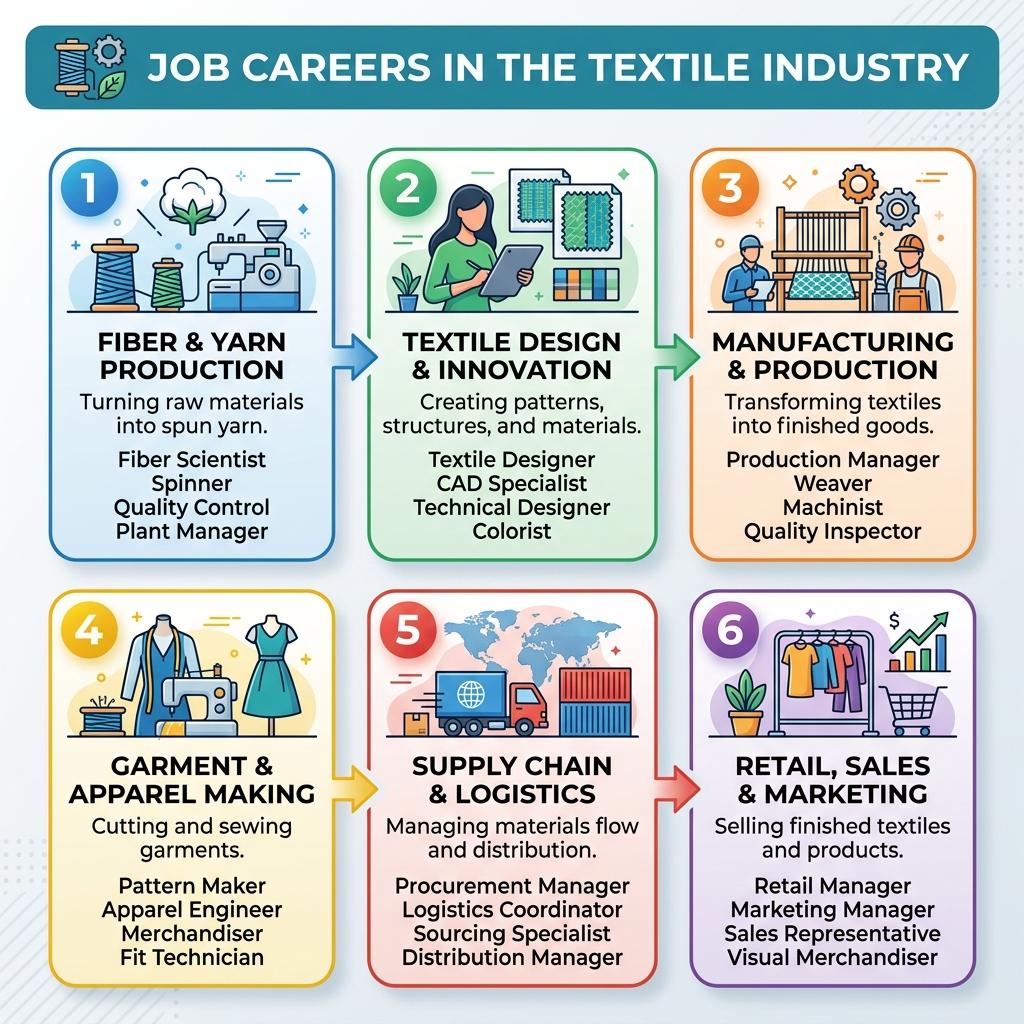
What are the primary career paths available in the textile industry?
The textile industry offers a diverse range of career opportunities across various stages of production and retail. The primary paths include:
- Design and Development: Textile designers, CAD specialists, and colorists who focus on the aesthetics and structure of fabrics.
- Engineering and Technology: Textile engineers, process engineers, and material scientists who optimize machinery and invent new fibers.
- Manufacturing and Production: Plant managers, loom technicians, and production planners who oversee the physical creation of textiles.
- Quality and Sourcing: Quality assurance (QA) inspectors, fabric sourcers, and buyers who ensure materials meet standards and budgets.
- Sales and Merchandising: Visual merchandisers, retail buyers, and marketing executives who bridge the gap between production and consumers.
What are the key responsibilities of a Textile Technologist?
A Textile Technologist bridges the gap between design and manufacturing, ensuring that fabrics meet specific structural and performance standards. Their primary responsibilities include:
- Testing textiles for durability, colorfastness, flammability, and safety.
- Developing new synthetic fibers or improving the performance of natural ones.
- Sourcing sustainable dyes, chemicals, and processing methods.
- Collaborating with designers to select the most suitable fabrics for specific end-products.
- Ensuring compliance with strict environmental and international industry regulations.
They play a crucial role in creating innovative materials, such as moisture-wicking sportswear or flame-retardant industrial gear.
What is the typical salary range for common textile industry roles?
Salaries in the textile industry vary heavily based on geographic location, education, and years of experience. Below is a general estimate of annual salaries in the US market:
| Job Title | Entry-Level Salary | Senior-Level Salary |
|---|---|---|
| Textile Designer | $45,000 | $85,000+ |
| Textile Engineer | $60,000 | $110,000+ |
| Apparel Merchandiser | $50,000 | $95,000+ |
| Quality Assurance Manager | $55,000 | $100,000+ |
How is the push for sustainability changing textile careers?
Sustainability is fundamentally reshaping the textile job market. As consumers and regulators demand eco-friendly practices, companies are moving away from "fast fashion" and creating entirely new roles focused on environmental compliance and the circular economy.
Key impacts on careers include:
- New Job Titles: A surge in roles like Sustainability Director, Circular Economy Specialist, and Eco-Materials Researcher.
- Skill Shifts: Existing roles, such as designers and engineers, now require knowledge of zero-waste design, organic farming standards, and closed-loop recycling processes.
- Supply Chain Transparency: Sourcing managers must now heavily vet international suppliers for fair labor practices and lower carbon footprints.
What skills are essential for a successful career in textile design?
To succeed as a textile designer, a candidate must blend artistic vision with deep technical expertise. The most sought-after skills include:
- Technical Proficiency: Mastery of Computer-Aided Design (CAD) software such as Adobe Illustrator, Photoshop, and specialized textile programs like NedGraphics.
- Textile Knowledge: A comprehensive understanding of yarn types, weave structures, knitting techniques, and dyeing/printing processes.
- Creative Abilities: A strong grasp of color theory, repeat pattern creation, and an acute eye for emerging fashion or interior design trends.
- Business Acumen: The ability to balance creative concepts with commercial viability, production limitations, and strict manufacturing budgets.
What is the difference between careers in traditional apparel and technical textiles?
While both sectors deal with fabrics, the career focus, required skills, and end-products differ significantly:
| Feature | Traditional Apparel | Technical Textiles |
|---|---|---|
| Primary Focus | Aesthetics, comfort, and consumer trends. | Functionality, durability, and life-saving safety. |
| Target Industries | Fashion, retail, and home furnishings. | Automotive, medical, aerospace, and agriculture. |
| Key Career Roles | Fashion Designer, Merchandiser, Tailor. | Material Scientist, R&D Engineer, Bio-textile Expert. |
| Required Knowledge | Trend forecasting, draping, and dyeing. | Polymer science, thermodynamics, and load testing. |
What steps should I take to transition into the Smart Textiles (e-textiles) sector?
Smart textiles, which integrate electronic components into fabrics, is a rapidly growing niche. To build a career in this cutting-edge field, follow these steps:
- Obtain Interdisciplinary Education: Combine a traditional degree in textile engineering with coursework in electronics, computer science, or the Internet of Things (IoT).
- Learn Basic Programming: Gain foundational coding skills (such as C++ or Python) to understand how microcontrollers process sensor data.
- Understand Wearable Tech: Study the integration of conductive yarns, flexible micro-batteries, and biometric sensors into woven materials.
- Gain Hands-on Experience: Apply for internships at tech-apparel startups or university research labs focusing on wearable technology.
What is the typical career progression for an apparel merchandiser?
Apparel merchandising is a highly rewarding career path with clear upward mobility. The standard progression usually follows this trajectory:
- Merchandising Assistant / Trainee: Handles administrative tasks, sample tracking, basic data entry, and vendor communication.
- Assistant Merchandiser: Assists with garment costing, creates purchase orders, and analyzes seasonal sales data.
- Merchandiser: Manages specific product lines, negotiates pricing with suppliers, and collaborates with designers to finalize collections.
- Senior Merchandiser: Oversees multiple product categories, directs global sourcing strategies, and manages junior staff.
- Merchandising Director / VP: Shapes the overarching financial, sourcing, and product strategy for the entire brand.
How important is networking for career development in the textile industry?
Networking is incredibly crucial in the textile industry, as the sector operates heavily on global Business-to-Business (B2B) relationships, trust, and complex supply chains.
Effective networking can lead to:
- Hidden Job Opportunities: Many high-level roles in sourcing, design, and management are filled through industry referrals rather than public job boards.
- Supplier Partnerships: Buyers and merchandisers rely heavily on their industry contacts to find reliable, high-quality, and cost-effective factories.
- Mentorship: Connecting with seasoned professionals provides invaluable guidance on navigating complex international trade laws and market shifts.
Professionals should actively attend major trade shows like Premiere Vision, Techtextil, and Texworld to build and maintain these connections.
What are the future job prospects and trends in the global textile industry?
The future job market in the textile industry is shifting rapidly from manual labor towards technology-driven and highly sustainable roles. While heavy automation is reducing the need for low-skill factory workers, it is simultaneously creating new, high-paying opportunities.
Key future trends include:
- Automation and AI: There is a high demand for robotics engineers and AI data specialists to optimize supply chains and automate weaving and cutting processes.
- 3D Design: Growth in roles related to 3D garment rendering (using software like CLO 3D), which drastically reduces physical sample waste.
- Eco-Innovation: Continued exponential growth for experts in circular supply chains, next-gen textile recycling technologies, and carbon footprint auditing.