 jobdayta.com
 Jobs and Career in Information Technology Industry
Information technology encompasses the use of computer systems, software, and networks for processing, storing, and transmitting data. It drives digital transformation across industries by enabling automation, communication, and data analysis. Key components include cloud computing, cybersecurity, artificial intelligence, and big data management. IT infrastructure and services support business operations, innovation, and decision-making efficiency.
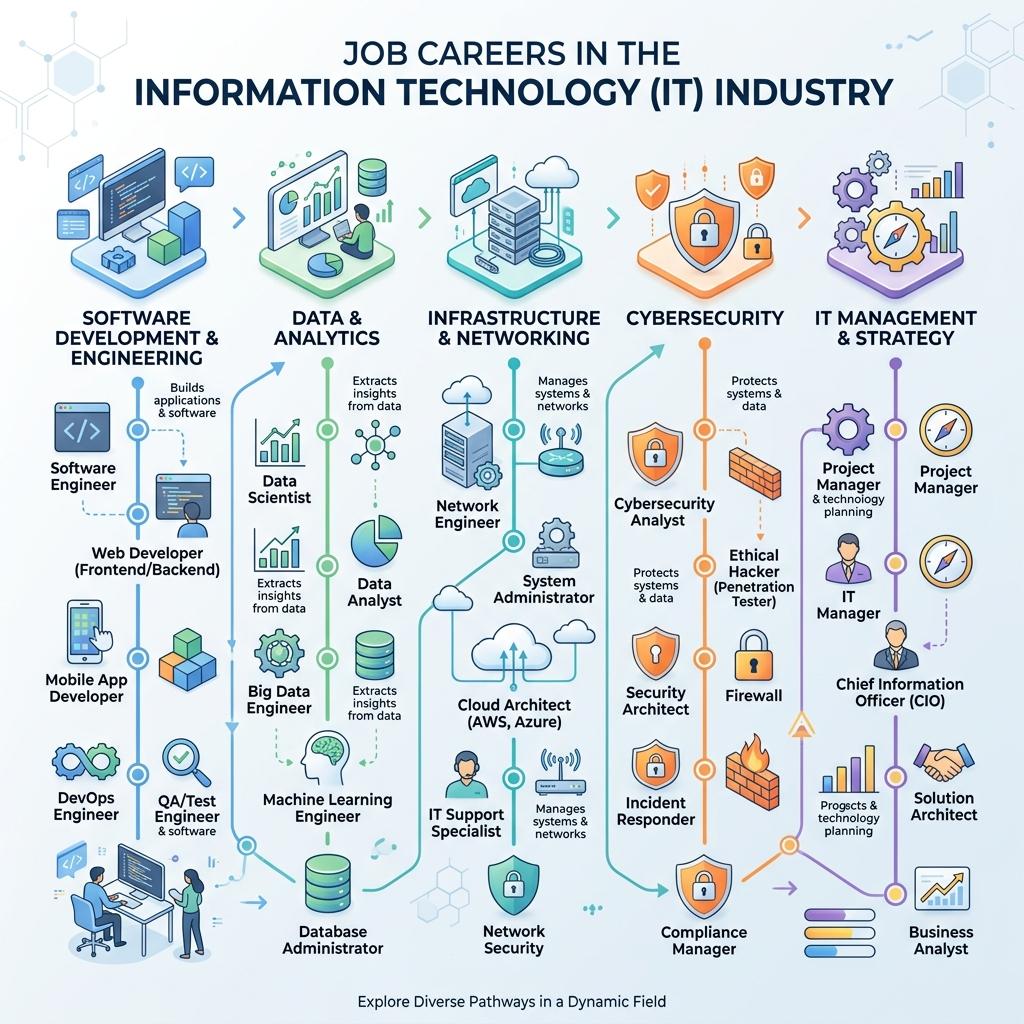
What are the most in-demand IT jobs right now?
The Information Technology industry is rapidly evolving, leading to high demand for specialized roles. Currently, the most sought-after positions focus on cloud infrastructure, security, and artificial intelligence.
- Cloud Architect: Designs and manages scalable cloud environments.
- Cybersecurity Analyst: Protects systems and data from cyber threats.
- Data Scientist: Analyzes complex datasets to drive business decisions.
- AI/Machine Learning Engineer: Develops and trains artificial intelligence models.
- DevOps Engineer: Bridges software development and IT operations for faster deployment.
These roles offer excellent job security and competitive salaries due to the ongoing digital transformation across all business sectors.
How can a beginner start a career in IT with no prior experience?
Starting an IT career requires dedication and a strategic learning approach. Follow these structured steps to break into the industry:
- Identify a niche: Choose an area of interest, such as web development, IT support, or networking.
- Learn the basics: Utilize online platforms (e.g., Coursera, Udemy) to learn foundational skills and programming logic.
- Earn a certification: Entry-level certifications like CompTIA A+, AWS Cloud Practitioner, or Cisco CCNA validate your baseline skills to employers.
- Build a portfolio: Work on personal projects or contribute to open-source communities to showcase practical abilities.
- Network: Attend tech meetups, join LinkedIn groups, and connect with professionals to discover entry-level or internship opportunities.
What is the difference between Frontend, Backend, and Full-Stack development?
Web development is divided into three primary categories based on the area of the application being built.
| Role | Focus Area | Common Technologies |
|---|---|---|
| Frontend | Client-side user interface. Focuses on what the user sees and interacts with. | HTML, CSS, JavaScript, React, Vue.js |
| Backend | Server-side logic, databases, and APIs. The behind-the-scenes functionality. | Python, Java, Node.js, SQL, Ruby |
| Full-Stack | Handles both frontend and backend development across the entire application. | A combination of frontend and backend tech stacks. |
Are IT certifications worth the time and financial investment?
Yes, IT certifications are highly valuable, especially for beginners and those looking to specialize or transition into a new technical role. They provide a structured learning path and act as standardized proof of your technical competence.
Key benefits include:
- Resume boost: Certifications help your resume pass through automated Applicant Tracking Systems (ATS).
- Higher salary potential: Certified professionals often negotiate better starting salaries.
- Employer trust: Vendor-specific certificates (like AWS, Microsoft, Cisco) prove you are trained to exact industry standards.
However, certifications should always complement—not replace—hands-on experience and real-world problem-solving skills.
What are the highest-paying roles in the IT sector?
Salaries in IT vary significantly based on location, experience, and specialization. However, leadership roles and highly specialized technical positions generally command the highest compensation packages.
| Job Title | Average Annual Salary (USD) | Primary Responsibility |
|---|---|---|
| Chief Information Officer (CIO) | $150,000 - $250,000+ | Oversees the entire IT strategy and budget of a company. |
| Cloud Architect | $130,000 - $180,000 | Designs robust, secure cloud infrastructures. |
| AI/ML Engineer | $120,000 - $170,000 | Develops intelligent algorithms and predictive models. |
| Information Security Manager | $120,000 - $160,000 | Leads corporate cybersecurity initiatives and policies. |
*Note: Salaries are approximate and depend heavily on the specific market.
What soft skills are essential for career advancement in IT?
While technical abilities will help you secure a job, soft skills are what help you get promoted. IT is highly collaborative, making interpersonal skills crucial for long-term career development.
- Communication: The ability to explain complex technical concepts clearly to non-technical stakeholders.
- Problem-Solving: Analyzing issues logically and developing creative solutions under pressure.
- Adaptability: Remaining open to learning new tools and methodologies as technology inevitably shifts.
- Teamwork: Collaborating effectively with cross-functional teams, including designers, managers, and testers.
- Time Management: Prioritizing tasks effectively to meet strict project deadlines in Agile work environments.
What is the typical career progression for a software engineer?
A software engineering career usually follows a structured path, eventually offering a fork between deep technical specialization and team management.
- Junior Developer (0-2 years): Focuses on learning the codebase, writing basic features, and fixing bugs under senior supervision.
- Mid-Level Developer (2-5 years): Works independently, designs system components, and begins mentoring junior staff.
- Senior Developer (5+ years): Owns major features, makes core architectural decisions, and leads project direction.
- Staff/Principal Engineer: The peak of the technical track; drives technical strategy across multiple teams without managing people.
- Engineering Manager: The management track; focuses on team scaling, budgets, career development, and business strategy.
How important is building a portfolio for IT job seekers?
A strong portfolio is exceptionally important, often holding more weight than a traditional resume or college degree, especially for roles like web development, UX/UI design, and data science. It provides tangible proof of your abilities.
An effective tech portfolio demonstrates:
- Practical application: Shows you can build real, working software, not just pass multiple-choice exams.
- Code quality: Allows hiring managers to evaluate your coding style, architecture, and documentation via GitHub links.
- Problem-solving: Case studies within your portfolio explain why you chose specific technologies to solve a problem.
For operations or networking roles, a portfolio might instead include a tech blog, architecture diagrams, or contributions to tech forums.
How has remote work impacted IT career opportunities?
The massive shift toward remote work has profoundly expanded IT career opportunities. Geography is no longer a limiting factor, allowing professionals to apply for roles globally. This has led to:
- Global Talent Pools: Companies can hire the best talent regardless of location, opening doors for workers outside major tech hubs to earn higher salaries.
- Flexible Work Environments: IT professionals enjoy a better work-life balance, leading to higher overall job satisfaction.
- Asynchronous Collaboration: Proficiency in remote communication tools (Jira, Slack, Git, Zoom) is now mandatory.
However, remote IT workers must be highly proactive in online communication to ensure visibility for promotions and career advancement.
How can IT professionals stay updated with rapidly changing technology?
Continuous learning is the absolute cornerstone of a successful IT career. Technologies become obsolete quickly, making daily upskilling a necessity.
- Read Tech Publications: Follow industry-leading blogs, TechCrunch, Hacker News, or specialized Substack newsletters.
- Take Online Courses: Utilize platforms like Pluralsight, edX, or Udacity to learn emerging programming languages or cloud tools.
- Attend Conferences: Events like AWS re:Invent or Google I/O provide deep insights into future technological trends.
- Join Communities: Participate in Discord servers, Reddit communities (like r/programming), and StackOverflow to discuss new tools with peers.
- Build Side Projects: Hands-on experimentation remains the absolute best way to master newly released frameworks or APIs.