 jobdayta.com
 Jobs and Career in Legal Industry
Legal frameworks establish rules governing individual and organizational behavior within society, ensuring justice and order. They cover various domains, including criminal law, civil law, corporate law, and regulatory compliance. Legal professionals, such as attorneys and judges, interpret and enforce these rules to resolve disputes and protect rights. Effective legal systems contribute to economic stability, public safety, and the protection of human rights.
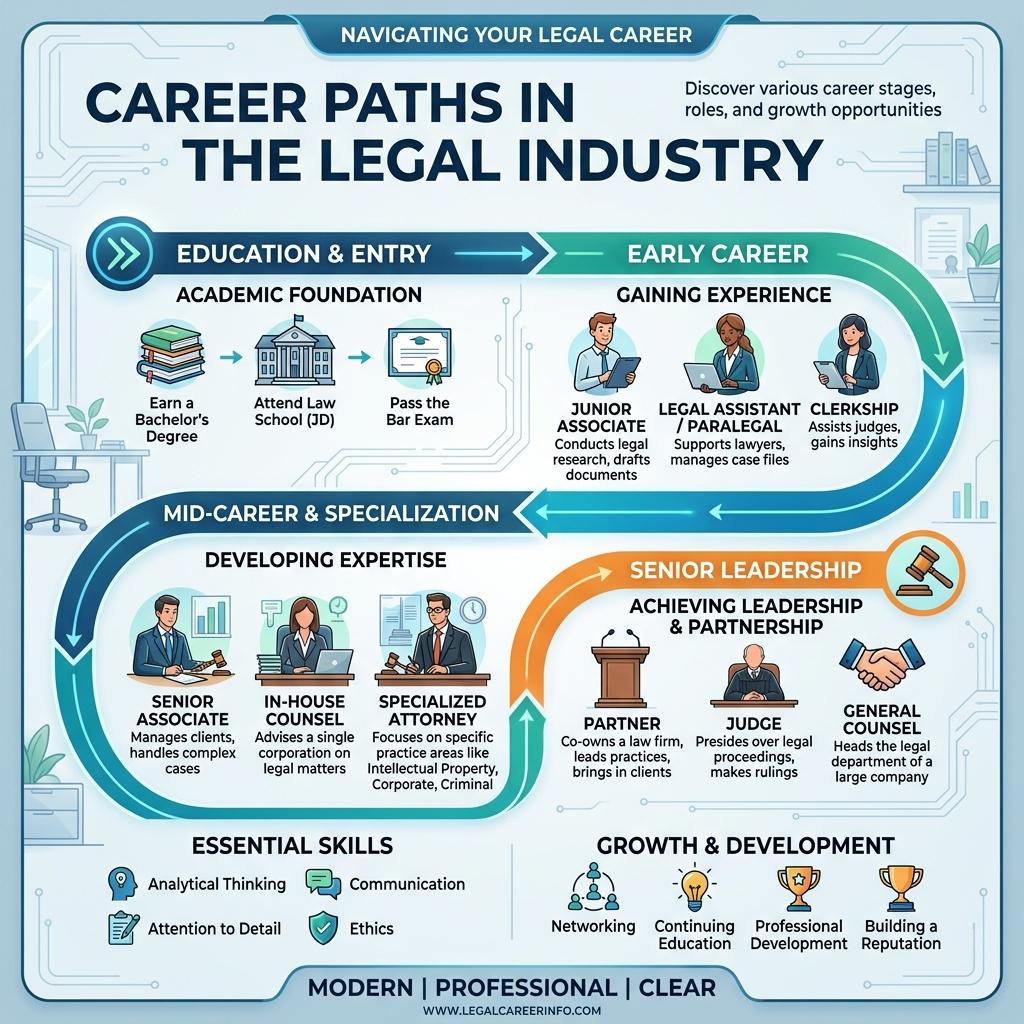
What are the primary career paths in the legal industry besides becoming a lawyer?
The legal industry offers numerous rewarding career paths that do not require a Juris Doctor (J.D.) degree. These roles are critical to the functioning of law firms and corporate legal departments.
- Paralegal: Assists lawyers by organizing files, conducting legal research, and drafting documents.
- Legal Secretary/Assistant: Manages administrative duties, scheduling, and client correspondence.
- Compliance Officer: Ensures that a company's operations comply with industry regulations and internal policies.
- Legal Technologist: Manages e-discovery, legal software, and technological integration within a firm.
- Mediator/Arbitrator: Facilitates dispute resolution outside of the traditional courtroom setting.
What is the typical career progression for an attorney in a private law firm?
Career progression in a traditional law firm generally follows a structured, tiered path, heavily dependent on billing hours, client acquisition, and legal expertise.
- Junior Associate: Entry-level attorney focusing on research, document review, and drafting (Years 1-3).
- Senior Associate: Takes on complex case work, client interaction, and manages junior associates (Years 4-7).
- Non-Equity Partner: Promoted to partner status with a fixed salary, but does not share in the firm's overall profits.
- Equity Partner: A partial owner of the firm who shares in the profits and losses, heavily focused on bringing in new business (rainmaking).
- Managing Partner: Sits at the top of the firm's hierarchy, acting as the chief executive overseeing firm-wide operations.
How do average annual salaries compare among common legal professions?
Salaries in the legal industry vary widely based on education, experience, location, and the specific sector (private vs. public). Below is a general comparison of median salaries in the United States:
| Legal Profession | Estimated Median Salary (USD) | Education Required |
|---|---|---|
| Lawyer (Private Practice) | $135,000 - $200,000+ | J.D. + Bar Exam |
| Judge / Magistrate | $148,000 | J.D. + Experience |
| Paralegal | $59,000 | Associate/Bachelor's + Certificate |
| Legal Assistant | $48,000 | High School / Associate Degree |
What are the most essential skills needed for career advancement in law?
To advance in the legal field, professionals must cultivate a blend of hard legal knowledge and vital soft skills. Relying solely on academic intelligence is rarely enough to reach the partner level or a General Counsel position.
- Analytical Thinking: The ability to synthesize vast amounts of complex information and identify key legal issues.
- Written and Verbal Communication: Drafting clear, persuasive legal arguments and speaking confidently in court or negotiations.
- Client Management: Building trust, managing expectations, and providing excellent customer service to retain business.
- Commercial Awareness: Understanding the business world and how legal advice impacts a client’s financial and strategic goals.
How does working as an in-house counsel differ from working in a private law firm?
Transitioning from a law firm to an in-house corporate role is a common career move for many attorneys. Here are the primary differences:
| Aspect | Private Law Firm | In-House Counsel |
|---|---|---|
| Client Base | Multiple different clients across various industries. | One single client (the employer/company). |
| Work-Life Balance | Often demanding, driven by strict billable hour requirements. | Generally more predictable hours; no billable targets. |
| Scope of Work | Highly specialized in one specific area of law (e.g., tax, litigation). | Often a generalist, handling everything from contracts to HR issues. |
What is a judicial clerkship and why is it beneficial for career development?
A judicial clerkship is a prestigious, highly competitive position where a recent law school graduate works as an assistant to a judge, typically for one or two years.
Clerkships are incredibly beneficial for career development because they provide unparalleled insight into the judicial decision-making process. Clerks hone their legal research and writing skills by drafting memos and court opinions. Additionally, a clerkship carries immense prestige, making the attorney highly attractive to top-tier law firms, often resulting in significant hiring bonuses and accelerated career tracks. It also provides a lifelong mentorship connection with the judge.
How is artificial intelligence (AI) and technology affecting legal careers?
AI and legal technology are fundamentally reshaping how legal services are delivered, altering job descriptions across the industry.
Instead of replacing lawyers, technology is automating routine tasks such as document review, contract analysis, and basic legal research (eDiscovery). This shift requires legal professionals to become tech-savvy. It has also created entirely new career paths, such as Legal Operations Managers and Legal Prompt Engineers. For young lawyers, it means less time spent on tedious administrative work and more time focusing on high-level strategic advisory, complex problem solving, and client relationship management.
What steps should an aspiring lawyer take to prepare for law school?
Preparation for a successful legal career begins well before law school. Aspiring lawyers should follow these strategic steps during their undergraduate years:
- Maintain a High GPA: Law school admissions are highly competitive, and your undergraduate GPA is a critical metric.
- Develop Reading and Writing Skills: Choose a major that requires rigorous reading, critical analysis, and extensive essay writing (e.g., History, English, Political Science).
- Prepare for the LSAT: Dedicate several months to studying for the Law School Admission Test, as it is heavily weighted in the admissions process.
- Gain Relevant Experience: Intern at a law firm, government agency, or legal non-profit to understand the daily realities of the profession.
What role does networking play in a legal professional's career growth?
Networking is the lifeblood of career development in the legal industry. Because the legal community in any given city is often smaller and more interconnected than it appears, a strong professional reputation is paramount.
For law firm associates, networking is essential for "rainmaking"—bringing in new clients, which is required to make partner. For those looking to move in-house or switch firms, lateral opportunities are frequently discovered through professional contacts rather than public job postings. Joining bar associations, attending legal conferences, and maintaining relationships with law school alumni are highly recommended strategies for sustained career growth.
What are Continuing Legal Education (CLE) requirements?
Continuing Legal Education (CLE) consists of mandatory professional development courses that attorneys must complete to maintain their license to practice law.
Each state’s bar association sets its own CLE requirements, typically requiring a specific number of educational hours every one to three years. These courses ensure that lawyers stay updated on recent changes in the law, new legal technologies, and evolving judicial precedents. Most states also mandate that a portion of these CLE hours be strictly dedicated to legal ethics, professionalism, and, increasingly, topics related to diversity, equity, and inclusion in the legal profession.