 jobdayta.com
 Jobs and Career in Science Industry
Science explores the principles governing natural phenomena through observation, experimentation, and analysis. It encompasses diverse fields such as physics, chemistry, biology, and earth sciences, each contributing to technological advancements and medical breakthroughs. Scientific methods enable the systematic discovery of knowledge, fostering innovation that shapes modern society. Research institutions and laboratories play a crucial role in expanding our understanding of the universe and improving quality of life.
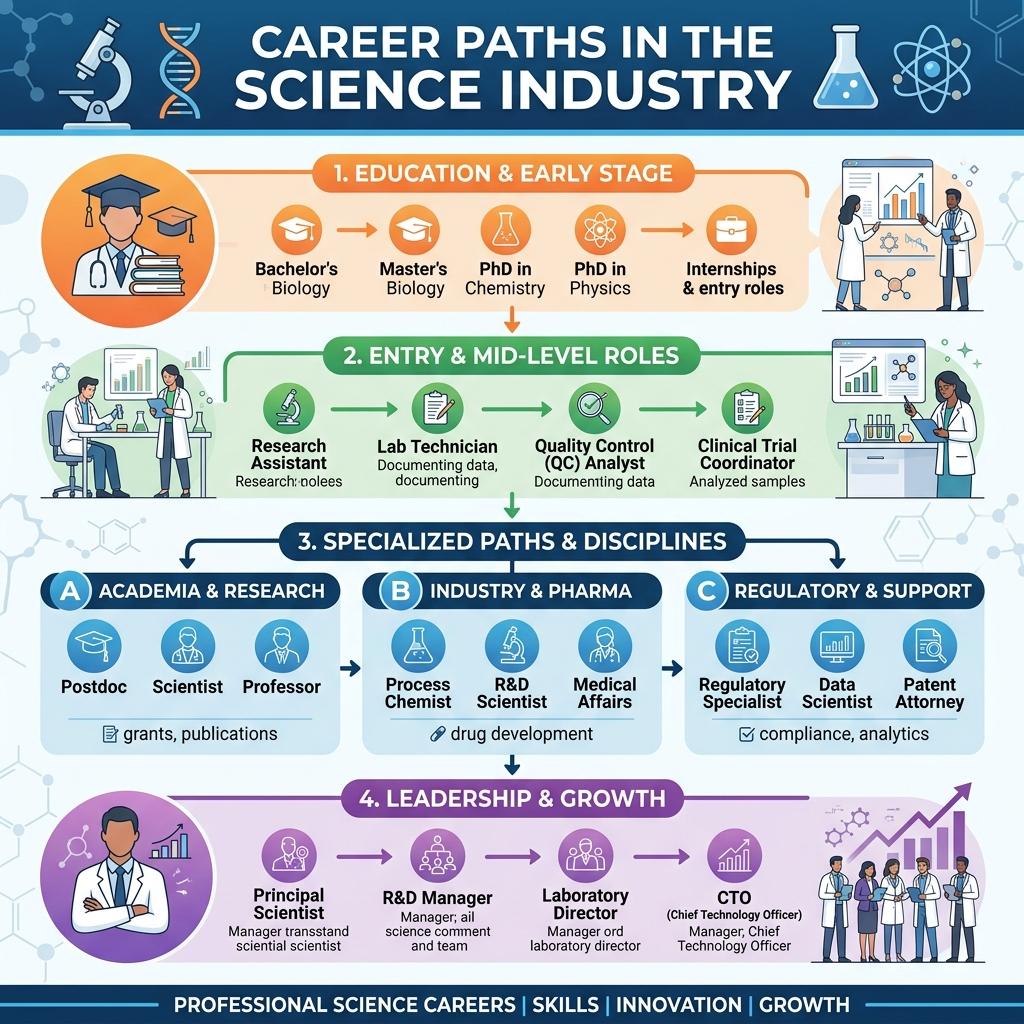
What are the primary career pathways in the science industry?
The science industry offers diverse career pathways beyond traditional lab work. Key sectors include:
- Academia: Focused on fundamental research, grant writing, and teaching (e.g., Postdoctoral Researcher, Professor).
- Industry: Applied research, product development, and commercialization within biotech, pharma, or tech companies (e.g., R&D Scientist, Quality Control Analyst).
- Government and Public Sector: Policy making, public health, and national defense (e.g., FDA Reviewer, Environmental Scientist).
- Alternative Science Careers: Roles outside the lab that require deep scientific knowledge (e.g., Science Writer, Patent Examiner, Consultant).
How important is a PhD for career advancement in science?
A PhD is highly valuable but not strictly mandatory for all science careers. It is essential for principal investigator (PI) roles, academic tenure, and upper-management R&D positions. However, many lucrative careers only require a Bachelor's or Master's degree.
| Degree Level | Typical Roles |
|---|---|
| BSc / MSc | Lab Technician, Research Associate, Quality Assurance, Sales Rep |
| PhD | Principal Scientist, Medical Science Liaison, University Professor |
What soft skills are most critical for scientists today?
While technical expertise is expected, employers increasingly look for strong soft skills to drive collaborative projects forward:
- Communication: The ability to translate complex data into clear insights for non-scientific stakeholders and investors.
- Collaboration: Working seamlessly across cross-functional teams, including marketing, regulatory affairs, and engineering.
- Adaptability: Pivoting quickly when experiments fail or industry trends shift.
- Project Management: Balancing budgets, timelines, and lab resources effectively.
What is a Medical Science Liaison (MSL) and how do I become one?
A Medical Science Liaison (MSL) is a specialized professional within the pharmaceutical, biotechnology, and medical device industries. They act as a bridge between their company and Key Opinion Leaders (KOLs) in the medical community, sharing the latest clinical data rather than pushing sales.
To become an MSL, candidates typically need an advanced clinical or scientific degree, such as a PharmD, MD, or PhD. Exceptional networking and presentation skills are crucial, as the role involves heavy travel and building relationships rather than conducting bench research.
Which science sectors are experiencing the fastest job growth?
The science industry is evolving rapidly, with several sectors experiencing explosive job growth due to technological advancements and global challenges:
- Bioinformatics & Computational Biology: Merging biology with data science to analyze massive genomic datasets.
- Green Technology: Developing sustainable energy solutions and climate change mitigation strategies.
- Advanced Therapeutics: Expanding research in CRISPR, personalized medicine, and mRNA vaccines.
- AI in Drug Discovery: Utilizing Artificial Intelligence to predict molecular behavior and accelerate pharmaceutical pipelines.
How can a bench scientist transition into a management role?
Transitioning from the bench to management requires shifting focus from individual experiments to team leadership and strategy. Follow these steps:
- Seek Leadership Opportunities: Volunteer to lead cross-departmental projects or manage lab safety protocols.
- Develop Business Acumen: Understand industry trends and how your research aligns with company profitability. Consider a mini-MBA.
- Expand Your Network: Build relationships with managers and executives outside your immediate department.
- Communicate Your Goals: Clearly express your managerial aspirations during performance reviews to gain targeted mentorship.
What is the typical salary progression for a research scientist in the industry?
Salary progression in the private science sector generally outpaces academia and increases significantly with experience. Below is a generalized progression for a US-based industry scientist:
| Career Level | Experience Required | Estimated Base Salary (USD) |
|---|---|---|
| Research Associate | 0-3 Years (BSc/MSc) | $60,000 - $85,000 |
| Scientist I/II | Entry PhD or 5+ Years | $95,000 - $130,000 |
| Senior Scientist | 5-10 Years (PhD) | $135,000 - $180,000 |
Note: Salaries vary widely based on geographic hub (e.g., Boston, San Francisco) and specific sub-industry.
Are post-doctoral fellowships necessary for industry jobs?
No, a post-doctoral fellowship (postdoc) is not strictly necessary for most industry jobs, though it is traditionally required for academic tenure-track positions. In the private sector, companies often value direct industry experience over academic postdocs.
If your goal is to work in biotech or pharma, transitioning directly into an industry role after your PhD can be more beneficial. It allows you to build corporate seniority, learn regulatory processes, and earn a significantly higher salary sooner. An "industry postdoc" is an exception, as it specifically trains you for corporate R&D.
How can networking accelerate a science career?
Networking is crucial because many science jobs, especially at senior levels, are filled through referrals before they are ever publicly posted. Effective networking accelerates your career by providing:
- Mentorship: Gaining guidance from seasoned professionals who can help you navigate career roadblocks.
- Collaborations: Finding partners for grant proposals, co-authorship, or startup ventures.
- Insider Knowledge: Learning about a company's culture and upcoming hiring initiatives directly from current employees.
Scientists should actively network by attending industry conferences and optimizing their LinkedIn profiles.
What role do certifications play in a scientific career?
While a science degree provides foundational knowledge, specialized certifications can make candidates significantly more competitive for niche or highly regulated roles. They prove practical competence in specific industry standards.
Valuable certifications include:
- Quality and Regulatory:
- Good Manufacturing Practice (cGMP)
- Regulatory Affairs Certification (RAC)
- Project Management:
- Project Management Professional (PMP) - highly valued for R&D directors.
- Data and Technology:
- Certifications in Python, R, or Bioinformatics for data-heavy research roles.