 jobdayta.com
 Jobs and Career in Fisheries Industry
Fisheries play a crucial role in global food security, providing approximately 17% of the world's animal protein intake. Marine and inland fisheries contribute significantly to economies, supporting livelihoods for over 60 million people worldwide. Sustainable fishing practices are essential to preserve aquatic ecosystems and maintain fish stocks for future generations. Technological advancements in aquaculture and monitoring systems have enhanced efficiency and environmental protection in the fisheries sector.
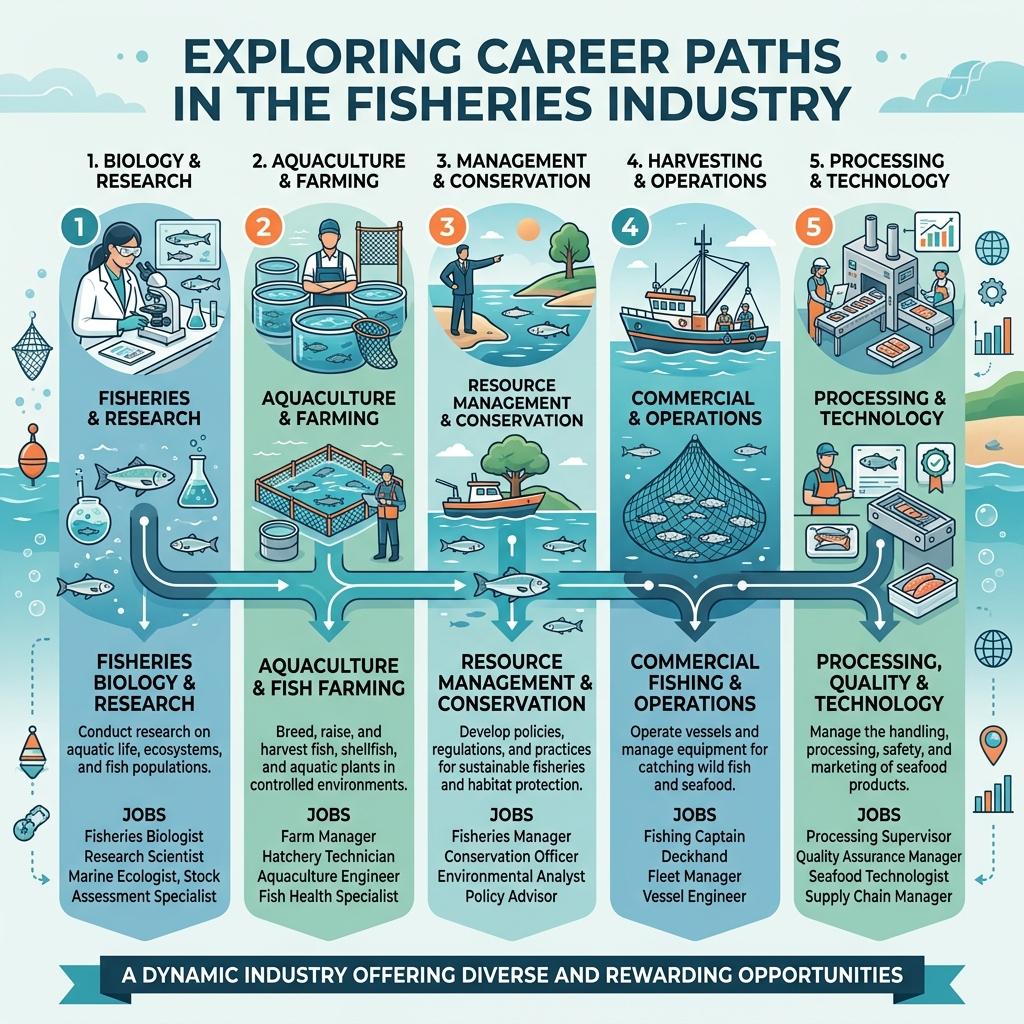
What are the primary career paths in the fisheries industry?
The fisheries industry offers diverse career opportunities categorized into four main paths:
- Commercial Fishing: Involves the actual harvesting of wild fish and seafood. Roles include deckhands, commercial divers, captains, and marine engineers.
- Aquaculture: The farming of aquatic organisms. Jobs range from hatchery technicians to farm managers and aquatic veterinarians.
- Fisheries Science & Management: Focuses on sustainability, research, and policy. Roles include marine biologists, fisheries observers, ecologists, and conservation officers.
- Seafood Processing & Supply Chain: Involves food safety, quality control, processing plant management, and seafood marketing and sales.
What is an Aquaculture Manager, and what are their daily responsibilities?
An Aquaculture Manager oversees the breeding, rearing, and harvesting of fish and shellfish in controlled environments like hatcheries or ocean net pens. Their daily responsibilities blend biology with business operations. Key duties include:
- Monitoring water quality, temperature, and oxygen levels.
- Formulating and managing feeding schedules to optimize fish growth.
- Preventing and treating aquatic diseases.
- Managing farm staff, budgets, and operational logistics.
- Ensuring compliance with environmental regulations and safety standards.
This role is critical for sustainable seafood production and requires strong scientific knowledge and problem-solving skills.
What educational qualifications are needed for a career in fisheries science?
Educational requirements vary depending on the specific role, but generally follow this progression:
- Entry-Level (Technicians/Observers): Often require an Associate's or Bachelor's degree in marine biology, fisheries science, environmental science, or zoology.
- Mid-Level (Biologists/Managers): Typically demand a Bachelor’s degree, though many employers prefer a Master’s degree in Fisheries Management or Aquaculture. Practical field experience is crucial.
- Advanced (Research Scientists/Academia): A Ph.D. in a specialized field (e.g., aquatic ecology, ichthyology) is required for leading independent research projects or teaching at the university level.
Certifications in SCUBA diving or boat handling are also highly beneficial.
How do average salaries compare across different roles in the fisheries sector?
Salaries in the fisheries industry vary widely based on location, education, and experience. Below is a comparative estimate of annual average salaries in the United States:
| Job Title | Estimated Average Salary (USD) |
|---|---|
| Fisheries Observer | $40,000 - $55,000 |
| Aquaculture Technician | $35,000 - $45,000 |
| Fisheries Biologist | $60,000 - $80,000 |
| Commercial Ship Captain | $75,000 - $100,000+ |
| Aquaculture Manager | $65,000 - $90,000 |
Note: Commercial fishing salaries often depend heavily on the yield of the catch rather than a fixed base salary.
What are the key technical skills required to succeed as a fisheries biologist?
Fisheries biologists require a mix of field, laboratory, and analytical skills to assess fish populations and manage aquatic ecosystems effectively. Essential technical skills include:
- Data Analysis: Proficiency in statistical software (like R or Python) to model fish populations, growth rates, and mortality.
- GIS Mapping: Using Geographic Information Systems to map aquatic habitats and track fish migrations.
- Field Sampling: Competence in using electrofishing gear, setting nets, and securely tagging fish.
- Water Quality Testing: Ability to measure chemical and physical water parameters.
- Taxonomy: Accurate identification of local fish species, invertebrates, and aquatic plants.
How can someone transition from a general biology degree into the fisheries industry?
Transitioning from a general biology background to a fisheries career involves targeted steps to gain industry-specific expertise:
- Gain Field Experience: Volunteer or intern at fish hatcheries, state wildlife agencies, or university research labs to get hands-on experience.
- Take Specialized Courses: Enroll in postgraduate courses or certificates focusing on ichthyology, aquatic ecology, or fisheries management.
- Develop Data Skills: Learn statistical modeling and GIS, which are highly valued in modern fisheries science.
- Work as a Fisheries Observer: This is a common entry-level gateway role that provides excellent at-sea experience and data collection skills.
- Network: Join professional societies to connect with industry professionals and find mentorship.
What are the current job prospects and growth trends in aquaculture?
The job prospects in aquaculture are highly positive and rapidly expanding. As wild fish populations face extreme pressure from overfishing and climate change, aquaculture is stepping in to meet the global demand for seafood. Today, aquaculture produces more than half of the seafood consumed worldwide.
Career growth is particularly strong in sustainable farming practices, offshore aquaculture, and recirculating aquaculture systems (RAS). There is a rising demand for specialized roles such as aquatic veterinarians, feed formulation scientists, and farm technology engineers. Candidates with a blend of biological knowledge and technological proficiency will find excellent employment opportunities.
What role does technology play in modern fisheries careers?
Technology has revolutionized the fisheries industry, creating new career niches and optimizing daily operations. Professionals must now interact with various advanced systems:
- Acoustic Telemetry: Biologists use underwater sonar and acoustic tags to track fish movements, spawning, and behavior in real-time.
- Drones and ROVs: Remotely Operated Vehicles are used by farm managers and researchers to inspect underwater nets, habitats, and fish health without needing to dive.
- Automated Feeding Systems: Aquaculture technicians use software-driven feeders equipped with AI cameras to optimize feeding and reduce environmental waste.
- Blockchain: Supply chain managers use blockchain to ensure seafood traceability from bait to plate, helping to combat illegal fishing.
What are the opportunities for international careers in fisheries?
The fisheries industry is fundamentally global, offering abundant international career opportunities, particularly in research, sustainability policy, and industry development. Key avenues include:
- NGOs and Conservation: Organizations like WWF or the Marine Stewardship Council hire experts to promote sustainable fishing practices in developing nations.
- International Policy: Careers with the UN’s Food and Agriculture Organization (FAO) involve global fisheries management, data collection, and food security.
- Aquaculture Consulting: Specialists travel globally to help design hatcheries or improve farm yields in countries heavily reliant on aquaculture, such as Norway, Chile, or Vietnam.
Bilingual candidates with cross-cultural communication skills are highly preferred for these international roles.
How can networking and professional organizations help career development in fisheries?
Networking is crucial in the relatively tight-knit fisheries industry. Joining professional organizations, such as the American Fisheries Society (AFS) or the World Aquaculture Society (WAS), provides multiple career benefits:
- Access to Job Boards: Members get exclusive access to niche job postings and internships not advertised on general job sites.
- Continuing Education: Organizations offer workshops, certifications, and webinars to keep skills updated regarding the latest industry regulations and technologies.
- Conferences: Attending annual meetings allows professionals to present research, meet potential employers, and find mentors.
- Publications: Subscriptions to scientific journals keep workers informed about cutting-edge research and market trends.