 jobdayta.com
 Jobs and Career in Public Industry
Public spaces foster social interaction, community engagement, and cultural expression. Urban parks, plazas, and libraries provide accessible environments that promote well-being and inclusivity. Well-designed public areas enhance property values, stimulate local economies, and support environmental sustainability through green infrastructure. Effective management and programming of public spaces ensure they meet diverse community needs and encourage civic participation.
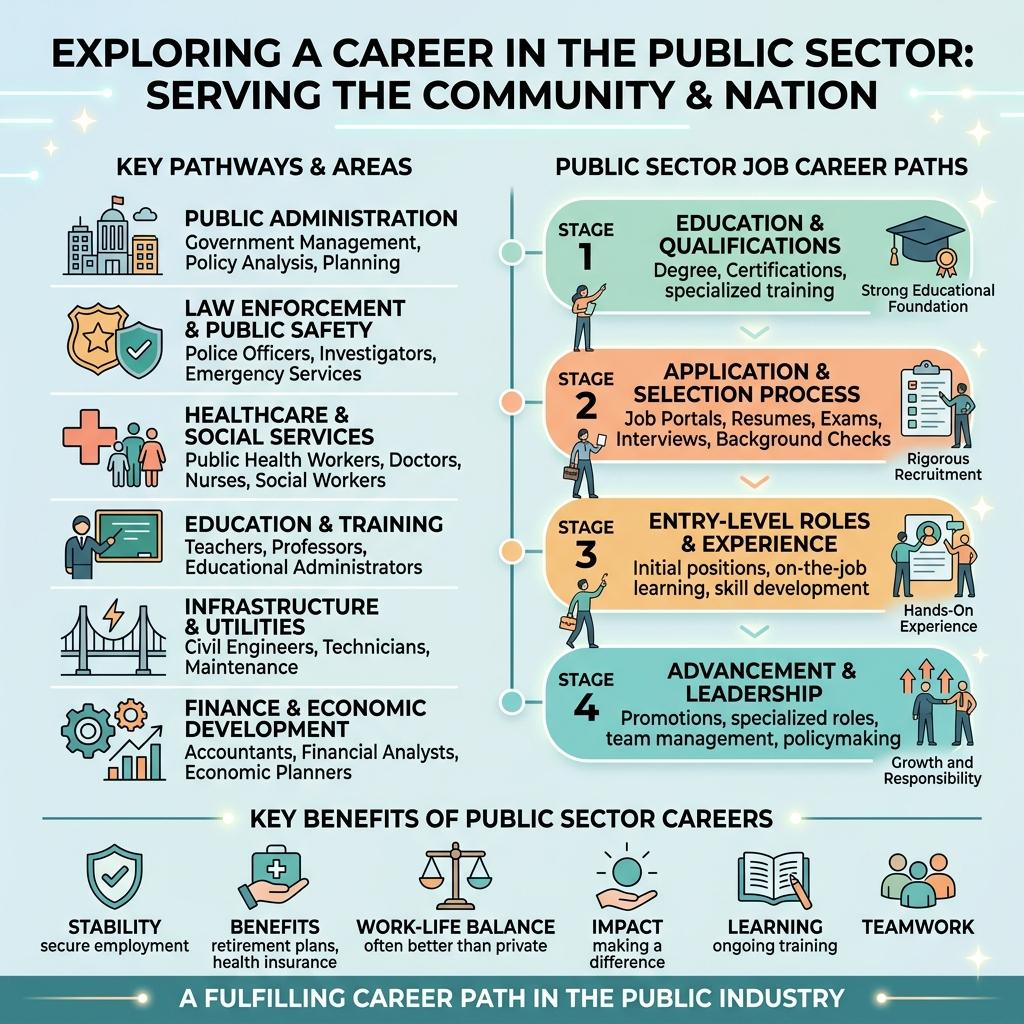
What are the primary benefits of working in the public sector?
Working in the public sector offers several compelling advantages, often contrasting heavily with private-sector roles:
- Job Security: Government jobs are generally less susceptible to market fluctuations and mass layoffs.
- Comprehensive Benefits: Excellent healthcare, dental, and vision insurance plans for employees and dependents.
- Retirement Plans: Access to traditional pensions (defined benefit plans), which are increasingly rare in the private sector.
- Work-Life Balance: Predictable hours, generous paid time off, and observance of federal or state holidays.
- Public Service: A sense of purpose derived from serving the community and making a tangible societal impact.
How does the application process differ from the private sector?
The public sector application process is typically more rigid, structured, and time-consuming than the private sector. The general steps include:
- Finding Opportunities: Searching centralized portals like USAJOBS (in the U.S.) or local government websites.
- Detailed Resume: Creating a specialized government resume that is highly detailed, often requiring specific formatting and salary histories.
- Assessments: Completing occupational questionnaires, civil service exams, or strict minimum-qualification screenings.
- Review and Clearance: Undergoing extensive background checks, security clearances, and structured panel interviews.
Patience is essential, as government hiring timelines can range from a few months to over a year.
What are the most common entry-level jobs in local government?
Local municipalities and counties offer diverse entry-level roles across various departments. Here are some of the most common:
| Job Title | Department | Minimum Requirement |
|---|---|---|
| Administrative Assistant | General Administration | High School Diploma |
| Public Works Technician | Infrastructure/Maintenance | High School / Valid Driver's License |
| Police Recruit | Law Enforcement | High School / Academy Training |
| HR Assistant | Human Resources | Associate or Bachelor's Degree |
Is career advancement slower in the public sector?
Historically, career advancement in the public sector can be slower compared to the fast-paced private sector. Promotions are often tied to rigid organizational structures, seniority, and specific pay grade systems.
Unlike private companies where exceptional performance can lead to rapid, impromptu promotions, government roles usually require waiting for a vacancy at the next grade level. Employees must actively apply and compete for these higher-level positions. However, this highly structured progression offers predictable career paths, clear salary expectations, and transparent, standardized criteria for advancement.
What are the General Schedule (GS) pay grades in the U.S. federal government?
The General Schedule (GS) is the predominant pay scale for U.S. federal employees, divided into 15 grades based on qualifications and job responsibilities.
| GS Grade | Typical Education Level / Role |
|---|---|
| GS-1 to GS-4 | Internships, entry-level clerical (High School to Associate Degree) |
| GS-5 to GS-7 | Entry-level professional (Bachelor's Degree) |
| GS-8 to GS-12 | Mid-level professionals (Master's Degree or equivalent experience) |
| GS-13 to GS-15 | Senior-level management, high-level technical specialists |
Each grade contains 10 "steps," allowing for regular salary increases based on tenure and acceptable performance.
What soft skills are most valued for career development in public service?
To successfully advance in the public sector, professionals must cultivate specific soft skills tailored to bureaucratic and public-facing environments:
- Integrity and Ethics: Maintaining transparency and adhering strictly to legal and ethical standards.
- Patience and Resilience: Navigating bureaucratic red tape and enduring long project timelines.
- Cross-Cultural Communication: Effectively interacting with diverse populations and inter-agency departments.
- Conflict Resolution: Handling complaints from the public diplomatically and mediating disputes.
- Adaptability: Adjusting to changing political administrations, shifting mandates, and fluctuating budgets.
How do security clearances impact career prospects in the public industry?
Obtaining a security clearance significantly boosts career prospects, particularly in defense, intelligence, and cybersecurity sectors.
Higher Marketability: Candidates possessing an active clearance are highly sought after by government agencies and contractors because it saves the employer the time and expense of sponsoring a new clearance.
Salary Premium: Roles requiring Secret or Top Secret (TS/SCI) clearances generally offer higher compensation due to the limited pool of eligible candidates.
Career Stability: Maintaining a clearance ensures ongoing eligibility for sensitive, mission-critical projects, providing a unique layer of job security.
What educational backgrounds are most demanded in modern government jobs?
While the public sector hires from almost every academic discipline, certain educational backgrounds are currently in exceptionally high demand to meet modern challenges:
- Public Administration & Policy (MPA/MPP): Essential for city managers and agency directors.
- Information Technology & Cybersecurity: Critical for modernizing legacy systems and protecting national infrastructure.
- Public Health: Required for managing community health initiatives, epidemiology, and emergency response.
- Data Science & Statistics: Necessary for evidence-based policymaking, census tracking, and economic forecasting.
- Accounting & Finance: Vital for auditing public funds and managing municipal budgets.
Can transitioning from the private sector to the public sector be difficult?
Transitioning to the public sector can be a culture shock for professionals accustomed to private industry. The primary difficulty often lies in adjusting to a slower operational pace. Public industry projects require extensive compliance checks, committee approvals, and strict adherence to regulations, which can frustrate those used to agile environments.
Additionally, top-tier private sector salaries often exceed public sector pay caps. However, many find the trade-off highly worthwhile. Transitioning professionals frequently value the enhanced work-life balance, superior retirement benefits, and the intrinsic reward of working for the public good over sheer profit maximization.
What are the typical stages of career progression for a government policy analyst?
Career progression for a policy analyst generally follows a structured, multi-tiered path within government agencies:
- Entry-Level (Junior Analyst / Research Assistant)
- Focuses on data collection, literature reviews, and drafting preliminary memos.
- Requires close supervision.
- Mid-Level (Policy Analyst)
- Conducts independent quantitative and qualitative research.
- Drafts policy proposals and briefs stakeholders.
- Senior-Level (Senior Analyst / Policy Advisor)
- Manages complex, multi-year policy initiatives.
- Advises elected officials or agency heads directly.
- Executive-Level (Policy Director / Chief of Staff)
- Oversees the entire policy department.
- Aligns agency strategies with legislative mandates and political goals.