 jobdayta.com
 Jobs and Career in Tourism Industry
Tourism drives global economic growth by attracting millions of travelers annually to diverse destinations. It fosters cultural exchange, promotes heritage preservation, and boosts local employment opportunities. Sustainable tourism practices help minimize environmental impact while enhancing visitor experiences. The industry's innovation in digital technologies improves accessibility and enriches itinerary planning.
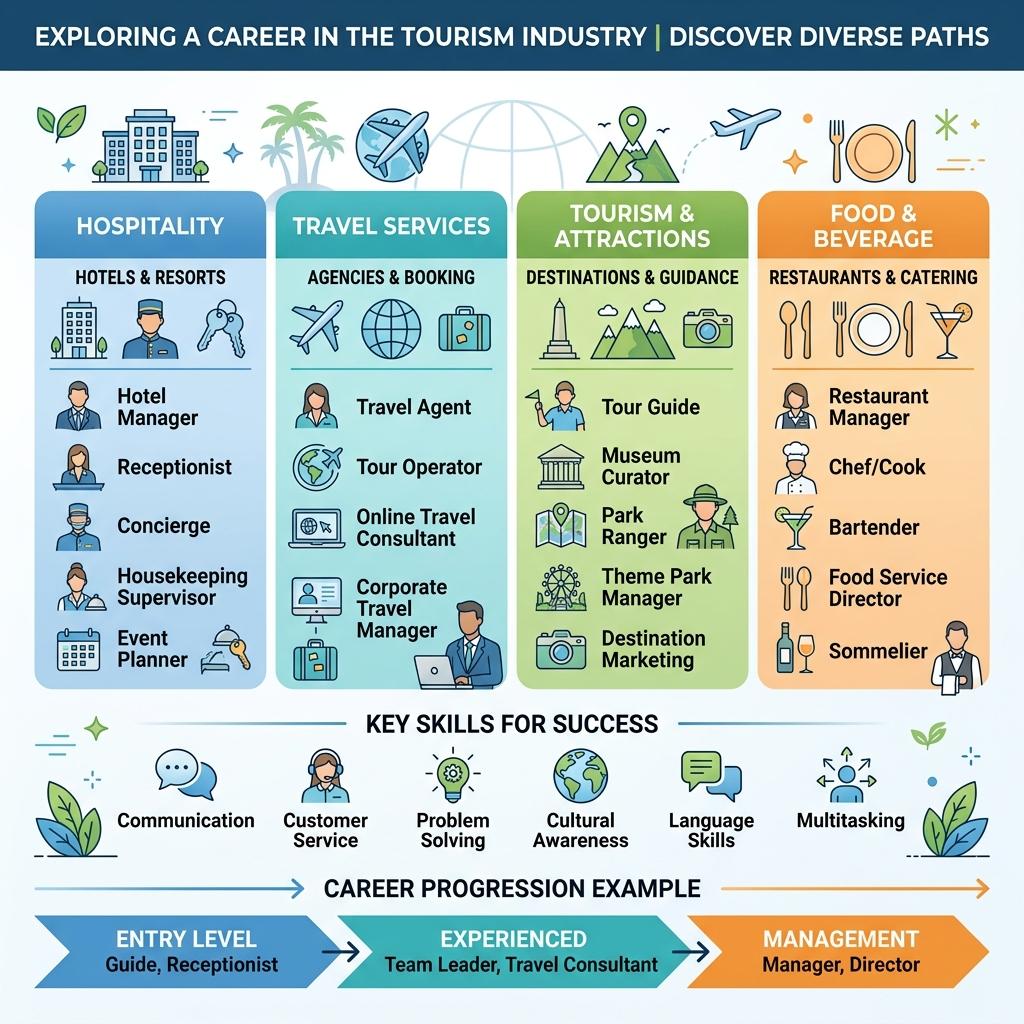
What are the primary career sectors within the tourism industry?
The tourism industry is incredibly diverse, offering career paths across several core sectors:
- Accommodation: Hotels, resorts, and vacation rentals (e.g., Hotel Manager, Concierge).
- Transportation: Airlines, cruise lines, and railways (e.g., Flight Attendant, Cruise Director).
- Food and Beverage: Restaurants, catering, and bars (e.g., Executive Chef, Sommelier).
- Travel and Tourism Services: Agencies, tour operators, and tourism boards (e.g., Travel Agent, Tour Guide).
- Attractions and Entertainment: Theme parks, museums, and historical sites (e.g., Event Coordinator, Museum Curator).
What essential skills are required to succeed in tourism jobs?
Success in tourism heavily relies on a mix of interpersonal and technical skills. Here is a breakdown of what employers look for:
| Soft Skills | Hard Skills |
|---|---|
| Excellent Communication | Foreign Language Proficiency |
| Customer Service & Empathy | Booking Software (e.g., Amadeus) |
| Problem-Solving & Adaptability | Tourism Marketing & SEO |
| Cultural Awareness | Financial & Revenue Management |
How can someone start a career in tourism without prior experience?
Breaking into the tourism industry without experience is highly achievable if you focus on entry-level opportunities and skill-building:
- Take entry-level roles: Positions like front desk receptionist, bellhop, or junior travel consultant provide ground-level experience.
- Pursue internships: Many hospitality brands offer summer internships or management trainee programs.
- Volunteer: Guide tours at local museums or help organize community cultural festivals.
- Obtain certifications: Complete online courses in hospitality management or customer service to make your resume stand out.
What does the typical career progression for a hotel manager look like?
The path to becoming a Hotel General Manager usually involves climbing the hospitality ladder and gaining cross-departmental experience. A common progression includes:
- Entry-Level: Front Desk Agent or Guest Services Representative.
- Supervisory Role: Front Office Supervisor or Shift Manager.
- Department Head: Rooms Division Manager, Food & Beverage Director, or Sales Director.
- Executive Level: Assistant General Manager (AGM).
- Top Leadership: General Manager (GM), overseeing all hotel operations.
Which tourism jobs offer the highest earning potential?
While many tourism jobs start at an hourly wage, several specialized and executive roles offer highly lucrative salaries. Below are a few top-paying careers:
| Job Title | Primary Responsibility |
|---|---|
| Airline Pilot | Safely operating commercial passenger flights globally. |
| Hotel General Manager | Overseeing all operational and financial aspects of a luxury resort. |
| Regional Director of Tourism | Managing tourism marketing and development for a specific geographic region. |
| Revenue Manager | Using data analytics to optimize pricing and maximize hospitality profits. |
How is technology changing career opportunities in tourism?
Technology has drastically transformed the tourism landscape, shifting demand from traditional roles to tech-centric positions. Automation has reduced the need for basic booking agents but created massive demand for new careers:
- Travel Tech Developers: Building apps for seamless booking and virtual reality tours.
- Digital Marketers: Utilizing social media, SEO, and influencer partnerships to attract travelers.
- Data Analysts: Analyzing traveler behavior to predict trends and personalize guest experiences.
Modern professionals must be tech-savvy, as travelers expect seamless digital interactions from booking to checkout.
What are the benefits of pursuing a career in eco-tourism?
Eco-tourism is one of the fastest-growing sectors in the industry, focusing on sustainable travel that conserves the environment. Career benefits include:
- High Demand: As travelers become more environmentally conscious, companies are actively hiring sustainability managers and eco-tour guides.
- Meaningful Work: Professionals directly contribute to wildlife conservation and the economic empowerment of indigenous communities.
- Niche Expertise: Developing skills in green hospitality or sustainable logistics makes you a highly sought-after specialist.
What professional certifications can boost career development in travel and tourism?
Earning specialized certifications demonstrates expertise, enhances credibility, and accelerates career advancement. Valuable credentials include:
- Certified Travel Associate (CTA): Ideal for frontline travel agents looking to master destination knowledge and sales.
- Certified Guest Service Professional (CGSP): A globally recognized credential for excellence in hospitality customer service.
- Certified Meeting Professional (CMP): The premier certification for event planners and convention coordinators.
- IATA Travel and Tourism Diploma: Highly regarded for those working in airline ticketing and international tour operations.
Are there opportunities for remote work in the tourism sector?
Yes, remote work has become highly prevalent in the tourism industry, particularly for roles that do not require face-to-face guest interaction. Popular remote tourism jobs include:
- Virtual Travel Advisors: Planning itineraries and booking trips for clients entirely from a home office.
- Travel Bloggers & Content Creators: Monetizing travel experiences through writing, photography, and social media.
- Remote Revenue Managers: Analyzing market trends and setting hotel room prices from anywhere in the world.
- Customer Support Agents: Handling airline or hotel reservations via phone and chat from home.
What are the biggest challenges faced by professionals in the tourism industry?
While a career in tourism is exciting, it comes with specific industry challenges that professionals must navigate:
- Seasonality: Many jobs experience peaks and off-seasons, which can lead to fluctuating income and unstable employment.
- Economic Sensitivity: The industry is highly vulnerable to global events, such as economic downturns and pandemics, which directly impact travel volume.
- Long and Irregular Hours: Hospitality and transport operate 24/7, meaning employees frequently work nights, weekends, and holidays.
- High Stress: Dealing with travel disruptions, delayed flights, and demanding customers requires immense patience.