 jobdayta.com
 Jobs and Career in Energy Industry
Energy powers modern society, driving industries, transportation, and technology. Renewable sources like solar, wind, and hydroelectric systems reduce carbon emissions and promote sustainability. Efficient energy management and innovation in storage solutions enhance grid reliability and resource utilization. Advances in smart grids and energy-saving technologies support the global transition toward cleaner power systems.
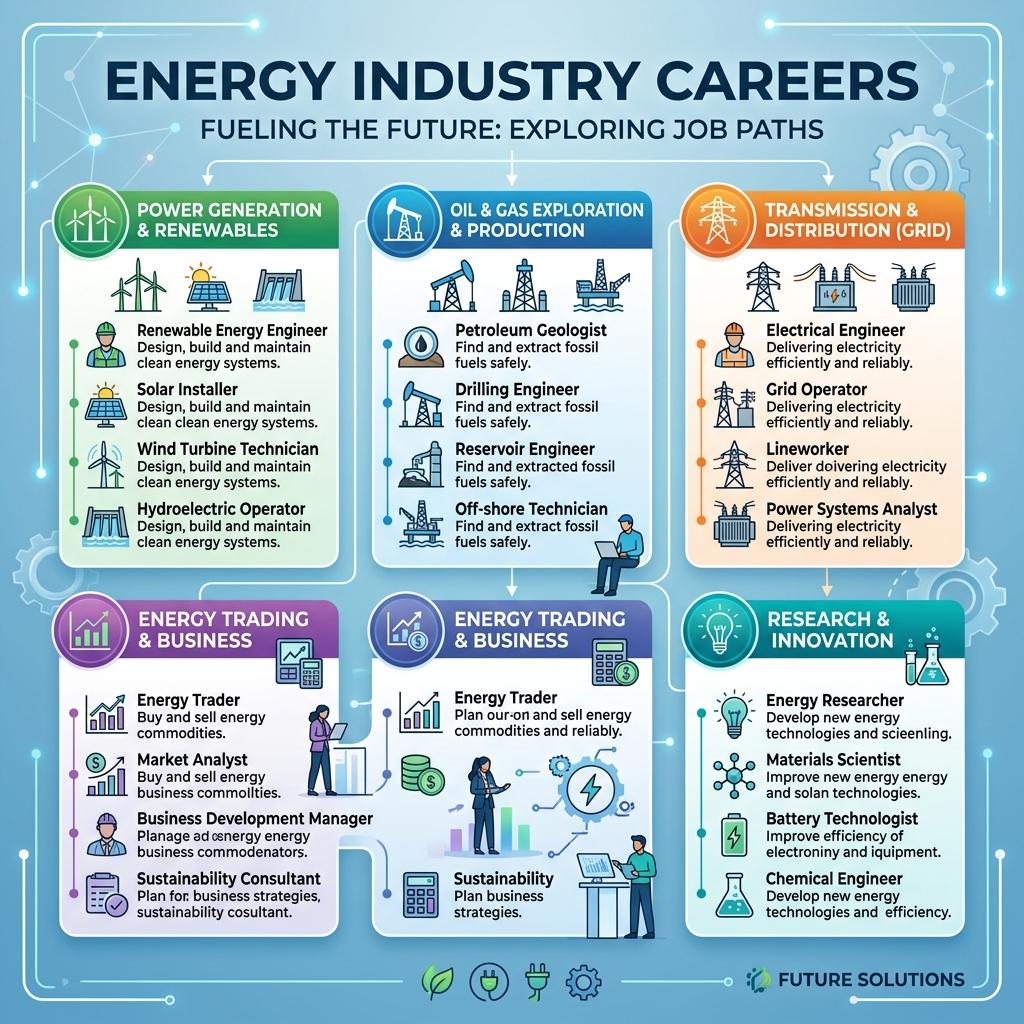
What are the primary sectors within the energy industry for job seekers?
The energy industry is broadly categorized into several key sectors, offering diverse career paths for professionals:
- Fossil Fuels: Includes oil, natural gas, and coal. Roles focus on extraction, refining, distribution, and increasingly, emissions reduction.
- Renewable Energy: The fastest-growing sector, encompassing solar, wind, hydro, and geothermal power.
- Nuclear Energy: A highly regulated, technical field focusing on plant operations, maintenance, and safety engineering.
- Grid and Transmission: Involves the critical infrastructure that delivers power to consumers, heavily focused on smart grid technologies and energy storage solutions.
What skills are in highest demand for renewable energy careers?
To succeed in the rapidly evolving renewable energy sector, employers are actively seeking candidates with a mix of technical and analytical skills:
- Engineering Proficiency: Mechanical, electrical, and civil engineering skills are crucial for designing and maintaining turbines and solar arrays.
- Data Analysis: The ability to analyze weather patterns, energy output, and grid efficiency using advanced software tools.
- Project Management: Overseeing large-scale utility installations to ensure they are completed on time and within budget.
- Regulatory Knowledge: Understanding local and federal environmental laws, tax subsidies, and compliance standards.
How do salary expectations compare between traditional and renewable energy roles?
While traditional oil and gas roles historically offered higher starting salaries, renewable energy compensation has become highly competitive. Below is a general comparison of average annual salaries in the US:
| Job Role | Oil & Gas (Traditional) | Renewable Energy |
|---|---|---|
| Entry-Level Engineer | $85,000 - $100,000 | $75,000 - $90,000 |
| Project Manager | $120,000 - $150,000 | $110,000 - $145,000 |
| Field Technician | $60,000 - $80,000 | $55,000 - $75,000 |
What certifications can accelerate a career in solar energy?
Obtaining industry-recognized certifications can significantly boost your employability and salary potential in the solar sector. Highly recommended credentials include:
- NABCEP (North American Board of Certified Energy Practitioners): The gold standard in solar.
- PV Installation Professional (PVIP)
- PV Design Specialist (PVDS)
- OSHA 10 or 30: Essential certifications for demonstrating construction, electrical, and workplace safety knowledge.
- LEED Green Associate: Demonstrates a solid foundation in green building principles and energy efficiency.
Is a university degree strictly necessary to enter the energy industry?
No, a four-year degree is not mandatory for all career paths. The energy sector relies heavily on skilled trades, and many lucrative careers begin with apprenticeships, vocational training, or associate degrees. Examples include:
- Wind Turbine Technicians: Often requires a two-year technical certificate and is consistently ranked among the fastest-growing jobs globally.
- Solar Photovoltaic Installers: Usually requires a high school diploma followed by on-the-job training or a short vocational course.
- Welders and Pipefitters: Highly sought after in traditional energy and nuclear sectors, requiring specialized trade certifications rather than university degrees.
What are the emerging job roles in smart grid technology?
As the world modernizes its power infrastructure, smart grids have created a lucrative intersection between traditional utilities and technology. Key emerging roles include:
- Grid Modernization Engineer: Upgrades legacy power lines with automated, responsive technologies to handle two-way electricity flows.
- Energy Storage Specialist: Focuses on battery technology and large-scale storage solutions to manage the intermittency of renewable sources.
- IoT Security Architect: Protects internet-connected grid infrastructure and consumer meters from cyberattacks.
- Smart Meter Data Analyst: Interprets consumer usage data to optimize energy distribution and reduce waste.
How can transitioning professionals from other industries enter the energy sector?
Career changers can successfully pivot into the energy industry by leveraging their transferable skills. Follow these strategic steps:
- Identify Transferable Skills: Backgrounds in IT, finance, human resources, and supply chain management are universally needed across all energy companies.
- Upskill: Take short courses or bootcamps in energy economics, sustainability principles, or industry-specific software like GIS.
- Network: Attend major industry conferences and join professional energy associations to meet hiring managers.
- Target Supply Chain Companies: Instead of applying directly to major utilities, look at consulting firms, software providers, or equipment manufacturers serving the energy sector.
What impact do AI and data analytics have on energy careers?
Artificial Intelligence and data analytics are revolutionizing the energy landscape, creating a massive demand for tech-savvy professionals. Companies now utilize AI for predictive maintenance on wind turbines, optimizing offshore drilling operations, and forecasting solar grid outputs based on weather data.
Consequently, traditional energy companies are hiring heavily for:
- Data Scientists
- Machine Learning Engineers
- Cloud Infrastructure Architects
Furthermore, even non-technical roles now require baseline data literacy. Professionals who understand both energy markets and data analytics will experience the fastest career progression in the coming decade.
What are the typical career progression steps for an Energy Analyst?
An Energy Analyst evaluates market trends, pricing, and efficiency to help companies make informed power decisions. The typical career ladder includes:
- Junior Energy Analyst (0-2 years): Focuses on raw data collection, basic reporting, and assisting senior staff with market research.
- Energy Analyst (2-5 years): Manages independent projects, develops financial models, and provides actionable insights on energy procurement.
- Senior Analyst / Consultant (5-8 years): Leads project teams, presents strategies to corporate executives, and designs long-term energy portfolios.
- Director of Energy Strategy (8+ years): Oversees the entire organization's energy policy, regulatory compliance, and market expansion efforts.
Where are the most significant geographical hubs for energy jobs?
While energy jobs exist everywhere, certain regions act as massive employment hubs due to their natural resources, infrastructure, and progressive policies. Here is a breakdown of major hubs in the United States:
| Region | Primary Energy Sectors | Key Job Types |
|---|---|---|
| Texas (Houston/Austin) | Oil & Gas, Wind, Energy Tech | Petroleum Engineers, Wind Techs, Energy Traders |
| California (Bay Area/LA) | Solar, EVs, Energy Storage | Solar Installers, Battery Engineers, Policy Analysts |
| Northeast (NY/Mass) | Offshore Wind, Smart Grid | Marine Engineers, Grid Modernization, Consultants |
| Midwest (Iowa/Illinois) | Biofuels, Onshore Wind | Agricultural Scientists, Turbine Mechanics |