 jobdayta.com
 Jobs and Career in Fashion Industry
Fashion encompasses clothing, accessories, and personal style that reflect cultural trends and individual expression. It influences and is influenced by social movements, economic factors, and technological advancements. Key fashion capitals like Paris, Milan, and New York drive global trends through runway shows and designer collections. Contemporary fashion integrates sustainability and innovation to meet evolving consumer demands.
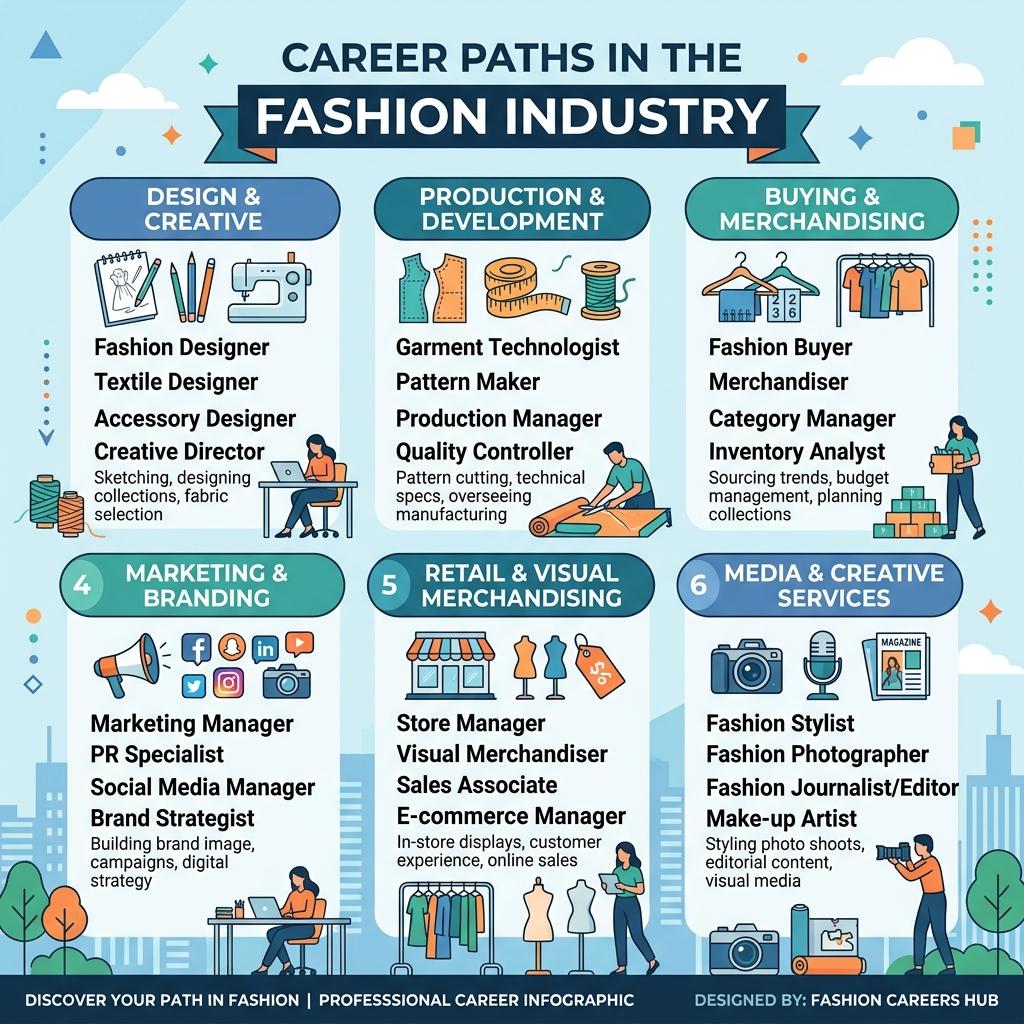
What are the core career paths available in the fashion industry?
The fashion industry offers diverse roles beyond just designing. Core career paths can be categorized into several distinct sectors:
- Design & Production: Fashion designer, technical designer, pattern maker, textile developer.
- Business & Retail: Fashion buyer, merchandiser, retail manager.
- Marketing & Media: Fashion journalist, PR specialist, social media manager.
- Visual & Styling: Fashion stylist, art director, visual merchandiser.
Choosing the right path depends on whether you lean more toward creative expression, analytical business strategies, or visual communication.
What skills are essential for becoming a successful fashion designer?
A successful fashion designer needs a blend of creative, technical, and business skills to thrive in a competitive market.
- Creative Skills: A strong eye for color, texture, and shape, plus the ability to sketch original concepts.
- Technical Skills: Proficiency in sewing, pattern-making, draping, and using CAD (Computer-Aided Design) software.
- Business Acumen: Understanding market trends, consumer behavior, and basic budgeting to ensure designs are commercially viable.
- Soft Skills: Strong communication and teamwork abilities to collaborate with manufacturers, buyers, and PR teams.
How does a fashion buyer decide what to purchase for a retail store?
Fashion buyers use a combination of data analysis and trend forecasting to curate collections that will sell well and maximize retail profits. Their decision-making process involves:
- Analyzing past sales data to see what styles, sizes, and colors performed best.
- Attending fashion weeks and trade shows to identify upcoming seasonal trends.
- Evaluating target demographics and consumer purchasing power.
- Negotiating costs, delivery times, and terms with suppliers.
Ultimately, a buyer must balance their creative intuition with strict budgets and inventory metrics.
What is the difference between a fashion stylist and a fashion consultant?
While both roles involve giving fashion advice, their focus and clientele typically differ.
Fashion Stylists primarily work on specific projects like editorial photoshoots, runway shows, or celebrity red-carpet appearances. They source garments from designers and pull together cohesive, visually striking looks for a specific visual outcome.
Fashion Consultants (or personal stylists) generally work directly with individual clients or retail brands to improve everyday wardrobes or brand identity. They focus on personal body types, lifestyle needs, and long-term wardrobe building rather than one-off artistic projects.
How is sustainability changing job roles in fashion?
Sustainability is forcing a massive shift in how fashion companies operate, leading to the creation of entirely new career paths and adapting existing ones.
- Sourcing Managers now prioritize finding eco-friendly textiles and ethical factories.
- Sustainability Directors oversee corporate social responsibility, carbon footprint reduction, and circular economy initiatives.
- Textile Innovators focus on developing biodegradable or recycled fabrics.
Even traditional designers are now required to adopt zero-waste pattern making and design for garment longevity, making environmental consciousness a mandatory skill across the industry.
What is the typical salary range for fashion merchandisers?
Fashion merchandising salaries vary greatly depending on experience, location, and the size of the retail brand. Below is a general estimate of annual salaries in the US market:
| Career Level | Job Title | Estimated Salary Range |
|---|---|---|
| Entry-Level | Assistant Merchandiser | $45,000 - $60,000 |
| Mid-Level | Merchandiser / Planner | $65,000 - $90,000 |
| Senior-Level | Senior Merchandiser | $95,000 - $130,000+ |
| Executive | VP of Merchandising | $150,000 - $250,000+ |
Note: These figures can fluctuate based on performance bonuses and corporate profit-sharing.
How can someone start a career in fashion without a degree in fashion design?
A degree in fashion design is not mandatory for a successful career in the industry. Here are effective ways to break in:
- Build a Portfolio: Create strong visual examples of your work, whether it's styling, photography, or digital sketches.
- Leverage Transferable Skills: Degrees in business, marketing, or graphic design translate perfectly into fashion PR, merchandising, and brand management.
- Gain Retail Experience: Working on the sales floor provides invaluable insights into consumer behavior and store operations.
- Network and Intern: Attend industry events, apply for internships, and connect with professionals to get your foot in the door.
What role does a technical designer play in the garment production process?
A technical designer acts as the bridge between the creative fashion designer and the manufacturing factory. Their primary goal is to ensure a garment fits perfectly and can be mass-produced efficiently.
Key responsibilities include:
- Creating detailed "tech packs" which include measurements, fabric details, and stitching instructions.
- Conducting fit sessions with live models to identify sizing issues.
- Adjusting patterns and communicating revisions to overseas or domestic factories.
This role requires high precision, a deep understanding of garment construction, and strong problem-solving skills.
How important are digital skills in modern fashion careers?
Digital proficiency is no longer optional; it is a vital component of modern fashion careers across all departments.
- Designers increasingly use 3D rendering software like CLO 3D or Browzwear to create virtual prototypes, significantly reducing physical waste.
- Marketers rely heavily on data analytics, SEO, and social media algorithms to drive e-commerce sales.
- Merchandisers utilize advanced inventory management software and AI trend-forecasting tools.
Candidates who possess a strong blend of traditional fashion knowledge and modern technological skills are currently the most competitive in the job market.
What are the typical steps to advance from an entry-level role to a Creative Director?
Becoming a Creative Director is a long-term goal that requires climbing the creative ladder and demonstrating both artistic vision and leadership. The typical progression looks like this:
- Design Assistant / Intern: Focuses on administrative tasks, sourcing fabrics, and assisting with sketches.
- Associate Designer: Takes ownership of specific categories (e.g., knitwear) under supervision.
- Senior Designer: Leads design teams for major collections and presents concepts to management.
- Design Director: Manages all designers, ensures brand cohesion, and oversees the production timeline.
- Creative Director: Controls the ultimate vision of the brand, encompassing clothing design, marketing campaigns, and store aesthetics.