 jobdayta.com
 Jobs and Career in Education Industry
Education cultivates critical thinking, fosters skill development, and promotes lifelong learning in diverse fields. It enhances social mobility by providing access to knowledge and empowering individuals to achieve personal and professional goals. Effective education systems incorporate technology, innovation, and inclusive methodologies to address varied learning needs. Global education trends emphasize STEM proficiency, digital literacy, and competencies for the 21st-century workforce.
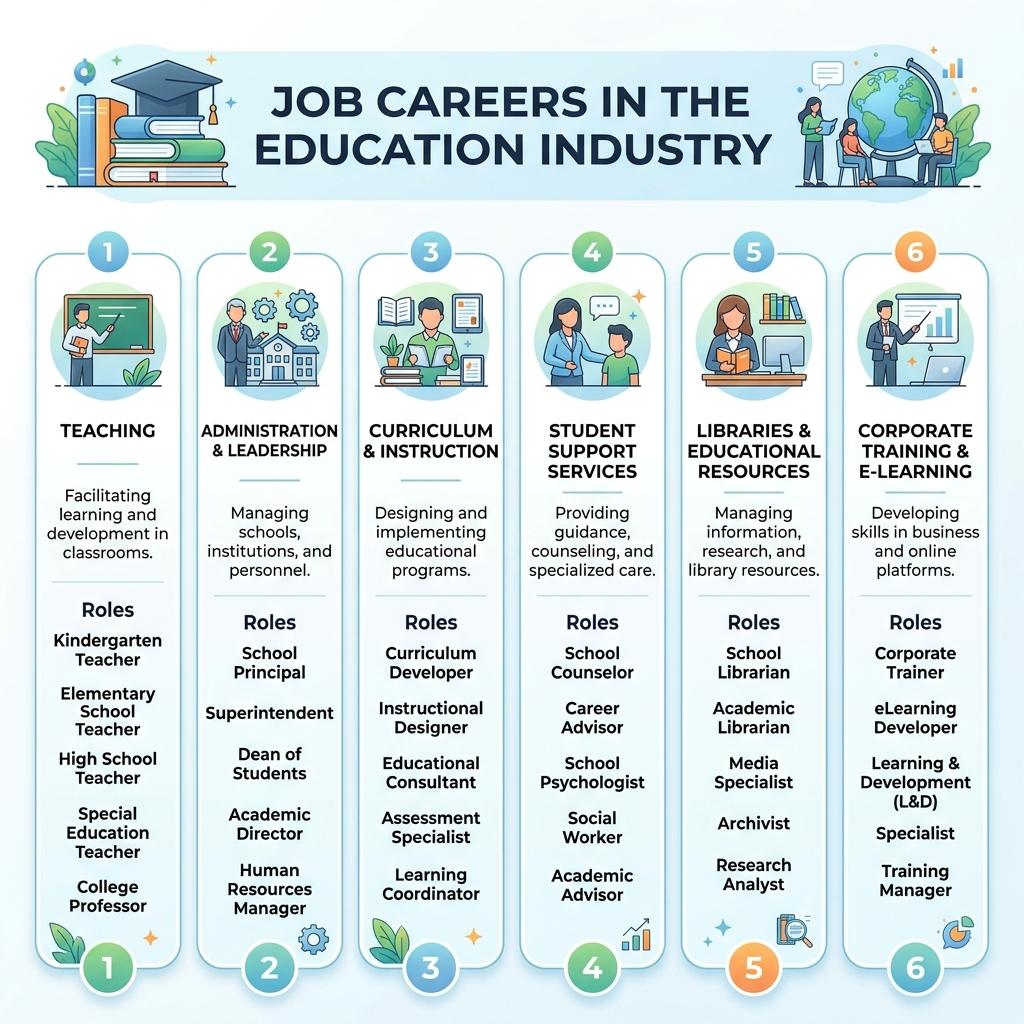
What are the primary career pathways in the education sector?
The education industry offers several distinct career pathways depending on your professional interests and skills:
- Instructional: Roles like K-12 teachers, university professors, and special education instructors who directly teach students.
- Administrative: Leadership roles such as school principals, district superintendents, and university deans.
- Support Services: Positions focusing on student well-being, including school counselors, social workers, and academic advisors.
- Curriculum & Development: Behind-the-scenes roles like instructional designers and curriculum developers.
- EdTech: Careers in educational technology, integrating software and digital tools into learning environments.
What qualifications are typically required to become a licensed K-12 teacher?
While specific requirements vary by state or country, the general steps to becoming a licensed public school teacher include:
- Bachelor’s Degree: Obtain a degree in education or the specific subject you intend to teach.
- Teacher Preparation Program: Complete an accredited program covering classroom management, pedagogy, and childhood development.
- Student Teaching: Gain hands-on experience through a supervised student teaching internship.
- Background Check: Pass a mandatory criminal background check and fingerprinting.
- Certification Exams: Pass standardized state exams (such as the Praxis) in teaching fundamentals and subject-specific knowledge.
How does the estimated salary progression look for K-12 public school teachers?
Teacher salaries generally grow based on years of experience and additional educational degrees. Below is a generalized estimate for K-12 public school teachers in the United States:
| Experience Level | Education Level | Estimated Annual Salary |
|---|---|---|
| Entry-Level (0-3 years) | Bachelor's Degree | $40,000 - $50,000 |
| Mid-Level (4-9 years) | Master's Degree | $55,000 - $65,000 |
| Senior-Level (10+ years) | Master's + Extra Credits | $70,000 - $90,000+ |
Note: Salaries fluctuate significantly based on geographic location, local tax funding, and union agreements.
What are the emerging job roles in Educational Technology (EdTech)?
The rapid digitalization of education has created exciting new career paths that blend technology and pedagogy. Key emerging roles include:
- E-Learning Developer: Creates digital modules, interactive videos, and online assessments.
- LMS Administrator: Manages Learning Management Systems (like Canvas, Moodle, or Blackboard) for schools or corporations.
- EdTech Product Manager: Oversees the development of educational software, applications, and platforms.
- Educational Data Analyst: Evaluates student performance metrics to improve learning outcomes and institutional efficiency.
- AI Integration Specialist: Helps schools safely and ethically implement artificial intelligence tools into their daily curriculum.
How can a teacher transition into educational administration?
Transitioning from the classroom to administration (such as becoming a principal) requires strategic career development:
- Gain Experience: Accumulate at least three to five years of successful classroom teaching experience.
- Take Leadership Roles: Volunteer to be a department chair, mentor teacher, or curriculum committee member to build leadership skills.
- Earn a Master’s Degree: Complete a Master’s degree in Educational Leadership, Educational Administration, or a similar field.
- Obtain Certification: Pass your state's administrative licensing exam (e.g., the School Leaders Licensure Assessment).
- Apply for Assistant Roles: Start by applying for Assistant Principal or Dean of Students positions to gain administrative hours.
What is the difference between an Instructional Designer and a Curriculum Developer?
Though often confused, these two roles have distinct focuses in the educational development process:
| Aspect | Curriculum Developer | Instructional Designer |
|---|---|---|
| Primary Focus | What is being taught. | How it is being taught. |
| Core Duties | Setting learning standards, choosing textbooks, and outlining course syllabi. | Creating the actual learning materials, digital modules, and interactive activities. |
| Work Environment | Mostly K-12 school districts and higher education institutions. | Higher education, EdTech companies, and corporate training sectors. |
Are there career opportunities in higher education beyond teaching?
Yes, universities and colleges operate like small cities and require a massive staff of non-teaching professionals. Career areas include:
- Student Affairs: Roles in residential life, student activities, and diversity & inclusion centers.
- Admissions & Enrollment: Recruiting prospective students, reviewing applications, and managing financial aid counseling.
- Academic Advising: Guiding students through course selection, major changes, and graduation requirements.
- Alumni Relations & Development: Fundraising, organizing alumni events, and managing donor relationships.
- Career Services: Helping students write resumes, find internships, and prepare for post-graduation employment.
What core skills are essential for a successful career in Special Education?
Special education professionals work with students who have diverse learning, mental, emotional, and physical disabilities. To thrive in this career, educators need specific competencies:
- Patience and Empathy: The ability to understand individual student struggles and maintain composure during challenging behavioral episodes.
- Adaptability: Modifying lesson plans on the fly to meet the unique needs of an Individualized Education Program (IEP).
- Communication Skills: Effectively collaborating with parents, general education teachers, speech therapists, and school psychologists.
- Data Tracking: Meticulously documenting student progress and behavioral metrics to ensure legal compliance and goal achievement.
How important is Continuous Professional Development (CPD) for educators?
Continuous Professional Development (CPD) is crucial in the education industry for several reasons. First, education is an evolving field; teachers must stay updated on new pedagogical strategies, technological advancements, and changing state standards to remain effective.
Second, CPD is often a legal requirement. Most states and countries mandate that licensed educators complete a specific number of professional development hours every few years to renew their teaching licenses.
Finally, CPD fuels career advancement. Engaging in workshops, attending educational conferences, or taking graduate courses allows educators to move up the salary schedule and prepares them for specialized leadership roles.
What are alternative career options for former teachers looking to leave the classroom?
Teachers possess highly transferable skills—such as public speaking, project management, and empathy—making them excellent candidates for various roles outside the traditional classroom:
- Corporate Trainer: Onboarding new employees and developing training programs for businesses.
- Educational Consultant: Advising school districts on curriculum choices, policy changes, and teacher training.
- Museum Educator: Designing educational programs, tours, and interactive exhibits for museums, zoos, or aquariums.
- Textbook Author / Editor: Writing or reviewing educational materials for academic publishing companies.
- Project Manager: Utilizing strong organizational and multitasking skills to lead projects in the non-profit or tech sectors.