 jobdayta.com
 Jobs and Career in Food Industry
Food serves as a fundamental source of nutrition, providing essential macronutrients like carbohydrates, proteins, and fats needed for energy and bodily functions. Diverse food groups supply vitamins and minerals crucial for maintaining health, supporting immune function, and preventing diseases. Cooking methods influence nutrient retention and bioavailability, impacting overall dietary quality. Understanding food's role in metabolism and wellness guides healthier eating choices and promotes longevity.
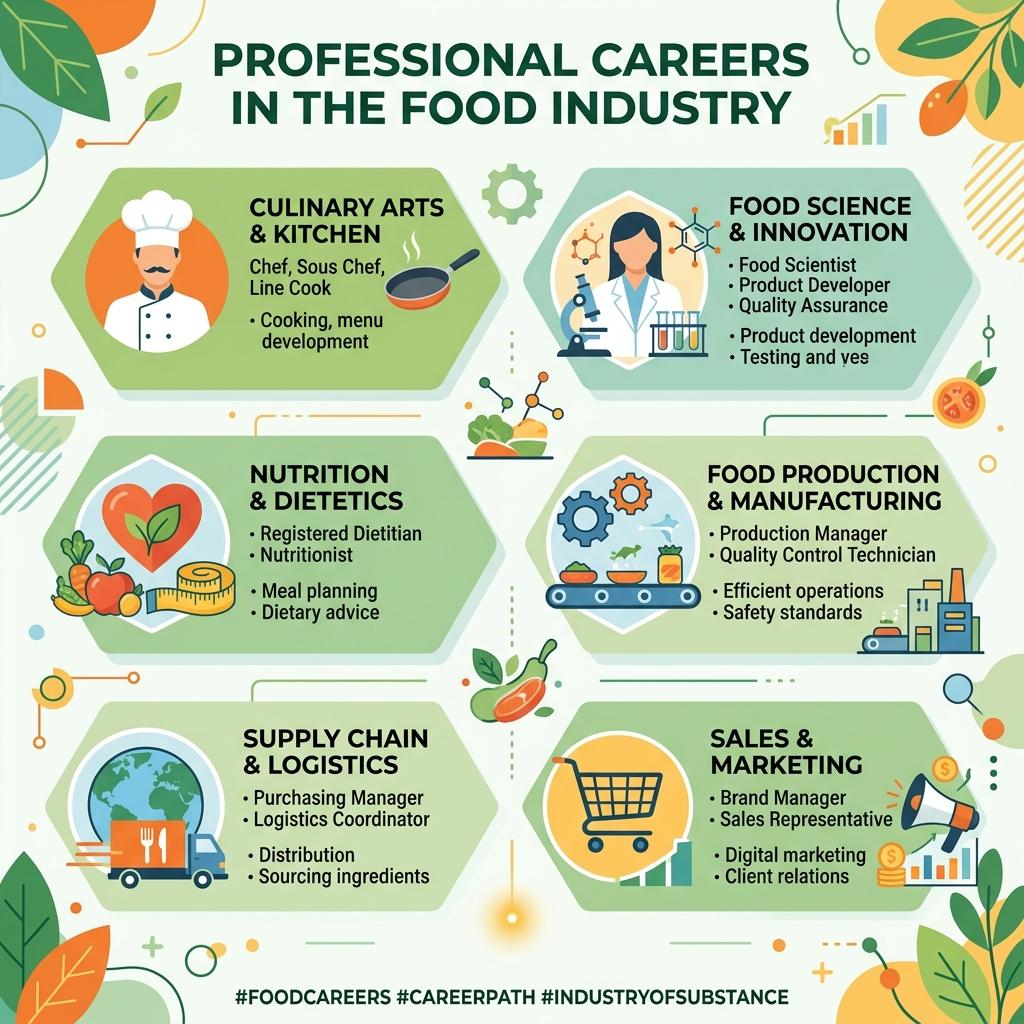
What are the primary career sectors within the food industry?
The food industry is vast and can be categorized into several key sectors, offering diverse career paths:
- Agriculture & Farming: Focuses on the raw production of crops, livestock, and sustainable farming technologies.
- Food Science & R&D: Involves creating new products, improving nutritional value, and extending shelf life.
- Manufacturing & Processing: Turns raw ingredients into packaged goods and manages factory operations.
- Quality Assurance & Safety: Ensures products meet regulatory health, safety, and hygiene standards.
- Retail & Food Service: Includes restaurant management, catering, and grocery supply chain distribution.
What is the typical career progression for a Food Scientist?
Career progression for a Food Scientist generally follows a structured, experience-based path:
- Entry-Level (Food Technologist / Lab Tech): Focuses on basic testing, data collection, and assisting senior scientists with sample creation.
- Mid-Level (Food Scientist / Product Developer): Involves leading specific product lines, formulating recipes, and managing sensory testing panels.
- Senior-Level (Senior Food Scientist / R&D Manager): Directs research teams, oversees project budgeting, and aligns product development with market trends.
- Executive-Level (VP of R&D / Chief Science Officer): Guides the overall scientific, regulatory, and innovation strategy for the entire company.
Which food industry jobs have the highest projected growth rates?
Several roles in the food industry are experiencing rapid growth due to changing consumer demands and technological advancements. Here are top roles based on recent market trends:
| Job Title | Primary Growth Driver |
|---|---|
| Food Safety Specialist | Stricter FDA/global health regulations |
| Alternative Protein Developer | Rise in vegan, vegetarian, and flexitarian diets |
| Supply Chain Analyst | Need for global logistical optimization and transparency |
| Sustainability Coordinator | Corporate pushes for eco-friendly packaging and zero-waste |
How can someone transition from culinary arts to corporate food roles?
Chefs possess invaluable palate and ingredient knowledge that corporate food companies desperately need. To transition successfully, you should:
- Pursue Further Education: Consider a certificate in food science or business to bridge the gap between culinary arts and mass production.
- Target Corporate Chef Roles: Many large brands hire "Research Chefs" to design mass-market recipes based on culinary trends.
- Highlight Transferable Skills: Emphasize your experience with inventory management, recipe scaling, and safety standards on your resume.
- Network: Join the Research Chefs Association (RCA) to connect with professionals blending culinary arts and food science.
What are the typical salary ranges for entry-level roles in food manufacturing?
Entry-level salaries in food manufacturing vary based on education, location, and specific job functions. Below is a general overview of average starting salaries in the United States:
| Entry-Level Role | Average Starting Salary (USD) |
|---|---|
| Quality Control Technician | $40,000 - $50,000 |
| Production Supervisor | $55,000 - $65,000 |
| Food Technologist | $50,000 - $60,000 |
| Supply Chain Coordinator | $45,000 - $55,000 |
Candidates with specialized degrees or relevant internship experience often negotiate toward the higher end of these brackets.
What soft skills are essential for a career in food management?
While technical knowledge is important, food management professionals must master several soft skills to succeed in a fast-paced environment:
- Communication: The ability to relay complex safety protocols to diverse teams clearly and effectively.
- Adaptability: Food trends, supply chain issues, and agricultural yields change rapidly. Managers must pivot strategies without panicking.
- Problem-Solving: Quickly identifying the root cause of issues, such as a compromised batch of ingredients or machinery failure.
- Leadership: Motivating shift workers and maintaining high morale in environments that are often physically demanding or repetitive.
How is artificial intelligence (AI) impacting career opportunities in the food industry?
Artificial Intelligence is revolutionizing the food sector, shifting career demand toward tech-centric roles. Key impacts include:
- Predictive Analytics: Demand for data analysts is rising. They use AI to predict consumer flavor trends and optimize inventory levels.
- Automation Engineering: Engineers are needed to design and maintain AI-driven robotics used in harvesting, sorting, and packaging.
- Precision Agriculture: AI creates jobs for drone operators and ag-tech specialists who monitor crop health and soil conditions.
- Quality Control: AI vision systems inspect food for defects, creating roles for technicians who train these machine-learning models.
What certifications can accelerate a career in Food Safety?
Earning recognized certifications proves your expertise to employers and is critical for advancing in food safety and quality assurance. Top certifications include:
- HACCP Certification: Essential for understanding Hazard Analysis and Critical Control Points in food production.
- PCQI (Preventive Controls Qualified Individual): Required under the FDA’s Food Safety Modernization Act (FSMA) for facility compliance.
- SQF (Safe Quality Food) Practitioner: Highly valued in manufacturing for implementing comprehensive food safety codes.
- ServSafe Manager: The industry standard for those working in food service, catering, and restaurant management.
Obtaining these credentials often leads to quicker promotions.
What is the difference between a Dietitian and a Nutritionist?
While both focus on food and health, their career paths, educational requirements, and legal statuses differ significantly:
| Feature | Registered Dietitian (RD) | Nutritionist |
|---|---|---|
| Education | Requires a specific university degree, supervised practice, and a board exam. | No strict educational requirement in many jurisdictions. |
| Regulation | Legally protected title; strictly regulated by national boards. | Not legally protected in all areas; varies by region. |
| Career Setting | Hospitals, clinical settings, public health policies. | Fitness centers, wellness blogs, holistic health coaching. |
If aiming for a clinical career, becoming an RD is the mandatory path.
What steps should a recent graduate take to secure a job in the food industry?
Entering the food industry after graduation requires a proactive approach. Follow these essential steps to land your first role:
- Secure an Internship: Practical experience in a lab, manufacturing plant, or corporate office is the most attractive trait to employers.
- Join Professional Organizations: Become a member of groups like the Institute of Food Technologists (IFT) to access exclusive job boards and networking events.
- Tailor Your Resume: Highlight relevant lab skills, equipment knowledge, and familiarity with food safety regulations (like FDA or USDA standards).
- Leverage LinkedIn: Connect with recruiters in food manufacturing and engage with industry news regarding sustainability and food tech.